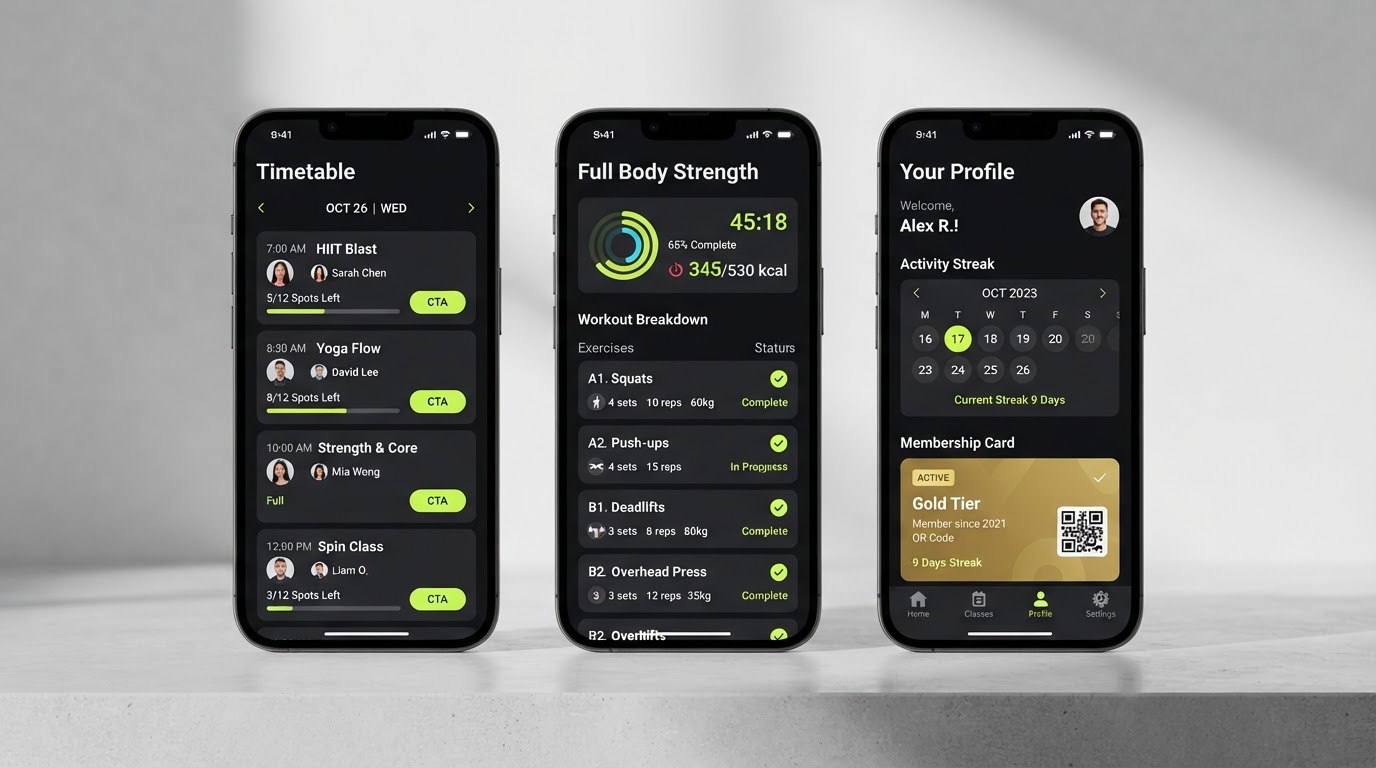
Product Engineering
Mobile Apps services
Livin Services builds native iOS and Android apps plus cross-platform apps in Flutter and React Native, along with the backend, APIs, push infrastructure and store submissions behind them. We are straight about when a progressive web app would serve you better than a store listing.
14 servicesTypical delivery 8–20 weeksFixed written scope
+92 337 0330012 · contact@livinservices.com — no discovery fee, no sales call. A written scope and a fixed price, or an honest no.
Full list
All 14 Mobile Apps services
Every one is a real page with its own scope, timeline, tools and deliverables — not a keyword in a list. Each also says plainly when it is the wrong thing to buy.
- Android App DevelopmentShip a Kotlin app that behaves properly across real device fragmentation
- iOS App DevelopmentBuild a Swift app that feels native rather than ported
- Flutter DevelopmentPopularRun one codebase on both stores with pixel-identical custom interfaces
- React Native DevelopmentPopularReuse your React team and skills across mobile without hiring twice
- Ionic DevelopmentWrap an existing web app for the stores at the lowest possible cost
- Progressive Web App DevelopmentPopularGet offline, push and a home-screen icon without app store gatekeeping
- Hybrid App DevelopmentBlend web and native where each one genuinely does the job better
- Wearable App DevelopmentPut glanceable, genuinely useful moments on the wrist
- TV App DevelopmentBuild for the ten-foot screen with a remote-first navigation model
- Mobile Backend DevelopmentGive your app an API that survives the day a campaign lands
- Mobile API DevelopmentDesign endpoints around screens so the app makes fewer round trips
- Firebase DevelopmentShip auth, data and push fast without running your own servers
- Push Notification SetupSend messages people act on instead of messages they switch off
- App MaintenanceStay compatible with each OS release before the store forces you to
Before you ask us
Work out the shape of a mobile apps project yourself
Three questions, no email address, no call. You get the scope written out — what is included, what is not, and what we would need from you — which you are free to take to another agency and compare. It is genuinely useful on its own, which is the only reason anyone finishes one of these.
- What you are building, and on which platform
- How much already exists, and what has to be migrated
- Which parts you want us to own and which stay with you
What you get at the end is a written scope, not a price plucked from a range. We do not publish project prices because a price without a scope is a guess — and a guess published as a price is one that gets revised upwards later.
Build your scopeHow we quote, in fullIn detail
Mobile Apps: what the work actually involves
An app is a distribution decision before it is an engineering one. If nobody has a reason to keep your icon on their home screen, a fast mobile site will outperform it. We ask that question first, then build properly once the answer is yes.
What you get from mobile apps work
- A single codebase where cross-platform genuinely fits
- App Store and Play submissions handled, including the rejections
- Crash reporting and analytics from day one, not after the first bad review
- A backend that will not fall over when a campaign works
Signs this is what you need
If none of these sound like you, this probably is not the work to buy — and we will say so.
- Your mobile experience is a pinched-in desktop site
- You need camera, offline or push capability the web cannot give you
- An existing app has not been updated through two OS releases
- Your users are asking where the app is
What we deliver, every time
- Product definition and platform recommendation for Android App Development
- Design implementation to platform interaction guidelines
- Build with crash reporting and analytics instrumented
- Store listing assets, metadata and submission handling
- Backend, API and push notification infrastructure
- Post-launch defect window and a release process your team can run
- Tested on real mid-range hardware, not only a high-end emulator
- Play Store listing, signing keys and release track set up in your own account
- A stated minimum Android version, with the share of users that choice excludes
Tools and platforms we work in
React NativeFlutterSwiftKotlinFirebaseNode.js
+92 337 0330012 · contact@livinservices.com
Choose
Which one do you need?
Most people arrive here knowing what is wrong but not what the work is called, which is completely normal. Find the row that sounds like your situation. If none of them do, message us and we will tell you which mobile apps service fits — including when the honest answer is that none of them do.
| If this is your situation | Start here |
|---|---|
| One product, both platforms, tight budget | React Native Development |
| Highly custom UI on both platforms | Flutter Development |
| Deep iOS platform features | iOS App Development |
| Deep Android and device fragmentation | Android App Development |
| App-like experience without a store | Progressive Web App Development |
| App exists, backend does not | Mobile Backend Development |
How it runs
How mobile apps work actually runs
- 01
Native or cross-platform
Decided by what your app actually does with the device, not by preference — and we explain the trade-off in writing.
- 02
Flows before pixels
Screens and states are mapped and agreed before any interface design starts.
- 03
Builds on your device
TestFlight and internal Android builds from early on, so you are judging it in your hand.
- 04
Store submission
We handle review, listing assets and the rejections that come with them — first submission is rarely the last.
Cross-platform when the app is mostly screens and data; native when it leans on the camera, sensors, background work or platform UI.
Straight answer
When not to hire us for this
We would rather lose the enquiry here than three weeks in.
- A responsive website would do the job. Many "app" briefs are websites with a launcher icon, and that is cheaper to build and maintain.
- You need it in the store in two weeks. Review timelines alone make that a promise nobody can keep.
- You want ongoing feature development with no maintenance budget. Mobile platforms force yearly work whether you plan for it or not.
Example builds
What mobile apps looks like in practice
Representative engagements across different sectors — the brief, the written scope, the stack and what shipped. These are example builds rather than named client stories; our attributable proof is the verified Google reviews.
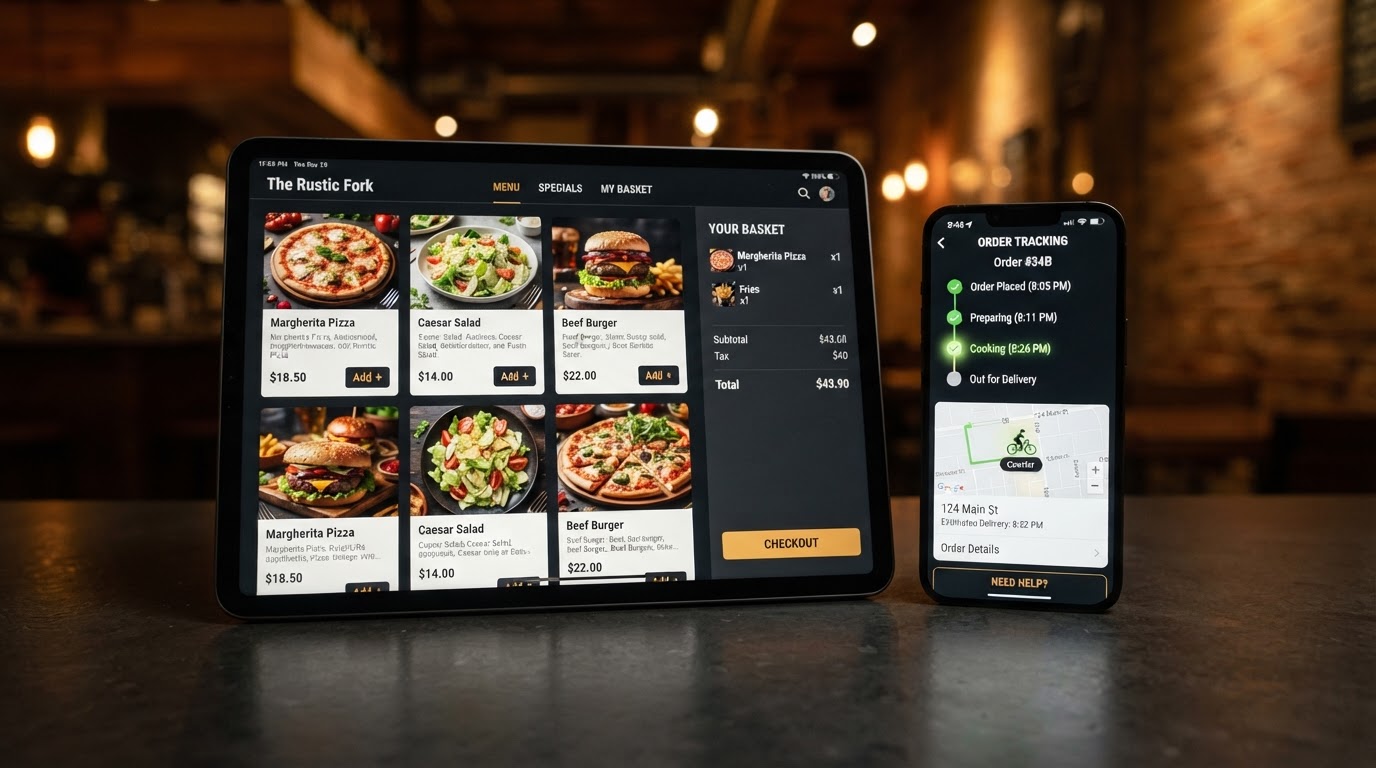
How mobile apps work runs with us
The same four steps every time, whether the engagement is one week or six months. Typical delivery is 8–20 weeks.
Step 1 · Day 0
Conversation
Twenty minutes on the actual problem. No deck, no discovery fee. You leave knowing whether we are the right team.
Step 2 · Within 2 days
Written scope
A document listing every deliverable, the price, the timeline and what is explicitly out of scope. Nothing starts until you approve it.
Step 3 · Delivery window
Build in the open
Work lands in reviewable increments on a staging URL you can open any time. You see progress weekly, not at the end.
Step 4 · Launch
Handover that sticks
Full ownership of code and accounts, a recorded walkthrough and written documentation. No lock-in, no hostage access.
Fixed price, agreed first
The number in the scope is the number you pay.
You own everything
Code, accounts and credentials are yours from day one.
No retainer required
Hire us for one job. Stay only if it was worth it.
Honest no
We turn work down when it will not pay for itself.
5average on Google, every review published in fullFixed price against a written scope23 disciplines in-house, briefed as one teamSee the work
Start small if you want to
Three ways to start with mobile apps
You do not have to pick the exact service first. Tell us the problem and we will point at the one that fits — or tell you it is not worth doing yet.
Smallest step
Ask one question
Send us the thing you are unsure about — whether mobile apps work is even the right work, or whether what you already have is close enough. You get a straight answer, not a proposal.
Free · usually answered same working day
Middle step
Get it looked at properly
We review what you have against how mobile apps work normally runs, and tell you what is actually worth doing.
Findings in writing · no obligation to book the work
Full engagement
Book the mobile apps work work
One fixed price for the agreed scope, written down before anything starts.
Typically 8–20 weeks · price agreed before work starts
What to send so the first reply is useful
- Your URL, or the platform you are on
- One sentence on what you want mobile apps work to change
- Any date that matters, and why it matters
- Whether anyone is already working on it
You do not need a brief, a budget or a spec. If mobile apps work turns out not to be what you need, we will say so and point you at the product engineering work that is — even where that is less for us to invoice.
Get a fixed price — Mobile Apps work
iOS, Android and cross-platform builds. Tell us where you are now and we will recommend the specific service that fits — with a written scope and a fixed price.
- No discovery fee, no deposit to hold a slot, and no retainer attached to a build.
- We usually reply within a couple of hours in working time.
- We write the scope down and attach one fixed price to it, before any work starts.
Questions
692 mobile apps questions, answered
Including the ones with awkward answers. If yours is not here, message us — we answer in writing before anyone books a call.
What is Flutter Development?
Flutter Development is a mobile apps service from Livin Services. In one line: run one codebase on both stores with pixel-identical custom interfaces. It's a defined piece of work with an agreed finish line, not an open-ended retainer, so you know what you're buying before you commit to it.
What is included in Flutter Development?
Flutter Development covers product definition and platform recommendation for flutter development, design implementation to platform interaction guidelines, build with crash reporting and analytics instrumented, store listing assets, metadata and submission handling, backend, api and push notification infrastructure, post-launch defect window and a release process your team can run, one codebase producing both store builds, with platform conventions still respected, store submission handled under your developer accounts, not ours and an honest note on where flutter is the wrong choice — heavy native sdks and deep os integration. All of that gets written down before we start, so you know exactly what's landing and what isn't. Anything outside the list gets quoted separately — we won't quietly absorb it and we won't quietly bill for it either.
What is not included in Flutter Development?
Anything not named in the written scope. In practice that usually means ongoing management after handover, content and copy you have not supplied, third-party licence and subscription costs, and work in other disciplines — those are separate services with their own scopes. We list exclusions explicitly rather than leaving them to be discovered halfway through.
Who is Flutter Development for?
It fits teams where your mobile experience is a pinched-in desktop site. The goal is simple: run one codebase on both stores with pixel-identical custom interfaces. If your situation is different, tell us and we will point you at the mobile apps service that actually fits — including one we do not sell.
When should I not buy Flutter Development?
When the underlying problem sits somewhere else. Buying Flutter Development to fix something it does not touch is expensive and disappointing in equal measure. Tell us what outcome you are actually after and we will say plainly whether this is the right service, a different one, or nothing at all right now.
How is this different from hiring a freelancer for Flutter Development?
A good freelancer is often the right answer for a narrow, well-defined task, and cheaper. What an agency adds is continuity when someone is unavailable, a second pair of eyes on decisions, and accountability that survives the individual. Judge it on whether your project needs those things — plenty do not.
Do you offer Flutter Development as an ongoing retainer?
This service is scoped as a defined piece of work with a handover at the end, which is deliberate: it means the engagement has a finish line rather than drifting into an indefinite monthly cost. If you need continuing support afterwards we can arrange it, but it is a separate agreement you enter knowingly.
How many rounds of revisions are included in Flutter Development?
Revisions within the agreed scope are part of the work, not a numbered allowance to be rationed. What is charged separately is a change of direction — new requirements, a reversed decision, or work outside what was scoped. The distinction is written into the scope so it is not decided by argument later.
Is Flutter Development worth it for a small business?
Sometimes, and sometimes not — it depends on whether the thing it fixes is actually what is holding you back. Smaller scopes are quoted the same way as large ones, with no minimum engagement, so size is not the barrier. Being honest about whether this is your highest-leverage move is more useful to you than a yes.
What is React Native Development?
React Native Development is a mobile apps service from Livin Services. In one line: reuse your React team and skills across mobile without hiring twice. It's a defined piece of work with an agreed finish line, not an open-ended retainer, so you know what you're buying before you commit to it.
What is included in React Native Development?
React Native Development covers product definition and platform recommendation for react native development, design implementation to platform interaction guidelines, build with crash reporting and analytics instrumented, store listing assets, metadata and submission handling, backend, api and push notification infrastructure, post-launch defect window and a release process your team can run, shared typescript types between app and web so the two cannot drift apart, over-the-air updates configured for fixes that do not need store review and a clear line on which native modules need real native work, before you assume none do. All of that gets written down before we start, so you know exactly what's landing and what isn't. Anything outside the list gets quoted separately — we won't quietly absorb it and we won't quietly bill for it either.
What is not included in React Native Development?
Anything not named in the written scope. In practice that usually means ongoing management after handover, content and copy you have not supplied, third-party licence and subscription costs, and work in other disciplines — those are separate services with their own scopes. We list exclusions explicitly rather than leaving them to be discovered halfway through.
Who is React Native Development for?
It fits teams where your mobile experience is a pinched-in desktop site. The goal is simple: reuse your React team and skills across mobile without hiring twice. If your situation is different, tell us and we will point you at the mobile apps service that actually fits — including one we do not sell.
When should I not buy React Native Development?
When the underlying problem sits somewhere else. Buying React Native Development to fix something it does not touch is expensive and disappointing in equal measure. Tell us what outcome you are actually after and we will say plainly whether this is the right service, a different one, or nothing at all right now.
How is this different from hiring a freelancer for React Native Development?
A good freelancer is often the right answer for a narrow, well-defined task, and cheaper. What an agency adds is continuity when someone is unavailable, a second pair of eyes on decisions, and accountability that survives the individual. Judge it on whether your project needs those things — plenty do not.
Do you offer React Native Development as an ongoing retainer?
This service is scoped as a defined piece of work with a handover at the end, which is deliberate: it means the engagement has a finish line rather than drifting into an indefinite monthly cost. If you need continuing support afterwards we can arrange it, but it is a separate agreement you enter knowingly.
How many rounds of revisions are included in React Native Development?
Revisions within the agreed scope are part of the work, not a numbered allowance to be rationed. What is charged separately is a change of direction — new requirements, a reversed decision, or work outside what was scoped. The distinction is written into the scope so it is not decided by argument later.
Is React Native Development worth it for a small business?
Sometimes, and sometimes not — it depends on whether the thing it fixes is actually what is holding you back. Smaller scopes are quoted the same way as large ones, with no minimum engagement, so size is not the barrier. Being honest about whether this is your highest-leverage move is more useful to you than a yes.
What is Progressive Web App Development?
Progressive Web App Development is a mobile apps service from Livin Services. In one line: get offline, push and a home-screen icon without app store gatekeeping. It's a defined piece of work with an agreed finish line, not an open-ended retainer, so you know what you're buying before you commit to it.
What is included in Progressive Web App Development?
Progressive Web App Development covers product definition and platform recommendation for progressive web app development, design implementation to platform interaction guidelines, build with crash reporting and analytics instrumented, store listing assets, metadata and submission handling, backend, api and push notification infrastructure, post-launch defect window and a release process your team can run, offline behaviour defined per screen, rather than a blanket cache that serves stale data, install prompt and home-screen icon working on both android and ios and an upfront list of what ios still restricts, so you decide with that known rather than after. All of that gets written down before we start, so you know exactly what's landing and what isn't. Anything outside the list gets quoted separately — we won't quietly absorb it and we won't quietly bill for it either.
What is not included in Progressive Web App Development?
Anything not named in the written scope. In practice that usually means ongoing management after handover, content and copy you have not supplied, third-party licence and subscription costs, and work in other disciplines — those are separate services with their own scopes. We list exclusions explicitly rather than leaving them to be discovered halfway through.
Who is Progressive Web App Development for?
It fits teams where your mobile experience is a pinched-in desktop site. The goal is simple: get offline, push and a home-screen icon without app store gatekeeping. If your situation is different, tell us and we will point you at the mobile apps service that actually fits — including one we do not sell.
When should I not buy Progressive Web App Development?
When the underlying problem sits somewhere else. Buying Progressive Web App Development to fix something it does not touch is expensive and disappointing in equal measure. Tell us what outcome you are actually after and we will say plainly whether this is the right service, a different one, or nothing at all right now.
How is this different from hiring a freelancer for Progressive Web App Development?
A good freelancer is often the right answer for a narrow, well-defined task, and cheaper. What an agency adds is continuity when someone is unavailable, a second pair of eyes on decisions, and accountability that survives the individual. Judge it on whether your project needs those things — plenty do not.
Do you offer Progressive Web App Development as an ongoing retainer?
This service is scoped as a defined piece of work with a handover at the end, which is deliberate: it means the engagement has a finish line rather than drifting into an indefinite monthly cost. If you need continuing support afterwards we can arrange it, but it is a separate agreement you enter knowingly.
How many rounds of revisions are included in Progressive Web App Development?
Revisions within the agreed scope are part of the work, not a numbered allowance to be rationed. What is charged separately is a change of direction — new requirements, a reversed decision, or work outside what was scoped. The distinction is written into the scope so it is not decided by argument later.
Is Progressive Web App Development worth it for a small business?
Sometimes, and sometimes not — it depends on whether the thing it fixes is actually what is holding you back. Smaller scopes are quoted the same way as large ones, with no minimum engagement, so size is not the barrier. Being honest about whether this is your highest-leverage move is more useful to you than a yes.
What is Android App Development?
Android App Development is a mobile apps service from Livin Services. In one line: ship a Kotlin app that behaves properly across real device fragmentation. It's a defined piece of work with an agreed finish line, not an open-ended retainer, so you know what you're buying before you commit to it.
What is included in Android App Development?
Android App Development covers product definition and platform recommendation for android app development, design implementation to platform interaction guidelines, build with crash reporting and analytics instrumented, store listing assets, metadata and submission handling, backend, api and push notification infrastructure, post-launch defect window and a release process your team can run, tested on real mid-range hardware, not only a high-end emulator, play store listing, signing keys and release track set up in your own account and a stated minimum android version, with the share of users that choice excludes. All of that gets written down before we start, so you know exactly what's landing and what isn't. Anything outside the list gets quoted separately — we won't quietly absorb it and we won't quietly bill for it either.
What is not included in Android App Development?
Anything not named in the written scope. In practice that usually means ongoing management after handover, content and copy you have not supplied, third-party licence and subscription costs, and work in other disciplines — those are separate services with their own scopes. We list exclusions explicitly rather than leaving them to be discovered halfway through.
Who is Android App Development for?
It fits teams where your mobile experience is a pinched-in desktop site. The goal is simple: ship a Kotlin app that behaves properly across real device fragmentation. If your situation is different, tell us and we will point you at the mobile apps service that actually fits — including one we do not sell.
When should I not buy Android App Development?
When the underlying problem sits somewhere else. Buying Android App Development to fix something it does not touch is expensive and disappointing in equal measure. Tell us what outcome you are actually after and we will say plainly whether this is the right service, a different one, or nothing at all right now.
How is this different from hiring a freelancer for Android App Development?
A good freelancer is often the right answer for a narrow, well-defined task, and cheaper. What an agency adds is continuity when someone is unavailable, a second pair of eyes on decisions, and accountability that survives the individual. Judge it on whether your project needs those things — plenty do not.
Do you offer Android App Development as an ongoing retainer?
This service is scoped as a defined piece of work with a handover at the end, which is deliberate: it means the engagement has a finish line rather than drifting into an indefinite monthly cost. If you need continuing support afterwards we can arrange it, but it is a separate agreement you enter knowingly.
How many rounds of revisions are included in Android App Development?
Revisions within the agreed scope are part of the work, not a numbered allowance to be rationed. What is charged separately is a change of direction — new requirements, a reversed decision, or work outside what was scoped. The distinction is written into the scope so it is not decided by argument later.
Is Android App Development worth it for a small business?
Sometimes, and sometimes not — it depends on whether the thing it fixes is actually what is holding you back. Smaller scopes are quoted the same way as large ones, with no minimum engagement, so size is not the barrier. Being honest about whether this is your highest-leverage move is more useful to you than a yes.
What is iOS App Development?
iOS App Development is a mobile apps service from Livin Services. In one line: build a Swift app that feels native rather than ported. It's a defined piece of work with an agreed finish line, not an open-ended retainer, so you know what you're buying before you commit to it.
What is included in iOS App Development?
iOS App Development covers product definition and platform recommendation for ios app development, design implementation to platform interaction guidelines, build with crash reporting and analytics instrumented, store listing assets, metadata and submission handling, backend, api and push notification infrastructure, post-launch defect window and a release process your team can run, testflight builds from the first week, so you use it long before launch, app review guidelines checked before submission, which is where most delays come from and privacy manifest and tracking disclosures completed honestly, not minimised. All of that gets written down before we start, so you know exactly what's landing and what isn't. Anything outside the list gets quoted separately — we won't quietly absorb it and we won't quietly bill for it either.
What is not included in iOS App Development?
Anything not named in the written scope. In practice that usually means ongoing management after handover, content and copy you have not supplied, third-party licence and subscription costs, and work in other disciplines — those are separate services with their own scopes. We list exclusions explicitly rather than leaving them to be discovered halfway through.
Who is iOS App Development for?
It fits teams where your mobile experience is a pinched-in desktop site. The goal is simple: build a Swift app that feels native rather than ported. If your situation is different, tell us and we will point you at the mobile apps service that actually fits — including one we do not sell.
When should I not buy iOS App Development?
When the underlying problem sits somewhere else. Buying iOS App Development to fix something it does not touch is expensive and disappointing in equal measure. Tell us what outcome you are actually after and we will say plainly whether this is the right service, a different one, or nothing at all right now.
How is this different from hiring a freelancer for iOS App Development?
A good freelancer is often the right answer for a narrow, well-defined task, and cheaper. What an agency adds is continuity when someone is unavailable, a second pair of eyes on decisions, and accountability that survives the individual. Judge it on whether your project needs those things — plenty do not.
Do you offer iOS App Development as an ongoing retainer?
This service is scoped as a defined piece of work with a handover at the end, which is deliberate: it means the engagement has a finish line rather than drifting into an indefinite monthly cost. If you need continuing support afterwards we can arrange it, but it is a separate agreement you enter knowingly.
How many rounds of revisions are included in iOS App Development?
Revisions within the agreed scope are part of the work, not a numbered allowance to be rationed. What is charged separately is a change of direction — new requirements, a reversed decision, or work outside what was scoped. The distinction is written into the scope so it is not decided by argument later.
Is iOS App Development worth it for a small business?
Sometimes, and sometimes not — it depends on whether the thing it fixes is actually what is holding you back. Smaller scopes are quoted the same way as large ones, with no minimum engagement, so size is not the barrier. Being honest about whether this is your highest-leverage move is more useful to you than a yes.
What is Ionic Development?
Ionic Development is a mobile apps service from Livin Services. In one line: wrap an existing web app for the stores at the lowest possible cost. It's a defined piece of work with an agreed finish line, not an open-ended retainer, so you know what you're buying before you commit to it.
What is included in Ionic Development?
Ionic Development covers product definition and platform recommendation for ionic development, design implementation to platform interaction guidelines, build with crash reporting and analytics instrumented, store listing assets, metadata and submission handling, backend, api and push notification infrastructure, post-launch defect window and a release process your team can run, your existing web app packaged for both stores without a second codebase, native plugins added only where the web platform genuinely cannot do the job and a frank note that stores reject thin wrappers — we tell you if yours would be one. All of that gets written down before we start, so you know exactly what's landing and what isn't. Anything outside the list gets quoted separately — we won't quietly absorb it and we won't quietly bill for it either.
What is not included in Ionic Development?
Anything not named in the written scope. In practice that usually means ongoing management after handover, content and copy you have not supplied, third-party licence and subscription costs, and work in other disciplines — those are separate services with their own scopes. We list exclusions explicitly rather than leaving them to be discovered halfway through.
Who is Ionic Development for?
It fits teams where your mobile experience is a pinched-in desktop site. The goal is simple: wrap an existing web app for the stores at the lowest possible cost. If your situation is different, tell us and we will point you at the mobile apps service that actually fits — including one we do not sell.
When should I not buy Ionic Development?
When the underlying problem sits somewhere else. Buying Ionic Development to fix something it does not touch is expensive and disappointing in equal measure. Tell us what outcome you are actually after and we will say plainly whether this is the right service, a different one, or nothing at all right now.
How is this different from hiring a freelancer for Ionic Development?
A good freelancer is often the right answer for a narrow, well-defined task, and cheaper. What an agency adds is continuity when someone is unavailable, a second pair of eyes on decisions, and accountability that survives the individual. Judge it on whether your project needs those things — plenty do not.
Do you offer Ionic Development as an ongoing retainer?
This service is scoped as a defined piece of work with a handover at the end, which is deliberate: it means the engagement has a finish line rather than drifting into an indefinite monthly cost. If you need continuing support afterwards we can arrange it, but it is a separate agreement you enter knowingly.
How many rounds of revisions are included in Ionic Development?
Revisions within the agreed scope are part of the work, not a numbered allowance to be rationed. What is charged separately is a change of direction — new requirements, a reversed decision, or work outside what was scoped. The distinction is written into the scope so it is not decided by argument later.
Is Ionic Development worth it for a small business?
Sometimes, and sometimes not — it depends on whether the thing it fixes is actually what is holding you back. Smaller scopes are quoted the same way as large ones, with no minimum engagement, so size is not the barrier. Being honest about whether this is your highest-leverage move is more useful to you than a yes.
What is Hybrid App Development?
Hybrid App Development is a mobile apps service from Livin Services. In one line: blend web and native where each one genuinely does the job better. It's a defined piece of work with an agreed finish line, not an open-ended retainer, so you know what you're buying before you commit to it.
What is included in Hybrid App Development?
Hybrid App Development covers product definition and platform recommendation for hybrid app development, design implementation to platform interaction guidelines, build with crash reporting and analytics instrumented, store listing assets, metadata and submission handling, backend, api and push notification infrastructure, post-launch defect window and a release process your team can run, a written split of which screens are web and which are native, decided on evidence, one shared design language so the seams are not visible to the user and the maintenance cost of two toolchains stated before you commit to this route. All of that gets written down before we start, so you know exactly what's landing and what isn't. Anything outside the list gets quoted separately — we won't quietly absorb it and we won't quietly bill for it either.
What is not included in Hybrid App Development?
Anything not named in the written scope. In practice that usually means ongoing management after handover, content and copy you have not supplied, third-party licence and subscription costs, and work in other disciplines — those are separate services with their own scopes. We list exclusions explicitly rather than leaving them to be discovered halfway through.
Who is Hybrid App Development for?
It fits teams where your mobile experience is a pinched-in desktop site. The goal is simple: blend web and native where each one genuinely does the job better. If your situation is different, tell us and we will point you at the mobile apps service that actually fits — including one we do not sell.
When should I not buy Hybrid App Development?
When the underlying problem sits somewhere else. Buying Hybrid App Development to fix something it does not touch is expensive and disappointing in equal measure. Tell us what outcome you are actually after and we will say plainly whether this is the right service, a different one, or nothing at all right now.
How is this different from hiring a freelancer for Hybrid App Development?
A good freelancer is often the right answer for a narrow, well-defined task, and cheaper. What an agency adds is continuity when someone is unavailable, a second pair of eyes on decisions, and accountability that survives the individual. Judge it on whether your project needs those things — plenty do not.
Do you offer Hybrid App Development as an ongoing retainer?
This service is scoped as a defined piece of work with a handover at the end, which is deliberate: it means the engagement has a finish line rather than drifting into an indefinite monthly cost. If you need continuing support afterwards we can arrange it, but it is a separate agreement you enter knowingly.
How many rounds of revisions are included in Hybrid App Development?
Revisions within the agreed scope are part of the work, not a numbered allowance to be rationed. What is charged separately is a change of direction — new requirements, a reversed decision, or work outside what was scoped. The distinction is written into the scope so it is not decided by argument later.
Is Hybrid App Development worth it for a small business?
Sometimes, and sometimes not — it depends on whether the thing it fixes is actually what is holding you back. Smaller scopes are quoted the same way as large ones, with no minimum engagement, so size is not the barrier. Being honest about whether this is your highest-leverage move is more useful to you than a yes.
What is Wearable App Development?
Wearable App Development is a mobile apps service from Livin Services. In one line: put glanceable, genuinely useful moments on the wrist. It's a defined piece of work with an agreed finish line, not an open-ended retainer, so you know what you're buying before you commit to it.
What is included in Wearable App Development?
Wearable App Development covers product definition and platform recommendation for wearable app development, design implementation to platform interaction guidelines, build with crash reporting and analytics instrumented, store listing assets, metadata and submission handling, backend, api and push notification infrastructure, post-launch defect window and a release process your team can run, interactions designed for a few seconds of attention, not a shrunken phone screen, battery and background-refresh behaviour measured on real hardware and an honest view of whether a complication or notification would serve you better than an app. All of that gets written down before we start, so you know exactly what's landing and what isn't. Anything outside the list gets quoted separately — we won't quietly absorb it and we won't quietly bill for it either.
What is not included in Wearable App Development?
Anything not named in the written scope. In practice that usually means ongoing management after handover, content and copy you have not supplied, third-party licence and subscription costs, and work in other disciplines — those are separate services with their own scopes. We list exclusions explicitly rather than leaving them to be discovered halfway through.
Who is Wearable App Development for?
It fits teams where your mobile experience is a pinched-in desktop site. The goal is simple: put glanceable, genuinely useful moments on the wrist. If your situation is different, tell us and we will point you at the mobile apps service that actually fits — including one we do not sell.
When should I not buy Wearable App Development?
When the underlying problem sits somewhere else. Buying Wearable App Development to fix something it does not touch is expensive and disappointing in equal measure. Tell us what outcome you are actually after and we will say plainly whether this is the right service, a different one, or nothing at all right now.
How is this different from hiring a freelancer for Wearable App Development?
A good freelancer is often the right answer for a narrow, well-defined task, and cheaper. What an agency adds is continuity when someone is unavailable, a second pair of eyes on decisions, and accountability that survives the individual. Judge it on whether your project needs those things — plenty do not.
Do you offer Wearable App Development as an ongoing retainer?
This service is scoped as a defined piece of work with a handover at the end, which is deliberate: it means the engagement has a finish line rather than drifting into an indefinite monthly cost. If you need continuing support afterwards we can arrange it, but it is a separate agreement you enter knowingly.
How many rounds of revisions are included in Wearable App Development?
Revisions within the agreed scope are part of the work, not a numbered allowance to be rationed. What is charged separately is a change of direction — new requirements, a reversed decision, or work outside what was scoped. The distinction is written into the scope so it is not decided by argument later.
Is Wearable App Development worth it for a small business?
Sometimes, and sometimes not — it depends on whether the thing it fixes is actually what is holding you back. Smaller scopes are quoted the same way as large ones, with no minimum engagement, so size is not the barrier. Being honest about whether this is your highest-leverage move is more useful to you than a yes.
What is TV App Development?
TV App Development is a mobile apps service from Livin Services. In one line: build for the ten-foot screen with a remote-first navigation model. It's a defined piece of work with an agreed finish line, not an open-ended retainer, so you know what you're buying before you commit to it.
What is included in TV App Development?
TV App Development covers product definition and platform recommendation for tv app development, design implementation to platform interaction guidelines, build with crash reporting and analytics instrumented, store listing assets, metadata and submission handling, backend, api and push notification infrastructure, post-launch defect window and a release process your team can run, focus and d-pad navigation tested with a real remote, which is where most tv apps fail, type sizes and contrast set for viewing distance rather than desk distance and store certification requirements handled per platform, since each one differs. All of that gets written down before we start, so you know exactly what's landing and what isn't. Anything outside the list gets quoted separately — we won't quietly absorb it and we won't quietly bill for it either.
What is not included in TV App Development?
Anything not named in the written scope. In practice that usually means ongoing management after handover, content and copy you have not supplied, third-party licence and subscription costs, and work in other disciplines — those are separate services with their own scopes. We list exclusions explicitly rather than leaving them to be discovered halfway through.
Who is TV App Development for?
It fits teams where your mobile experience is a pinched-in desktop site. The goal is simple: build for the ten-foot screen with a remote-first navigation model. If your situation is different, tell us and we will point you at the mobile apps service that actually fits — including one we do not sell.
When should I not buy TV App Development?
When the underlying problem sits somewhere else. Buying TV App Development to fix something it does not touch is expensive and disappointing in equal measure. Tell us what outcome you are actually after and we will say plainly whether this is the right service, a different one, or nothing at all right now.
How is this different from hiring a freelancer for TV App Development?
A good freelancer is often the right answer for a narrow, well-defined task, and cheaper. What an agency adds is continuity when someone is unavailable, a second pair of eyes on decisions, and accountability that survives the individual. Judge it on whether your project needs those things — plenty do not.
Do you offer TV App Development as an ongoing retainer?
This service is scoped as a defined piece of work with a handover at the end, which is deliberate: it means the engagement has a finish line rather than drifting into an indefinite monthly cost. If you need continuing support afterwards we can arrange it, but it is a separate agreement you enter knowingly.
How many rounds of revisions are included in TV App Development?
Revisions within the agreed scope are part of the work, not a numbered allowance to be rationed. What is charged separately is a change of direction — new requirements, a reversed decision, or work outside what was scoped. The distinction is written into the scope so it is not decided by argument later.
Is TV App Development worth it for a small business?
Sometimes, and sometimes not — it depends on whether the thing it fixes is actually what is holding you back. Smaller scopes are quoted the same way as large ones, with no minimum engagement, so size is not the barrier. Being honest about whether this is your highest-leverage move is more useful to you than a yes.
What is Mobile Backend Development?
Mobile Backend Development is a mobile apps service from Livin Services. In one line: give your app an API that survives the day a campaign lands. It's a defined piece of work with an agreed finish line, not an open-ended retainer, so you know what you're buying before you commit to it.
What is included in Mobile Backend Development?
Mobile Backend Development covers product definition and platform recommendation for mobile backend development, design implementation to platform interaction guidelines, build with crash reporting and analytics instrumented, store listing assets, metadata and submission handling, backend, api and push notification infrastructure, post-launch defect window and a release process your team can run, load tested at a multiple of your expected peak, with the numbers shown to you, rate limiting and caching so one bad client cannot take the service down and versioned endpoints, so shipping the backend never breaks an app already installed. All of that gets written down before we start, so you know exactly what's landing and what isn't. Anything outside the list gets quoted separately — we won't quietly absorb it and we won't quietly bill for it either.
What is not included in Mobile Backend Development?
Anything not named in the written scope. In practice that usually means ongoing management after handover, content and copy you have not supplied, third-party licence and subscription costs, and work in other disciplines — those are separate services with their own scopes. We list exclusions explicitly rather than leaving them to be discovered halfway through.
Who is Mobile Backend Development for?
It fits teams where your mobile experience is a pinched-in desktop site. The goal is simple: give your app an API that survives the day a campaign lands. If your situation is different, tell us and we will point you at the mobile apps service that actually fits — including one we do not sell.
When should I not buy Mobile Backend Development?
When the underlying problem sits somewhere else. Buying Mobile Backend Development to fix something it does not touch is expensive and disappointing in equal measure. Tell us what outcome you are actually after and we will say plainly whether this is the right service, a different one, or nothing at all right now.
How is this different from hiring a freelancer for Mobile Backend Development?
A good freelancer is often the right answer for a narrow, well-defined task, and cheaper. What an agency adds is continuity when someone is unavailable, a second pair of eyes on decisions, and accountability that survives the individual. Judge it on whether your project needs those things — plenty do not.
Do you offer Mobile Backend Development as an ongoing retainer?
This service is scoped as a defined piece of work with a handover at the end, which is deliberate: it means the engagement has a finish line rather than drifting into an indefinite monthly cost. If you need continuing support afterwards we can arrange it, but it is a separate agreement you enter knowingly.
How many rounds of revisions are included in Mobile Backend Development?
Revisions within the agreed scope are part of the work, not a numbered allowance to be rationed. What is charged separately is a change of direction — new requirements, a reversed decision, or work outside what was scoped. The distinction is written into the scope so it is not decided by argument later.
Is Mobile Backend Development worth it for a small business?
Sometimes, and sometimes not — it depends on whether the thing it fixes is actually what is holding you back. Smaller scopes are quoted the same way as large ones, with no minimum engagement, so size is not the barrier. Being honest about whether this is your highest-leverage move is more useful to you than a yes.
What is Mobile API Development?
Mobile API Development is a mobile apps service from Livin Services. In one line: design endpoints around screens so the app makes fewer round trips. It's a defined piece of work with an agreed finish line, not an open-ended retainer, so you know what you're buying before you commit to it.
What is included in Mobile API Development?
Mobile API Development covers product definition and platform recommendation for mobile api development, design implementation to platform interaction guidelines, build with crash reporting and analytics instrumented, store listing assets, metadata and submission handling, backend, api and push notification infrastructure, post-launch defect window and a release process your team can run, endpoints shaped to what a screen renders, cutting requests on slow connections, a published openapi or schema document your own developers can build against and payloads measured on 3g, because mobile latency punishes chatty apis hardest. All of that gets written down before we start, so you know exactly what's landing and what isn't. Anything outside the list gets quoted separately — we won't quietly absorb it and we won't quietly bill for it either.
What is not included in Mobile API Development?
Anything not named in the written scope. In practice that usually means ongoing management after handover, content and copy you have not supplied, third-party licence and subscription costs, and work in other disciplines — those are separate services with their own scopes. We list exclusions explicitly rather than leaving them to be discovered halfway through.
Who is Mobile API Development for?
It fits teams where your mobile experience is a pinched-in desktop site. The goal is simple: design endpoints around screens so the app makes fewer round trips. If your situation is different, tell us and we will point you at the mobile apps service that actually fits — including one we do not sell.
When should I not buy Mobile API Development?
When the underlying problem sits somewhere else. Buying Mobile API Development to fix something it does not touch is expensive and disappointing in equal measure. Tell us what outcome you are actually after and we will say plainly whether this is the right service, a different one, or nothing at all right now.
How is this different from hiring a freelancer for Mobile API Development?
A good freelancer is often the right answer for a narrow, well-defined task, and cheaper. What an agency adds is continuity when someone is unavailable, a second pair of eyes on decisions, and accountability that survives the individual. Judge it on whether your project needs those things — plenty do not.
Do you offer Mobile API Development as an ongoing retainer?
This service is scoped as a defined piece of work with a handover at the end, which is deliberate: it means the engagement has a finish line rather than drifting into an indefinite monthly cost. If you need continuing support afterwards we can arrange it, but it is a separate agreement you enter knowingly.
How many rounds of revisions are included in Mobile API Development?
Revisions within the agreed scope are part of the work, not a numbered allowance to be rationed. What is charged separately is a change of direction — new requirements, a reversed decision, or work outside what was scoped. The distinction is written into the scope so it is not decided by argument later.
Is Mobile API Development worth it for a small business?
Sometimes, and sometimes not — it depends on whether the thing it fixes is actually what is holding you back. Smaller scopes are quoted the same way as large ones, with no minimum engagement, so size is not the barrier. Being honest about whether this is your highest-leverage move is more useful to you than a yes.
What is Firebase Development?
Firebase Development is a mobile apps service from Livin Services. In one line: ship auth, data and push fast without running your own servers. It's a defined piece of work with an agreed finish line, not an open-ended retainer, so you know what you're buying before you commit to it.
What is included in Firebase Development?
Firebase Development covers product definition and platform recommendation for firebase development, design implementation to platform interaction guidelines, build with crash reporting and analytics instrumented, store listing assets, metadata and submission handling, backend, api and push notification infrastructure, post-launch defect window and a release process your team can run, security rules written and tested, not left in the open default that ships with a new project, query and index design that keeps read costs predictable as data grows and a clear statement of where firebase gets expensive, and what leaving it would involve. All of that gets written down before we start, so you know exactly what's landing and what isn't. Anything outside the list gets quoted separately — we won't quietly absorb it and we won't quietly bill for it either.
What is not included in Firebase Development?
Anything not named in the written scope. In practice that usually means ongoing management after handover, content and copy you have not supplied, third-party licence and subscription costs, and work in other disciplines — those are separate services with their own scopes. We list exclusions explicitly rather than leaving them to be discovered halfway through.
Who is Firebase Development for?
It fits teams where your mobile experience is a pinched-in desktop site. The goal is simple: ship auth, data and push fast without running your own servers. If your situation is different, tell us and we will point you at the mobile apps service that actually fits — including one we do not sell.
When should I not buy Firebase Development?
When the underlying problem sits somewhere else. Buying Firebase Development to fix something it does not touch is expensive and disappointing in equal measure. Tell us what outcome you are actually after and we will say plainly whether this is the right service, a different one, or nothing at all right now.
How is this different from hiring a freelancer for Firebase Development?
A good freelancer is often the right answer for a narrow, well-defined task, and cheaper. What an agency adds is continuity when someone is unavailable, a second pair of eyes on decisions, and accountability that survives the individual. Judge it on whether your project needs those things — plenty do not.
Do you offer Firebase Development as an ongoing retainer?
This service is scoped as a defined piece of work with a handover at the end, which is deliberate: it means the engagement has a finish line rather than drifting into an indefinite monthly cost. If you need continuing support afterwards we can arrange it, but it is a separate agreement you enter knowingly.
How many rounds of revisions are included in Firebase Development?
Revisions within the agreed scope are part of the work, not a numbered allowance to be rationed. What is charged separately is a change of direction — new requirements, a reversed decision, or work outside what was scoped. The distinction is written into the scope so it is not decided by argument later.
Is Firebase Development worth it for a small business?
Sometimes, and sometimes not — it depends on whether the thing it fixes is actually what is holding you back. Smaller scopes are quoted the same way as large ones, with no minimum engagement, so size is not the barrier. Being honest about whether this is your highest-leverage move is more useful to you than a yes.
What is Push Notification Setup?
Push Notification Setup is a mobile apps service from Livin Services. In one line: send messages people act on instead of messages they switch off. It's a defined piece of work with an agreed finish line, not an open-ended retainer, so you know what you're buying before you commit to it.
What is included in Push Notification Setup?
Push Notification Setup covers product definition and platform recommendation for push notification setup, design implementation to platform interaction guidelines, build with crash reporting and analytics instrumented, store listing assets, metadata and submission handling, backend, api and push notification infrastructure, post-launch defect window and a release process your team can run, permission requested at a moment that earns it, not on first launch where most people decline, segmentation and frequency caps, because a switched-off channel cannot be re-enabled and opt-out and deep-link handling so a tap lands on the thing the message promised. All of that gets written down before we start, so you know exactly what's landing and what isn't. Anything outside the list gets quoted separately — we won't quietly absorb it and we won't quietly bill for it either.
What is not included in Push Notification Setup?
Anything not named in the written scope. In practice that usually means ongoing management after handover, content and copy you have not supplied, third-party licence and subscription costs, and work in other disciplines — those are separate services with their own scopes. We list exclusions explicitly rather than leaving them to be discovered halfway through.
Who is Push Notification Setup for?
It fits teams where your mobile experience is a pinched-in desktop site. The goal is simple: send messages people act on instead of messages they switch off. If your situation is different, tell us and we will point you at the mobile apps service that actually fits — including one we do not sell.
When should I not buy Push Notification Setup?
When the underlying problem sits somewhere else. Buying Push Notification Setup to fix something it does not touch is expensive and disappointing in equal measure. Tell us what outcome you are actually after and we will say plainly whether this is the right service, a different one, or nothing at all right now.
How is this different from hiring a freelancer for Push Notification Setup?
A good freelancer is often the right answer for a narrow, well-defined task, and cheaper. What an agency adds is continuity when someone is unavailable, a second pair of eyes on decisions, and accountability that survives the individual. Judge it on whether your project needs those things — plenty do not.
Do you offer Push Notification Setup as an ongoing retainer?
This service is scoped as a defined piece of work with a handover at the end, which is deliberate: it means the engagement has a finish line rather than drifting into an indefinite monthly cost. If you need continuing support afterwards we can arrange it, but it is a separate agreement you enter knowingly.
How many rounds of revisions are included in Push Notification Setup?
Revisions within the agreed scope are part of the work, not a numbered allowance to be rationed. What is charged separately is a change of direction — new requirements, a reversed decision, or work outside what was scoped. The distinction is written into the scope so it is not decided by argument later.
Is Push Notification Setup worth it for a small business?
Sometimes, and sometimes not — it depends on whether the thing it fixes is actually what is holding you back. Smaller scopes are quoted the same way as large ones, with no minimum engagement, so size is not the barrier. Being honest about whether this is your highest-leverage move is more useful to you than a yes.
What is App Maintenance?
App Maintenance is a mobile apps service from Livin Services. In one line: stay compatible with each OS release before the store forces you to. It's a defined piece of work with an agreed finish line, not an open-ended retainer, so you know what you're buying before you commit to it.
What is included in App Maintenance?
App Maintenance covers product definition and platform recommendation for app maintenance, design implementation to platform interaction guidelines, build with crash reporting and analytics instrumented, store listing assets, metadata and submission handling, backend, api and push notification infrastructure, post-launch defect window and a release process your team can run, sdk and os compatibility updates ahead of each store deadline, not after a rejection, crash monitoring with the top issues fixed rather than only reported and no lock-in — your accounts, your repositories, and a handover whenever you want one. All of that gets written down before we start, so you know exactly what's landing and what isn't. Anything outside the list gets quoted separately — we won't quietly absorb it and we won't quietly bill for it either.
What is not included in App Maintenance?
Anything not named in the written scope. In practice that usually means ongoing management after handover, content and copy you have not supplied, third-party licence and subscription costs, and work in other disciplines — those are separate services with their own scopes. We list exclusions explicitly rather than leaving them to be discovered halfway through.
Who is App Maintenance for?
It fits teams where your mobile experience is a pinched-in desktop site. The goal is simple: stay compatible with each OS release before the store forces you to. If your situation is different, tell us and we will point you at the mobile apps service that actually fits — including one we do not sell.
When should I not buy App Maintenance?
When the underlying problem sits somewhere else. Buying App Maintenance to fix something it does not touch is expensive and disappointing in equal measure. Tell us what outcome you are actually after and we will say plainly whether this is the right service, a different one, or nothing at all right now.
How is this different from hiring a freelancer for App Maintenance?
A good freelancer is often the right answer for a narrow, well-defined task, and cheaper. What an agency adds is continuity when someone is unavailable, a second pair of eyes on decisions, and accountability that survives the individual. Judge it on whether your project needs those things — plenty do not.
Do you offer App Maintenance as an ongoing retainer?
This service is scoped as a defined piece of work with a handover at the end, which is deliberate: it means the engagement has a finish line rather than drifting into an indefinite monthly cost. If you need continuing support afterwards we can arrange it, but it is a separate agreement you enter knowingly.
How many rounds of revisions are included in App Maintenance?
Revisions within the agreed scope are part of the work, not a numbered allowance to be rationed. What is charged separately is a change of direction — new requirements, a reversed decision, or work outside what was scoped. The distinction is written into the scope so it is not decided by argument later.
Is App Maintenance worth it for a small business?
Sometimes, and sometimes not — it depends on whether the thing it fixes is actually what is holding you back. Smaller scopes are quoted the same way as large ones, with no minimum engagement, so size is not the barrier. Being honest about whether this is your highest-leverage move is more useful to you than a yes.
What does app maintenance cost?
Plan for roughly fifteen to twenty percent of the build cost annually. Both platforms ship a major OS release every year and both will eventually stop accepting builds compiled against old SDKs. Skipping maintenance does not save money, it defers a bigger bill.
How long does Flutter Development take?
A typical Flutter Development engagement runs 8–20 weeks from kickoff to handover. That covers discovery and scoping, build or implementation, review with your team, and a final QA pass. Larger or multi-market builds extend this and we say so during scoping rather than after.
Can Flutter Development be delivered faster than 8–20 weeks?
Sometimes, if the scope is reduced rather than the care taken. We will tell you which parts can be deferred to a second phase to hit a date. What we will not do is compress testing and review to make a deadline look achievable — that moves the cost from the timeline to the month after launch.
How is Flutter Development quoted?
One fixed price against a written scope. Not an hourly rate. What moves that number is how many templates, integrations and awkward edge cases are involved — not how long we happen to take, which is our problem to manage, not yours. There's no price list because a real quote depends on your situation. Tell us what you need and you'll get a written scope and a fixed figure back, with anything that could change it flagged upfront rather than appearing on an invoice later.
What makes Flutter Development cost more or less?
Four things, roughly in order of how much they matter. How much is genuinely bespoke versus configuration. How many integrations and outside systems are in play. What state your starting point is in — inherited problems have to be sorted before anything new can sit on top of them. And how many people are in the approval chain. We'll name which of those apply to you in the quote, so you can see where the number came from.
Do I pay anything to get a quote for Flutter Development?
No. Scoping and quoting are free, and so is the conversation to get there. If it turns out Flutter Development isn't what you need, you'll hear that for free too — rather than being sold a paid discovery phase that arrives at the same answer three weeks later.
What happens if Flutter Development turns out to be bigger than quoted?
If we underestimated something inside the agreed scope, we absorb it. That's what a fixed price means. If the scope itself changes because a new requirement turns up, we quote that separately and you decide whether to go ahead before anyone touches it. You won't get an invoice for something you didn't approve.
What are the payment terms for Flutter Development?
Agreed in writing before work starts, as part of the scope. There is no deposit taken to hold a slot in the calendar and no charge for the scoping conversation. If the engagement is stopped partway by either side, you pay for the work completed to that point and you keep it.
How long until we see the effect of Flutter Development?
Depends entirely on what it is. Build work shows immediately because the thing either exists or it does not. Anything depending on user behaviour, search engines or list warm-up takes longer, and how much longer is a function of your traffic volume — low traffic means a longer wait before any change is distinguishable from noise. We say which category your work falls into up front.
We had a cheaper quote for Flutter Development. Why?
Usually one of three reasons: a narrower scope than ours, a junior person delivering it, or exclusions that surface as change requests later. Ask both suppliers for the written scope and compare those rather than the totals. If theirs genuinely covers the same ground for less, take it — and we will tell you so.
How long does React Native Development take?
A typical React Native Development engagement runs 8–20 weeks from kickoff to handover. That covers discovery and scoping, build or implementation, review with your team, and a final QA pass. Larger or multi-market builds extend this and we say so during scoping rather than after.
Can React Native Development be delivered faster than 8–20 weeks?
Sometimes, if the scope is reduced rather than the care taken. We will tell you which parts can be deferred to a second phase to hit a date. What we will not do is compress testing and review to make a deadline look achievable — that moves the cost from the timeline to the month after launch.
How is React Native Development quoted?
One fixed price against a written scope. Not an hourly rate. What moves that number is how many templates, integrations and awkward edge cases are involved — not how long we happen to take, which is our problem to manage, not yours. There's no price list because a real quote depends on your situation. Tell us what you need and you'll get a written scope and a fixed figure back, with anything that could change it flagged upfront rather than appearing on an invoice later.
What makes React Native Development cost more or less?
Four things, roughly in order of how much they matter. How much is genuinely bespoke versus configuration. How many integrations and outside systems are in play. What state your starting point is in — inherited problems have to be sorted before anything new can sit on top of them. And how many people are in the approval chain. We'll name which of those apply to you in the quote, so you can see where the number came from.
Do I pay anything to get a quote for React Native Development?
No. Scoping and quoting are free, and so is the conversation to get there. If it turns out React Native Development isn't what you need, you'll hear that for free too — rather than being sold a paid discovery phase that arrives at the same answer three weeks later.
What happens if React Native Development turns out to be bigger than quoted?
If we underestimated something inside the agreed scope, we absorb it. That's what a fixed price means. If the scope itself changes because a new requirement turns up, we quote that separately and you decide whether to go ahead before anyone touches it. You won't get an invoice for something you didn't approve.
What are the payment terms for React Native Development?
Agreed in writing before work starts, as part of the scope. There is no deposit taken to hold a slot in the calendar and no charge for the scoping conversation. If the engagement is stopped partway by either side, you pay for the work completed to that point and you keep it.
How long until we see the effect of React Native Development?
Depends entirely on what it is. Build work shows immediately because the thing either exists or it does not. Anything depending on user behaviour, search engines or list warm-up takes longer, and how much longer is a function of your traffic volume — low traffic means a longer wait before any change is distinguishable from noise. We say which category your work falls into up front.
We had a cheaper quote for React Native Development. Why?
Usually one of three reasons: a narrower scope than ours, a junior person delivering it, or exclusions that surface as change requests later. Ask both suppliers for the written scope and compare those rather than the totals. If theirs genuinely covers the same ground for less, take it — and we will tell you so.
How long does Progressive Web App Development take?
A typical Progressive Web App Development engagement runs 4–10 weeks from kickoff to handover. That covers discovery and scoping, build or implementation, review with your team, and a final QA pass. Larger or multi-market builds extend this and we say so during scoping rather than after.
Can Progressive Web App Development be delivered faster than 4–10 weeks?
Sometimes, if the scope is reduced rather than the care taken. We will tell you which parts can be deferred to a second phase to hit a date. What we will not do is compress testing and review to make a deadline look achievable — that moves the cost from the timeline to the month after launch.
How is Progressive Web App Development quoted?
One fixed price against a written scope. Not an hourly rate. What moves that number is how many templates, integrations and awkward edge cases are involved — not how long we happen to take, which is our problem to manage, not yours. There's no price list because a real quote depends on your situation. Tell us what you need and you'll get a written scope and a fixed figure back, with anything that could change it flagged upfront rather than appearing on an invoice later.
What makes Progressive Web App Development cost more or less?
Four things, roughly in order of how much they matter. How much is genuinely bespoke versus configuration. How many integrations and outside systems are in play. What state your starting point is in — inherited problems have to be sorted before anything new can sit on top of them. And how many people are in the approval chain. We'll name which of those apply to you in the quote, so you can see where the number came from.
Do I pay anything to get a quote for Progressive Web App Development?
No. Scoping and quoting are free, and so is the conversation to get there. If it turns out Progressive Web App Development isn't what you need, you'll hear that for free too — rather than being sold a paid discovery phase that arrives at the same answer three weeks later.
What happens if Progressive Web App Development turns out to be bigger than quoted?
If we underestimated something inside the agreed scope, we absorb it. That's what a fixed price means. If the scope itself changes because a new requirement turns up, we quote that separately and you decide whether to go ahead before anyone touches it. You won't get an invoice for something you didn't approve.
What are the payment terms for Progressive Web App Development?
Agreed in writing before work starts, as part of the scope. There is no deposit taken to hold a slot in the calendar and no charge for the scoping conversation. If the engagement is stopped partway by either side, you pay for the work completed to that point and you keep it.
How long until we see the effect of Progressive Web App Development?
Depends entirely on what it is. Build work shows immediately because the thing either exists or it does not. Anything depending on user behaviour, search engines or list warm-up takes longer, and how much longer is a function of your traffic volume — low traffic means a longer wait before any change is distinguishable from noise. We say which category your work falls into up front.
We had a cheaper quote for Progressive Web App Development. Why?
Usually one of three reasons: a narrower scope than ours, a junior person delivering it, or exclusions that surface as change requests later. Ask both suppliers for the written scope and compare those rather than the totals. If theirs genuinely covers the same ground for less, take it — and we will tell you so.
How long does Android App Development take?
A typical Android App Development engagement runs 8–20 weeks from kickoff to handover. That covers discovery and scoping, build or implementation, review with your team, and a final QA pass. Larger or multi-market builds extend this and we say so during scoping rather than after.
Can Android App Development be delivered faster than 8–20 weeks?
Sometimes, if the scope is reduced rather than the care taken. We will tell you which parts can be deferred to a second phase to hit a date. What we will not do is compress testing and review to make a deadline look achievable — that moves the cost from the timeline to the month after launch.
How is Android App Development quoted?
One fixed price against a written scope. Not an hourly rate. What moves that number is how many templates, integrations and awkward edge cases are involved — not how long we happen to take, which is our problem to manage, not yours. There's no price list because a real quote depends on your situation. Tell us what you need and you'll get a written scope and a fixed figure back, with anything that could change it flagged upfront rather than appearing on an invoice later.
What makes Android App Development cost more or less?
Four things, roughly in order of how much they matter. How much is genuinely bespoke versus configuration. How many integrations and outside systems are in play. What state your starting point is in — inherited problems have to be sorted before anything new can sit on top of them. And how many people are in the approval chain. We'll name which of those apply to you in the quote, so you can see where the number came from.
Do I pay anything to get a quote for Android App Development?
No. Scoping and quoting are free, and so is the conversation to get there. If it turns out Android App Development isn't what you need, you'll hear that for free too — rather than being sold a paid discovery phase that arrives at the same answer three weeks later.
What happens if Android App Development turns out to be bigger than quoted?
If we underestimated something inside the agreed scope, we absorb it. That's what a fixed price means. If the scope itself changes because a new requirement turns up, we quote that separately and you decide whether to go ahead before anyone touches it. You won't get an invoice for something you didn't approve.
What are the payment terms for Android App Development?
Agreed in writing before work starts, as part of the scope. There is no deposit taken to hold a slot in the calendar and no charge for the scoping conversation. If the engagement is stopped partway by either side, you pay for the work completed to that point and you keep it.
How long until we see the effect of Android App Development?
Depends entirely on what it is. Build work shows immediately because the thing either exists or it does not. Anything depending on user behaviour, search engines or list warm-up takes longer, and how much longer is a function of your traffic volume — low traffic means a longer wait before any change is distinguishable from noise. We say which category your work falls into up front.
We had a cheaper quote for Android App Development. Why?
Usually one of three reasons: a narrower scope than ours, a junior person delivering it, or exclusions that surface as change requests later. Ask both suppliers for the written scope and compare those rather than the totals. If theirs genuinely covers the same ground for less, take it — and we will tell you so.
How long does iOS App Development take?
A typical iOS App Development engagement runs 8–20 weeks from kickoff to handover. That covers discovery and scoping, build or implementation, review with your team, and a final QA pass. Larger or multi-market builds extend this and we say so during scoping rather than after.
Can iOS App Development be delivered faster than 8–20 weeks?
Sometimes, if the scope is reduced rather than the care taken. We will tell you which parts can be deferred to a second phase to hit a date. What we will not do is compress testing and review to make a deadline look achievable — that moves the cost from the timeline to the month after launch.
How is iOS App Development quoted?
One fixed price against a written scope. Not an hourly rate. What moves that number is how many templates, integrations and awkward edge cases are involved — not how long we happen to take, which is our problem to manage, not yours. There's no price list because a real quote depends on your situation. Tell us what you need and you'll get a written scope and a fixed figure back, with anything that could change it flagged upfront rather than appearing on an invoice later.
What makes iOS App Development cost more or less?
Four things, roughly in order of how much they matter. How much is genuinely bespoke versus configuration. How many integrations and outside systems are in play. What state your starting point is in — inherited problems have to be sorted before anything new can sit on top of them. And how many people are in the approval chain. We'll name which of those apply to you in the quote, so you can see where the number came from.
Do I pay anything to get a quote for iOS App Development?
No. Scoping and quoting are free, and so is the conversation to get there. If it turns out iOS App Development isn't what you need, you'll hear that for free too — rather than being sold a paid discovery phase that arrives at the same answer three weeks later.
What happens if iOS App Development turns out to be bigger than quoted?
If we underestimated something inside the agreed scope, we absorb it. That's what a fixed price means. If the scope itself changes because a new requirement turns up, we quote that separately and you decide whether to go ahead before anyone touches it. You won't get an invoice for something you didn't approve.
What are the payment terms for iOS App Development?
Agreed in writing before work starts, as part of the scope. There is no deposit taken to hold a slot in the calendar and no charge for the scoping conversation. If the engagement is stopped partway by either side, you pay for the work completed to that point and you keep it.
How long until we see the effect of iOS App Development?
Depends entirely on what it is. Build work shows immediately because the thing either exists or it does not. Anything depending on user behaviour, search engines or list warm-up takes longer, and how much longer is a function of your traffic volume — low traffic means a longer wait before any change is distinguishable from noise. We say which category your work falls into up front.
We had a cheaper quote for iOS App Development. Why?
Usually one of three reasons: a narrower scope than ours, a junior person delivering it, or exclusions that surface as change requests later. Ask both suppliers for the written scope and compare those rather than the totals. If theirs genuinely covers the same ground for less, take it — and we will tell you so.
How long does Ionic Development take?
A typical Ionic Development engagement runs 5–10 weeks from kickoff to handover. That covers discovery and scoping, build or implementation, review with your team, and a final QA pass. Larger or multi-market builds extend this and we say so during scoping rather than after.
Can Ionic Development be delivered faster than 5–10 weeks?
Sometimes, if the scope is reduced rather than the care taken. We will tell you which parts can be deferred to a second phase to hit a date. What we will not do is compress testing and review to make a deadline look achievable — that moves the cost from the timeline to the month after launch.
How is Ionic Development quoted?
One fixed price against a written scope. Not an hourly rate. What moves that number is how many templates, integrations and awkward edge cases are involved — not how long we happen to take, which is our problem to manage, not yours. There's no price list because a real quote depends on your situation. Tell us what you need and you'll get a written scope and a fixed figure back, with anything that could change it flagged upfront rather than appearing on an invoice later.
What makes Ionic Development cost more or less?
Four things, roughly in order of how much they matter. How much is genuinely bespoke versus configuration. How many integrations and outside systems are in play. What state your starting point is in — inherited problems have to be sorted before anything new can sit on top of them. And how many people are in the approval chain. We'll name which of those apply to you in the quote, so you can see where the number came from.
Do I pay anything to get a quote for Ionic Development?
No. Scoping and quoting are free, and so is the conversation to get there. If it turns out Ionic Development isn't what you need, you'll hear that for free too — rather than being sold a paid discovery phase that arrives at the same answer three weeks later.
What happens if Ionic Development turns out to be bigger than quoted?
If we underestimated something inside the agreed scope, we absorb it. That's what a fixed price means. If the scope itself changes because a new requirement turns up, we quote that separately and you decide whether to go ahead before anyone touches it. You won't get an invoice for something you didn't approve.
What are the payment terms for Ionic Development?
Agreed in writing before work starts, as part of the scope. There is no deposit taken to hold a slot in the calendar and no charge for the scoping conversation. If the engagement is stopped partway by either side, you pay for the work completed to that point and you keep it.
How long until we see the effect of Ionic Development?
Depends entirely on what it is. Build work shows immediately because the thing either exists or it does not. Anything depending on user behaviour, search engines or list warm-up takes longer, and how much longer is a function of your traffic volume — low traffic means a longer wait before any change is distinguishable from noise. We say which category your work falls into up front.
We had a cheaper quote for Ionic Development. Why?
Usually one of three reasons: a narrower scope than ours, a junior person delivering it, or exclusions that surface as change requests later. Ask both suppliers for the written scope and compare those rather than the totals. If theirs genuinely covers the same ground for less, take it — and we will tell you so.
How long does Hybrid App Development take?
A typical Hybrid App Development engagement runs 6–14 weeks from kickoff to handover. That covers discovery and scoping, build or implementation, review with your team, and a final QA pass. Larger or multi-market builds extend this and we say so during scoping rather than after.
Can Hybrid App Development be delivered faster than 6–14 weeks?
Sometimes, if the scope is reduced rather than the care taken. We will tell you which parts can be deferred to a second phase to hit a date. What we will not do is compress testing and review to make a deadline look achievable — that moves the cost from the timeline to the month after launch.
How is Hybrid App Development quoted?
One fixed price against a written scope. Not an hourly rate. What moves that number is how many templates, integrations and awkward edge cases are involved — not how long we happen to take, which is our problem to manage, not yours. There's no price list because a real quote depends on your situation. Tell us what you need and you'll get a written scope and a fixed figure back, with anything that could change it flagged upfront rather than appearing on an invoice later.
What makes Hybrid App Development cost more or less?
Four things, roughly in order of how much they matter. How much is genuinely bespoke versus configuration. How many integrations and outside systems are in play. What state your starting point is in — inherited problems have to be sorted before anything new can sit on top of them. And how many people are in the approval chain. We'll name which of those apply to you in the quote, so you can see where the number came from.
Do I pay anything to get a quote for Hybrid App Development?
No. Scoping and quoting are free, and so is the conversation to get there. If it turns out Hybrid App Development isn't what you need, you'll hear that for free too — rather than being sold a paid discovery phase that arrives at the same answer three weeks later.
What happens if Hybrid App Development turns out to be bigger than quoted?
If we underestimated something inside the agreed scope, we absorb it. That's what a fixed price means. If the scope itself changes because a new requirement turns up, we quote that separately and you decide whether to go ahead before anyone touches it. You won't get an invoice for something you didn't approve.
What are the payment terms for Hybrid App Development?
Agreed in writing before work starts, as part of the scope. There is no deposit taken to hold a slot in the calendar and no charge for the scoping conversation. If the engagement is stopped partway by either side, you pay for the work completed to that point and you keep it.
How long until we see the effect of Hybrid App Development?
Depends entirely on what it is. Build work shows immediately because the thing either exists or it does not. Anything depending on user behaviour, search engines or list warm-up takes longer, and how much longer is a function of your traffic volume — low traffic means a longer wait before any change is distinguishable from noise. We say which category your work falls into up front.
We had a cheaper quote for Hybrid App Development. Why?
Usually one of three reasons: a narrower scope than ours, a junior person delivering it, or exclusions that surface as change requests later. Ask both suppliers for the written scope and compare those rather than the totals. If theirs genuinely covers the same ground for less, take it — and we will tell you so.
How long does Wearable App Development take?
A typical Wearable App Development engagement runs 4–10 weeks from kickoff to handover. That covers discovery and scoping, build or implementation, review with your team, and a final QA pass. Larger or multi-market builds extend this and we say so during scoping rather than after.
Can Wearable App Development be delivered faster than 4–10 weeks?
Sometimes, if the scope is reduced rather than the care taken. We will tell you which parts can be deferred to a second phase to hit a date. What we will not do is compress testing and review to make a deadline look achievable — that moves the cost from the timeline to the month after launch.
How is Wearable App Development quoted?
One fixed price against a written scope. Not an hourly rate. What moves that number is how many templates, integrations and awkward edge cases are involved — not how long we happen to take, which is our problem to manage, not yours. There's no price list because a real quote depends on your situation. Tell us what you need and you'll get a written scope and a fixed figure back, with anything that could change it flagged upfront rather than appearing on an invoice later.
What makes Wearable App Development cost more or less?
Four things, roughly in order of how much they matter. How much is genuinely bespoke versus configuration. How many integrations and outside systems are in play. What state your starting point is in — inherited problems have to be sorted before anything new can sit on top of them. And how many people are in the approval chain. We'll name which of those apply to you in the quote, so you can see where the number came from.
Do I pay anything to get a quote for Wearable App Development?
No. Scoping and quoting are free, and so is the conversation to get there. If it turns out Wearable App Development isn't what you need, you'll hear that for free too — rather than being sold a paid discovery phase that arrives at the same answer three weeks later.
What happens if Wearable App Development turns out to be bigger than quoted?
If we underestimated something inside the agreed scope, we absorb it. That's what a fixed price means. If the scope itself changes because a new requirement turns up, we quote that separately and you decide whether to go ahead before anyone touches it. You won't get an invoice for something you didn't approve.
What are the payment terms for Wearable App Development?
Agreed in writing before work starts, as part of the scope. There is no deposit taken to hold a slot in the calendar and no charge for the scoping conversation. If the engagement is stopped partway by either side, you pay for the work completed to that point and you keep it.
How long until we see the effect of Wearable App Development?
Depends entirely on what it is. Build work shows immediately because the thing either exists or it does not. Anything depending on user behaviour, search engines or list warm-up takes longer, and how much longer is a function of your traffic volume — low traffic means a longer wait before any change is distinguishable from noise. We say which category your work falls into up front.
We had a cheaper quote for Wearable App Development. Why?
Usually one of three reasons: a narrower scope than ours, a junior person delivering it, or exclusions that surface as change requests later. Ask both suppliers for the written scope and compare those rather than the totals. If theirs genuinely covers the same ground for less, take it — and we will tell you so.
How long does TV App Development take?
A typical TV App Development engagement runs 6–14 weeks from kickoff to handover. That covers discovery and scoping, build or implementation, review with your team, and a final QA pass. Larger or multi-market builds extend this and we say so during scoping rather than after.
Can TV App Development be delivered faster than 6–14 weeks?
Sometimes, if the scope is reduced rather than the care taken. We will tell you which parts can be deferred to a second phase to hit a date. What we will not do is compress testing and review to make a deadline look achievable — that moves the cost from the timeline to the month after launch.
How is TV App Development quoted?
One fixed price against a written scope. Not an hourly rate. What moves that number is how many templates, integrations and awkward edge cases are involved — not how long we happen to take, which is our problem to manage, not yours. There's no price list because a real quote depends on your situation. Tell us what you need and you'll get a written scope and a fixed figure back, with anything that could change it flagged upfront rather than appearing on an invoice later.
What makes TV App Development cost more or less?
Four things, roughly in order of how much they matter. How much is genuinely bespoke versus configuration. How many integrations and outside systems are in play. What state your starting point is in — inherited problems have to be sorted before anything new can sit on top of them. And how many people are in the approval chain. We'll name which of those apply to you in the quote, so you can see where the number came from.
Do I pay anything to get a quote for TV App Development?
No. Scoping and quoting are free, and so is the conversation to get there. If it turns out TV App Development isn't what you need, you'll hear that for free too — rather than being sold a paid discovery phase that arrives at the same answer three weeks later.
What happens if TV App Development turns out to be bigger than quoted?
If we underestimated something inside the agreed scope, we absorb it. That's what a fixed price means. If the scope itself changes because a new requirement turns up, we quote that separately and you decide whether to go ahead before anyone touches it. You won't get an invoice for something you didn't approve.
What are the payment terms for TV App Development?
Agreed in writing before work starts, as part of the scope. There is no deposit taken to hold a slot in the calendar and no charge for the scoping conversation. If the engagement is stopped partway by either side, you pay for the work completed to that point and you keep it.
How long until we see the effect of TV App Development?
Depends entirely on what it is. Build work shows immediately because the thing either exists or it does not. Anything depending on user behaviour, search engines or list warm-up takes longer, and how much longer is a function of your traffic volume — low traffic means a longer wait before any change is distinguishable from noise. We say which category your work falls into up front.
We had a cheaper quote for TV App Development. Why?
Usually one of three reasons: a narrower scope than ours, a junior person delivering it, or exclusions that surface as change requests later. Ask both suppliers for the written scope and compare those rather than the totals. If theirs genuinely covers the same ground for less, take it — and we will tell you so.
How long does Mobile Backend Development take?
A typical Mobile Backend Development engagement runs 4–12 weeks from kickoff to handover. That covers discovery and scoping, build or implementation, review with your team, and a final QA pass. Larger or multi-market builds extend this and we say so during scoping rather than after.
Can Mobile Backend Development be delivered faster than 4–12 weeks?
Sometimes, if the scope is reduced rather than the care taken. We will tell you which parts can be deferred to a second phase to hit a date. What we will not do is compress testing and review to make a deadline look achievable — that moves the cost from the timeline to the month after launch.
How is Mobile Backend Development quoted?
One fixed price against a written scope. Not an hourly rate. What moves that number is how many templates, integrations and awkward edge cases are involved — not how long we happen to take, which is our problem to manage, not yours. There's no price list because a real quote depends on your situation. Tell us what you need and you'll get a written scope and a fixed figure back, with anything that could change it flagged upfront rather than appearing on an invoice later.
What makes Mobile Backend Development cost more or less?
Four things, roughly in order of how much they matter. How much is genuinely bespoke versus configuration. How many integrations and outside systems are in play. What state your starting point is in — inherited problems have to be sorted before anything new can sit on top of them. And how many people are in the approval chain. We'll name which of those apply to you in the quote, so you can see where the number came from.
Do I pay anything to get a quote for Mobile Backend Development?
No. Scoping and quoting are free, and so is the conversation to get there. If it turns out Mobile Backend Development isn't what you need, you'll hear that for free too — rather than being sold a paid discovery phase that arrives at the same answer three weeks later.
What happens if Mobile Backend Development turns out to be bigger than quoted?
If we underestimated something inside the agreed scope, we absorb it. That's what a fixed price means. If the scope itself changes because a new requirement turns up, we quote that separately and you decide whether to go ahead before anyone touches it. You won't get an invoice for something you didn't approve.
What are the payment terms for Mobile Backend Development?
Agreed in writing before work starts, as part of the scope. There is no deposit taken to hold a slot in the calendar and no charge for the scoping conversation. If the engagement is stopped partway by either side, you pay for the work completed to that point and you keep it.
How long until we see the effect of Mobile Backend Development?
Depends entirely on what it is. Build work shows immediately because the thing either exists or it does not. Anything depending on user behaviour, search engines or list warm-up takes longer, and how much longer is a function of your traffic volume — low traffic means a longer wait before any change is distinguishable from noise. We say which category your work falls into up front.
We had a cheaper quote for Mobile Backend Development. Why?
Usually one of three reasons: a narrower scope than ours, a junior person delivering it, or exclusions that surface as change requests later. Ask both suppliers for the written scope and compare those rather than the totals. If theirs genuinely covers the same ground for less, take it — and we will tell you so.
How long does Mobile API Development take?
A typical Mobile API Development engagement runs 3–8 weeks from kickoff to handover. That covers discovery and scoping, build or implementation, review with your team, and a final QA pass. Larger or multi-market builds extend this and we say so during scoping rather than after.
Can Mobile API Development be delivered faster than 3–8 weeks?
Sometimes, if the scope is reduced rather than the care taken. We will tell you which parts can be deferred to a second phase to hit a date. What we will not do is compress testing and review to make a deadline look achievable — that moves the cost from the timeline to the month after launch.
How is Mobile API Development quoted?
One fixed price against a written scope. Not an hourly rate. What moves that number is how many templates, integrations and awkward edge cases are involved — not how long we happen to take, which is our problem to manage, not yours. There's no price list because a real quote depends on your situation. Tell us what you need and you'll get a written scope and a fixed figure back, with anything that could change it flagged upfront rather than appearing on an invoice later.
What makes Mobile API Development cost more or less?
Four things, roughly in order of how much they matter. How much is genuinely bespoke versus configuration. How many integrations and outside systems are in play. What state your starting point is in — inherited problems have to be sorted before anything new can sit on top of them. And how many people are in the approval chain. We'll name which of those apply to you in the quote, so you can see where the number came from.
Do I pay anything to get a quote for Mobile API Development?
No. Scoping and quoting are free, and so is the conversation to get there. If it turns out Mobile API Development isn't what you need, you'll hear that for free too — rather than being sold a paid discovery phase that arrives at the same answer three weeks later.
What happens if Mobile API Development turns out to be bigger than quoted?
If we underestimated something inside the agreed scope, we absorb it. That's what a fixed price means. If the scope itself changes because a new requirement turns up, we quote that separately and you decide whether to go ahead before anyone touches it. You won't get an invoice for something you didn't approve.
What are the payment terms for Mobile API Development?
Agreed in writing before work starts, as part of the scope. There is no deposit taken to hold a slot in the calendar and no charge for the scoping conversation. If the engagement is stopped partway by either side, you pay for the work completed to that point and you keep it.
How long until we see the effect of Mobile API Development?
Depends entirely on what it is. Build work shows immediately because the thing either exists or it does not. Anything depending on user behaviour, search engines or list warm-up takes longer, and how much longer is a function of your traffic volume — low traffic means a longer wait before any change is distinguishable from noise. We say which category your work falls into up front.
We had a cheaper quote for Mobile API Development. Why?
Usually one of three reasons: a narrower scope than ours, a junior person delivering it, or exclusions that surface as change requests later. Ask both suppliers for the written scope and compare those rather than the totals. If theirs genuinely covers the same ground for less, take it — and we will tell you so.
How long does Firebase Development take?
A typical Firebase Development engagement runs 2–8 weeks from kickoff to handover. That covers discovery and scoping, build or implementation, review with your team, and a final QA pass. Larger or multi-market builds extend this and we say so during scoping rather than after.
Can Firebase Development be delivered faster than 2–8 weeks?
Sometimes, if the scope is reduced rather than the care taken. We will tell you which parts can be deferred to a second phase to hit a date. What we will not do is compress testing and review to make a deadline look achievable — that moves the cost from the timeline to the month after launch.
How is Firebase Development quoted?
One fixed price against a written scope. Not an hourly rate. What moves that number is how many templates, integrations and awkward edge cases are involved — not how long we happen to take, which is our problem to manage, not yours. There's no price list because a real quote depends on your situation. Tell us what you need and you'll get a written scope and a fixed figure back, with anything that could change it flagged upfront rather than appearing on an invoice later.
What makes Firebase Development cost more or less?
Four things, roughly in order of how much they matter. How much is genuinely bespoke versus configuration. How many integrations and outside systems are in play. What state your starting point is in — inherited problems have to be sorted before anything new can sit on top of them. And how many people are in the approval chain. We'll name which of those apply to you in the quote, so you can see where the number came from.
Do I pay anything to get a quote for Firebase Development?
No. Scoping and quoting are free, and so is the conversation to get there. If it turns out Firebase Development isn't what you need, you'll hear that for free too — rather than being sold a paid discovery phase that arrives at the same answer three weeks later.
What happens if Firebase Development turns out to be bigger than quoted?
If we underestimated something inside the agreed scope, we absorb it. That's what a fixed price means. If the scope itself changes because a new requirement turns up, we quote that separately and you decide whether to go ahead before anyone touches it. You won't get an invoice for something you didn't approve.
What are the payment terms for Firebase Development?
Agreed in writing before work starts, as part of the scope. There is no deposit taken to hold a slot in the calendar and no charge for the scoping conversation. If the engagement is stopped partway by either side, you pay for the work completed to that point and you keep it.
How long until we see the effect of Firebase Development?
Depends entirely on what it is. Build work shows immediately because the thing either exists or it does not. Anything depending on user behaviour, search engines or list warm-up takes longer, and how much longer is a function of your traffic volume — low traffic means a longer wait before any change is distinguishable from noise. We say which category your work falls into up front.
We had a cheaper quote for Firebase Development. Why?
Usually one of three reasons: a narrower scope than ours, a junior person delivering it, or exclusions that surface as change requests later. Ask both suppliers for the written scope and compare those rather than the totals. If theirs genuinely covers the same ground for less, take it — and we will tell you so.
How long does Push Notification Setup take?
A typical Push Notification Setup engagement runs 1–3 weeks from kickoff to handover. That covers discovery and scoping, build or implementation, review with your team, and a final QA pass. Larger or multi-market builds extend this and we say so during scoping rather than after.
Can Push Notification Setup be delivered faster than 1–3 weeks?
Sometimes, if the scope is reduced rather than the care taken. We will tell you which parts can be deferred to a second phase to hit a date. What we will not do is compress testing and review to make a deadline look achievable — that moves the cost from the timeline to the month after launch.
How is Push Notification Setup quoted?
One fixed price against a written scope. Not an hourly rate. What moves that number is how many templates, integrations and awkward edge cases are involved — not how long we happen to take, which is our problem to manage, not yours. There's no price list because a real quote depends on your situation. Tell us what you need and you'll get a written scope and a fixed figure back, with anything that could change it flagged upfront rather than appearing on an invoice later.
What makes Push Notification Setup cost more or less?
Four things, roughly in order of how much they matter. How much is genuinely bespoke versus configuration. How many integrations and outside systems are in play. What state your starting point is in — inherited problems have to be sorted before anything new can sit on top of them. And how many people are in the approval chain. We'll name which of those apply to you in the quote, so you can see where the number came from.
Do I pay anything to get a quote for Push Notification Setup?
No. Scoping and quoting are free, and so is the conversation to get there. If it turns out Push Notification Setup isn't what you need, you'll hear that for free too — rather than being sold a paid discovery phase that arrives at the same answer three weeks later.
What happens if Push Notification Setup turns out to be bigger than quoted?
If we underestimated something inside the agreed scope, we absorb it. That's what a fixed price means. If the scope itself changes because a new requirement turns up, we quote that separately and you decide whether to go ahead before anyone touches it. You won't get an invoice for something you didn't approve.
What are the payment terms for Push Notification Setup?
Agreed in writing before work starts, as part of the scope. There is no deposit taken to hold a slot in the calendar and no charge for the scoping conversation. If the engagement is stopped partway by either side, you pay for the work completed to that point and you keep it.
How long until we see the effect of Push Notification Setup?
Depends entirely on what it is. Build work shows immediately because the thing either exists or it does not. Anything depending on user behaviour, search engines or list warm-up takes longer, and how much longer is a function of your traffic volume — low traffic means a longer wait before any change is distinguishable from noise. We say which category your work falls into up front.
We had a cheaper quote for Push Notification Setup. Why?
Usually one of three reasons: a narrower scope than ours, a junior person delivering it, or exclusions that surface as change requests later. Ask both suppliers for the written scope and compare those rather than the totals. If theirs genuinely covers the same ground for less, take it — and we will tell you so.
How long does App Maintenance take?
A typical App Maintenance engagement runs ongoing from kickoff to handover. That covers discovery and scoping, build or implementation, review with your team, and a final QA pass. Larger or multi-market builds extend this and we say so during scoping rather than after.
Can App Maintenance be delivered faster than ongoing?
Sometimes, if the scope is reduced rather than the care taken. We will tell you which parts can be deferred to a second phase to hit a date. What we will not do is compress testing and review to make a deadline look achievable — that moves the cost from the timeline to the month after launch.
How is App Maintenance quoted?
One fixed price against a written scope. Not an hourly rate. What moves that number is how many templates, integrations and awkward edge cases are involved — not how long we happen to take, which is our problem to manage, not yours. There's no price list because a real quote depends on your situation. Tell us what you need and you'll get a written scope and a fixed figure back, with anything that could change it flagged upfront rather than appearing on an invoice later.
What makes App Maintenance cost more or less?
Four things, roughly in order of how much they matter. How much is genuinely bespoke versus configuration. How many integrations and outside systems are in play. What state your starting point is in — inherited problems have to be sorted before anything new can sit on top of them. And how many people are in the approval chain. We'll name which of those apply to you in the quote, so you can see where the number came from.
Do I pay anything to get a quote for App Maintenance?
No. Scoping and quoting are free, and so is the conversation to get there. If it turns out App Maintenance isn't what you need, you'll hear that for free too — rather than being sold a paid discovery phase that arrives at the same answer three weeks later.
What happens if App Maintenance turns out to be bigger than quoted?
If we underestimated something inside the agreed scope, we absorb it. That's what a fixed price means. If the scope itself changes because a new requirement turns up, we quote that separately and you decide whether to go ahead before anyone touches it. You won't get an invoice for something you didn't approve.
What are the payment terms for App Maintenance?
Agreed in writing before work starts, as part of the scope. There is no deposit taken to hold a slot in the calendar and no charge for the scoping conversation. If the engagement is stopped partway by either side, you pay for the work completed to that point and you keep it.
How long until we see the effect of App Maintenance?
Depends entirely on what it is. Build work shows immediately because the thing either exists or it does not. Anything depending on user behaviour, search engines or list warm-up takes longer, and how much longer is a function of your traffic volume — low traffic means a longer wait before any change is distinguishable from noise. We say which category your work falls into up front.
We had a cheaper quote for App Maintenance. Why?
Usually one of three reasons: a narrower scope than ours, a junior person delivering it, or exclusions that surface as change requests later. Ask both suppliers for the written scope and compare those rather than the totals. If theirs genuinely covers the same ground for less, take it — and we will tell you so.
How do I brief a Flutter Development project?
Say what is happening now, what you want to be different, and by when. That is genuinely enough to get a scope back. You do not need to specify a solution — if you tell us the outcome, we will tell you what it takes, and sometimes that is less than you expected. What slows a brief down is a list of features with no stated problem behind them.
What should I ask before hiring anyone for Flutter Development?
Five questions worth asking any supplier. Who will actually do the work, not who is in the meeting. What is explicitly excluded. What happens if it takes longer than quoted. Whose name the accounts are in at the end. And what they would talk you out of — the last one is the hardest to fake, and the most revealing.
What does a good Flutter Development outcome look like?
Everything in the written scope delivered and verified, your team able to maintain it without us, and a recorded before-and-after on whatever measure you agreed at the start. Notably not: a slide deck, a vanity score, or a number with no baseline beside it.
How do I know if I need Flutter Development or something else?
Describe the symptom rather than the fix. If the symptom is one this service addresses, it is the right service. If it is not, we will name the one that is — including when that is a different discipline entirely, or nothing right now. Guessing at the service before naming the problem is how budgets get spent on the wrong thing.
How do I brief a React Native Development project?
Say what is happening now, what you want to be different, and by when. That is genuinely enough to get a scope back. You do not need to specify a solution — if you tell us the outcome, we will tell you what it takes, and sometimes that is less than you expected. What slows a brief down is a list of features with no stated problem behind them.
What should I ask before hiring anyone for React Native Development?
Five questions worth asking any supplier. Who will actually do the work, not who is in the meeting. What is explicitly excluded. What happens if it takes longer than quoted. Whose name the accounts are in at the end. And what they would talk you out of — the last one is the hardest to fake, and the most revealing.
What does a good React Native Development outcome look like?
Everything in the written scope delivered and verified, your team able to maintain it without us, and a recorded before-and-after on whatever measure you agreed at the start. Notably not: a slide deck, a vanity score, or a number with no baseline beside it.
How do I know if I need React Native Development or something else?
Describe the symptom rather than the fix. If the symptom is one this service addresses, it is the right service. If it is not, we will name the one that is — including when that is a different discipline entirely, or nothing right now. Guessing at the service before naming the problem is how budgets get spent on the wrong thing.
How do I brief a Progressive Web App Development project?
Say what is happening now, what you want to be different, and by when. That is genuinely enough to get a scope back. You do not need to specify a solution — if you tell us the outcome, we will tell you what it takes, and sometimes that is less than you expected. What slows a brief down is a list of features with no stated problem behind them.
What should I ask before hiring anyone for Progressive Web App Development?
Five questions worth asking any supplier. Who will actually do the work, not who is in the meeting. What is explicitly excluded. What happens if it takes longer than quoted. Whose name the accounts are in at the end. And what they would talk you out of — the last one is the hardest to fake, and the most revealing.
What does a good Progressive Web App Development outcome look like?
Everything in the written scope delivered and verified, your team able to maintain it without us, and a recorded before-and-after on whatever measure you agreed at the start. Notably not: a slide deck, a vanity score, or a number with no baseline beside it.
How do I know if I need Progressive Web App Development or something else?
Describe the symptom rather than the fix. If the symptom is one this service addresses, it is the right service. If it is not, we will name the one that is — including when that is a different discipline entirely, or nothing right now. Guessing at the service before naming the problem is how budgets get spent on the wrong thing.
How do I brief a Android App Development project?
Say what is happening now, what you want to be different, and by when. That is genuinely enough to get a scope back. You do not need to specify a solution — if you tell us the outcome, we will tell you what it takes, and sometimes that is less than you expected. What slows a brief down is a list of features with no stated problem behind them.
What should I ask before hiring anyone for Android App Development?
Five questions worth asking any supplier. Who will actually do the work, not who is in the meeting. What is explicitly excluded. What happens if it takes longer than quoted. Whose name the accounts are in at the end. And what they would talk you out of — the last one is the hardest to fake, and the most revealing.
What does a good Android App Development outcome look like?
Everything in the written scope delivered and verified, your team able to maintain it without us, and a recorded before-and-after on whatever measure you agreed at the start. Notably not: a slide deck, a vanity score, or a number with no baseline beside it.
How do I know if I need Android App Development or something else?
Describe the symptom rather than the fix. If the symptom is one this service addresses, it is the right service. If it is not, we will name the one that is — including when that is a different discipline entirely, or nothing right now. Guessing at the service before naming the problem is how budgets get spent on the wrong thing.
How do I brief a iOS App Development project?
Say what is happening now, what you want to be different, and by when. That is genuinely enough to get a scope back. You do not need to specify a solution — if you tell us the outcome, we will tell you what it takes, and sometimes that is less than you expected. What slows a brief down is a list of features with no stated problem behind them.
What should I ask before hiring anyone for iOS App Development?
Five questions worth asking any supplier. Who will actually do the work, not who is in the meeting. What is explicitly excluded. What happens if it takes longer than quoted. Whose name the accounts are in at the end. And what they would talk you out of — the last one is the hardest to fake, and the most revealing.
What does a good iOS App Development outcome look like?
Everything in the written scope delivered and verified, your team able to maintain it without us, and a recorded before-and-after on whatever measure you agreed at the start. Notably not: a slide deck, a vanity score, or a number with no baseline beside it.
How do I know if I need iOS App Development or something else?
Describe the symptom rather than the fix. If the symptom is one this service addresses, it is the right service. If it is not, we will name the one that is — including when that is a different discipline entirely, or nothing right now. Guessing at the service before naming the problem is how budgets get spent on the wrong thing.
How do I brief a Ionic Development project?
Say what is happening now, what you want to be different, and by when. That is genuinely enough to get a scope back. You do not need to specify a solution — if you tell us the outcome, we will tell you what it takes, and sometimes that is less than you expected. What slows a brief down is a list of features with no stated problem behind them.
What should I ask before hiring anyone for Ionic Development?
Five questions worth asking any supplier. Who will actually do the work, not who is in the meeting. What is explicitly excluded. What happens if it takes longer than quoted. Whose name the accounts are in at the end. And what they would talk you out of — the last one is the hardest to fake, and the most revealing.
What does a good Ionic Development outcome look like?
Everything in the written scope delivered and verified, your team able to maintain it without us, and a recorded before-and-after on whatever measure you agreed at the start. Notably not: a slide deck, a vanity score, or a number with no baseline beside it.
How do I know if I need Ionic Development or something else?
Describe the symptom rather than the fix. If the symptom is one this service addresses, it is the right service. If it is not, we will name the one that is — including when that is a different discipline entirely, or nothing right now. Guessing at the service before naming the problem is how budgets get spent on the wrong thing.
How do I brief a Hybrid App Development project?
Say what is happening now, what you want to be different, and by when. That is genuinely enough to get a scope back. You do not need to specify a solution — if you tell us the outcome, we will tell you what it takes, and sometimes that is less than you expected. What slows a brief down is a list of features with no stated problem behind them.
What should I ask before hiring anyone for Hybrid App Development?
Five questions worth asking any supplier. Who will actually do the work, not who is in the meeting. What is explicitly excluded. What happens if it takes longer than quoted. Whose name the accounts are in at the end. And what they would talk you out of — the last one is the hardest to fake, and the most revealing.
What does a good Hybrid App Development outcome look like?
Everything in the written scope delivered and verified, your team able to maintain it without us, and a recorded before-and-after on whatever measure you agreed at the start. Notably not: a slide deck, a vanity score, or a number with no baseline beside it.
How do I know if I need Hybrid App Development or something else?
Describe the symptom rather than the fix. If the symptom is one this service addresses, it is the right service. If it is not, we will name the one that is — including when that is a different discipline entirely, or nothing right now. Guessing at the service before naming the problem is how budgets get spent on the wrong thing.
How do I brief a Wearable App Development project?
Say what is happening now, what you want to be different, and by when. That is genuinely enough to get a scope back. You do not need to specify a solution — if you tell us the outcome, we will tell you what it takes, and sometimes that is less than you expected. What slows a brief down is a list of features with no stated problem behind them.
What should I ask before hiring anyone for Wearable App Development?
Five questions worth asking any supplier. Who will actually do the work, not who is in the meeting. What is explicitly excluded. What happens if it takes longer than quoted. Whose name the accounts are in at the end. And what they would talk you out of — the last one is the hardest to fake, and the most revealing.
What does a good Wearable App Development outcome look like?
Everything in the written scope delivered and verified, your team able to maintain it without us, and a recorded before-and-after on whatever measure you agreed at the start. Notably not: a slide deck, a vanity score, or a number with no baseline beside it.
How do I know if I need Wearable App Development or something else?
Describe the symptom rather than the fix. If the symptom is one this service addresses, it is the right service. If it is not, we will name the one that is — including when that is a different discipline entirely, or nothing right now. Guessing at the service before naming the problem is how budgets get spent on the wrong thing.
How do I brief a TV App Development project?
Say what is happening now, what you want to be different, and by when. That is genuinely enough to get a scope back. You do not need to specify a solution — if you tell us the outcome, we will tell you what it takes, and sometimes that is less than you expected. What slows a brief down is a list of features with no stated problem behind them.
What should I ask before hiring anyone for TV App Development?
Five questions worth asking any supplier. Who will actually do the work, not who is in the meeting. What is explicitly excluded. What happens if it takes longer than quoted. Whose name the accounts are in at the end. And what they would talk you out of — the last one is the hardest to fake, and the most revealing.
What does a good TV App Development outcome look like?
Everything in the written scope delivered and verified, your team able to maintain it without us, and a recorded before-and-after on whatever measure you agreed at the start. Notably not: a slide deck, a vanity score, or a number with no baseline beside it.
How do I know if I need TV App Development or something else?
Describe the symptom rather than the fix. If the symptom is one this service addresses, it is the right service. If it is not, we will name the one that is — including when that is a different discipline entirely, or nothing right now. Guessing at the service before naming the problem is how budgets get spent on the wrong thing.
How do I brief a Mobile Backend Development project?
Say what is happening now, what you want to be different, and by when. That is genuinely enough to get a scope back. You do not need to specify a solution — if you tell us the outcome, we will tell you what it takes, and sometimes that is less than you expected. What slows a brief down is a list of features with no stated problem behind them.
What should I ask before hiring anyone for Mobile Backend Development?
Five questions worth asking any supplier. Who will actually do the work, not who is in the meeting. What is explicitly excluded. What happens if it takes longer than quoted. Whose name the accounts are in at the end. And what they would talk you out of — the last one is the hardest to fake, and the most revealing.
What does a good Mobile Backend Development outcome look like?
Everything in the written scope delivered and verified, your team able to maintain it without us, and a recorded before-and-after on whatever measure you agreed at the start. Notably not: a slide deck, a vanity score, or a number with no baseline beside it.
How do I know if I need Mobile Backend Development or something else?
Describe the symptom rather than the fix. If the symptom is one this service addresses, it is the right service. If it is not, we will name the one that is — including when that is a different discipline entirely, or nothing right now. Guessing at the service before naming the problem is how budgets get spent on the wrong thing.
How do I brief a Mobile API Development project?
Say what is happening now, what you want to be different, and by when. That is genuinely enough to get a scope back. You do not need to specify a solution — if you tell us the outcome, we will tell you what it takes, and sometimes that is less than you expected. What slows a brief down is a list of features with no stated problem behind them.
What should I ask before hiring anyone for Mobile API Development?
Five questions worth asking any supplier. Who will actually do the work, not who is in the meeting. What is explicitly excluded. What happens if it takes longer than quoted. Whose name the accounts are in at the end. And what they would talk you out of — the last one is the hardest to fake, and the most revealing.
What does a good Mobile API Development outcome look like?
Everything in the written scope delivered and verified, your team able to maintain it without us, and a recorded before-and-after on whatever measure you agreed at the start. Notably not: a slide deck, a vanity score, or a number with no baseline beside it.
How do I know if I need Mobile API Development or something else?
Describe the symptom rather than the fix. If the symptom is one this service addresses, it is the right service. If it is not, we will name the one that is — including when that is a different discipline entirely, or nothing right now. Guessing at the service before naming the problem is how budgets get spent on the wrong thing.
How do I brief a Firebase Development project?
Say what is happening now, what you want to be different, and by when. That is genuinely enough to get a scope back. You do not need to specify a solution — if you tell us the outcome, we will tell you what it takes, and sometimes that is less than you expected. What slows a brief down is a list of features with no stated problem behind them.
What should I ask before hiring anyone for Firebase Development?
Five questions worth asking any supplier. Who will actually do the work, not who is in the meeting. What is explicitly excluded. What happens if it takes longer than quoted. Whose name the accounts are in at the end. And what they would talk you out of — the last one is the hardest to fake, and the most revealing.
What does a good Firebase Development outcome look like?
Everything in the written scope delivered and verified, your team able to maintain it without us, and a recorded before-and-after on whatever measure you agreed at the start. Notably not: a slide deck, a vanity score, or a number with no baseline beside it.
How do I know if I need Firebase Development or something else?
Describe the symptom rather than the fix. If the symptom is one this service addresses, it is the right service. If it is not, we will name the one that is — including when that is a different discipline entirely, or nothing right now. Guessing at the service before naming the problem is how budgets get spent on the wrong thing.
How do I brief a Push Notification Setup project?
Say what is happening now, what you want to be different, and by when. That is genuinely enough to get a scope back. You do not need to specify a solution — if you tell us the outcome, we will tell you what it takes, and sometimes that is less than you expected. What slows a brief down is a list of features with no stated problem behind them.
What should I ask before hiring anyone for Push Notification Setup?
Five questions worth asking any supplier. Who will actually do the work, not who is in the meeting. What is explicitly excluded. What happens if it takes longer than quoted. Whose name the accounts are in at the end. And what they would talk you out of — the last one is the hardest to fake, and the most revealing.
What does a good Push Notification Setup outcome look like?
Everything in the written scope delivered and verified, your team able to maintain it without us, and a recorded before-and-after on whatever measure you agreed at the start. Notably not: a slide deck, a vanity score, or a number with no baseline beside it.
How do I know if I need Push Notification Setup or something else?
Describe the symptom rather than the fix. If the symptom is one this service addresses, it is the right service. If it is not, we will name the one that is — including when that is a different discipline entirely, or nothing right now. Guessing at the service before naming the problem is how budgets get spent on the wrong thing.
How do I brief a App Maintenance project?
Say what is happening now, what you want to be different, and by when. That is genuinely enough to get a scope back. You do not need to specify a solution — if you tell us the outcome, we will tell you what it takes, and sometimes that is less than you expected. What slows a brief down is a list of features with no stated problem behind them.
What should I ask before hiring anyone for App Maintenance?
Five questions worth asking any supplier. Who will actually do the work, not who is in the meeting. What is explicitly excluded. What happens if it takes longer than quoted. Whose name the accounts are in at the end. And what they would talk you out of — the last one is the hardest to fake, and the most revealing.
What does a good App Maintenance outcome look like?
Everything in the written scope delivered and verified, your team able to maintain it without us, and a recorded before-and-after on whatever measure you agreed at the start. Notably not: a slide deck, a vanity score, or a number with no baseline beside it.
How do I know if I need App Maintenance or something else?
Describe the symptom rather than the fix. If the symptom is one this service addresses, it is the right service. If it is not, we will name the one that is — including when that is a different discipline entirely, or nothing right now. Guessing at the service before naming the problem is how budgets get spent on the wrong thing.
What are the risks with Flutter Development, honestly?
Three real ones. The starting point turning out to be worse than it looked, which extends the work. A dependency outside our control — a platform, a plugin, a third-party API — changing mid-project. And decisions on your side taking longer than planned, which is the most common of the three by a distance. We name whichever apply to you in the scope rather than after.
Will Flutter Development break anything that currently works?
That is the thing we test hardest against. Work happens on a copy or in a staging environment wherever the platform allows it, and we check the paths that already work before anything goes live. Where a change genuinely cannot be made without affecting something else, you hear that before it happens, not after.
What happens to our data during Flutter Development?
It stays yours and it stays in your systems. We work inside accounts you own, we do not export customer data to our own tools, and access is created so you can revoke it the moment the project ends. If a piece of work genuinely requires handling personal data, we say what, why and for how long, in writing.
Do you sign an NDA for Flutter Development work?
Yes, and without making it an event. Send yours over and we will sign it. We do not publish client names or work without permission either way — the example builds on this site are deliberately unnamed for that reason.
Can we stop the Flutter Development project partway through?
Yes. You pay for what has been completed and you take everything produced up to that point, including access and any partial documentation. Nothing is held back as leverage. We would rather stop a project that has stopped making sense than bill through to the end of it.
What are the risks with React Native Development, honestly?
Three real ones. The starting point turning out to be worse than it looked, which extends the work. A dependency outside our control — a platform, a plugin, a third-party API — changing mid-project. And decisions on your side taking longer than planned, which is the most common of the three by a distance. We name whichever apply to you in the scope rather than after.
Will React Native Development break anything that currently works?
That is the thing we test hardest against. Work happens on a copy or in a staging environment wherever the platform allows it, and we check the paths that already work before anything goes live. Where a change genuinely cannot be made without affecting something else, you hear that before it happens, not after.
What happens to our data during React Native Development?
It stays yours and it stays in your systems. We work inside accounts you own, we do not export customer data to our own tools, and access is created so you can revoke it the moment the project ends. If a piece of work genuinely requires handling personal data, we say what, why and for how long, in writing.
Do you sign an NDA for React Native Development work?
Yes, and without making it an event. Send yours over and we will sign it. We do not publish client names or work without permission either way — the example builds on this site are deliberately unnamed for that reason.
Can we stop the React Native Development project partway through?
Yes. You pay for what has been completed and you take everything produced up to that point, including access and any partial documentation. Nothing is held back as leverage. We would rather stop a project that has stopped making sense than bill through to the end of it.
What are the risks with Progressive Web App Development, honestly?
Three real ones. The starting point turning out to be worse than it looked, which extends the work. A dependency outside our control — a platform, a plugin, a third-party API — changing mid-project. And decisions on your side taking longer than planned, which is the most common of the three by a distance. We name whichever apply to you in the scope rather than after.
Will Progressive Web App Development break anything that currently works?
That is the thing we test hardest against. Work happens on a copy or in a staging environment wherever the platform allows it, and we check the paths that already work before anything goes live. Where a change genuinely cannot be made without affecting something else, you hear that before it happens, not after.
What happens to our data during Progressive Web App Development?
It stays yours and it stays in your systems. We work inside accounts you own, we do not export customer data to our own tools, and access is created so you can revoke it the moment the project ends. If a piece of work genuinely requires handling personal data, we say what, why and for how long, in writing.
Do you sign an NDA for Progressive Web App Development work?
Yes, and without making it an event. Send yours over and we will sign it. We do not publish client names or work without permission either way — the example builds on this site are deliberately unnamed for that reason.
Can we stop the Progressive Web App Development project partway through?
Yes. You pay for what has been completed and you take everything produced up to that point, including access and any partial documentation. Nothing is held back as leverage. We would rather stop a project that has stopped making sense than bill through to the end of it.
What are the risks with Android App Development, honestly?
Three real ones. The starting point turning out to be worse than it looked, which extends the work. A dependency outside our control — a platform, a plugin, a third-party API — changing mid-project. And decisions on your side taking longer than planned, which is the most common of the three by a distance. We name whichever apply to you in the scope rather than after.
Will Android App Development break anything that currently works?
That is the thing we test hardest against. Work happens on a copy or in a staging environment wherever the platform allows it, and we check the paths that already work before anything goes live. Where a change genuinely cannot be made without affecting something else, you hear that before it happens, not after.
What happens to our data during Android App Development?
It stays yours and it stays in your systems. We work inside accounts you own, we do not export customer data to our own tools, and access is created so you can revoke it the moment the project ends. If a piece of work genuinely requires handling personal data, we say what, why and for how long, in writing.
Do you sign an NDA for Android App Development work?
Yes, and without making it an event. Send yours over and we will sign it. We do not publish client names or work without permission either way — the example builds on this site are deliberately unnamed for that reason.
Can we stop the Android App Development project partway through?
Yes. You pay for what has been completed and you take everything produced up to that point, including access and any partial documentation. Nothing is held back as leverage. We would rather stop a project that has stopped making sense than bill through to the end of it.
What are the risks with iOS App Development, honestly?
Three real ones. The starting point turning out to be worse than it looked, which extends the work. A dependency outside our control — a platform, a plugin, a third-party API — changing mid-project. And decisions on your side taking longer than planned, which is the most common of the three by a distance. We name whichever apply to you in the scope rather than after.
Will iOS App Development break anything that currently works?
That is the thing we test hardest against. Work happens on a copy or in a staging environment wherever the platform allows it, and we check the paths that already work before anything goes live. Where a change genuinely cannot be made without affecting something else, you hear that before it happens, not after.
What happens to our data during iOS App Development?
It stays yours and it stays in your systems. We work inside accounts you own, we do not export customer data to our own tools, and access is created so you can revoke it the moment the project ends. If a piece of work genuinely requires handling personal data, we say what, why and for how long, in writing.
Do you sign an NDA for iOS App Development work?
Yes, and without making it an event. Send yours over and we will sign it. We do not publish client names or work without permission either way — the example builds on this site are deliberately unnamed for that reason.
Can we stop the iOS App Development project partway through?
Yes. You pay for what has been completed and you take everything produced up to that point, including access and any partial documentation. Nothing is held back as leverage. We would rather stop a project that has stopped making sense than bill through to the end of it.
What are the risks with Ionic Development, honestly?
Three real ones. The starting point turning out to be worse than it looked, which extends the work. A dependency outside our control — a platform, a plugin, a third-party API — changing mid-project. And decisions on your side taking longer than planned, which is the most common of the three by a distance. We name whichever apply to you in the scope rather than after.
Will Ionic Development break anything that currently works?
That is the thing we test hardest against. Work happens on a copy or in a staging environment wherever the platform allows it, and we check the paths that already work before anything goes live. Where a change genuinely cannot be made without affecting something else, you hear that before it happens, not after.
What happens to our data during Ionic Development?
It stays yours and it stays in your systems. We work inside accounts you own, we do not export customer data to our own tools, and access is created so you can revoke it the moment the project ends. If a piece of work genuinely requires handling personal data, we say what, why and for how long, in writing.
Do you sign an NDA for Ionic Development work?
Yes, and without making it an event. Send yours over and we will sign it. We do not publish client names or work without permission either way — the example builds on this site are deliberately unnamed for that reason.
Can we stop the Ionic Development project partway through?
Yes. You pay for what has been completed and you take everything produced up to that point, including access and any partial documentation. Nothing is held back as leverage. We would rather stop a project that has stopped making sense than bill through to the end of it.
What are the risks with Hybrid App Development, honestly?
Three real ones. The starting point turning out to be worse than it looked, which extends the work. A dependency outside our control — a platform, a plugin, a third-party API — changing mid-project. And decisions on your side taking longer than planned, which is the most common of the three by a distance. We name whichever apply to you in the scope rather than after.
Will Hybrid App Development break anything that currently works?
That is the thing we test hardest against. Work happens on a copy or in a staging environment wherever the platform allows it, and we check the paths that already work before anything goes live. Where a change genuinely cannot be made without affecting something else, you hear that before it happens, not after.
What happens to our data during Hybrid App Development?
It stays yours and it stays in your systems. We work inside accounts you own, we do not export customer data to our own tools, and access is created so you can revoke it the moment the project ends. If a piece of work genuinely requires handling personal data, we say what, why and for how long, in writing.
Do you sign an NDA for Hybrid App Development work?
Yes, and without making it an event. Send yours over and we will sign it. We do not publish client names or work without permission either way — the example builds on this site are deliberately unnamed for that reason.
Can we stop the Hybrid App Development project partway through?
Yes. You pay for what has been completed and you take everything produced up to that point, including access and any partial documentation. Nothing is held back as leverage. We would rather stop a project that has stopped making sense than bill through to the end of it.
What are the risks with Wearable App Development, honestly?
Three real ones. The starting point turning out to be worse than it looked, which extends the work. A dependency outside our control — a platform, a plugin, a third-party API — changing mid-project. And decisions on your side taking longer than planned, which is the most common of the three by a distance. We name whichever apply to you in the scope rather than after.
Will Wearable App Development break anything that currently works?
That is the thing we test hardest against. Work happens on a copy or in a staging environment wherever the platform allows it, and we check the paths that already work before anything goes live. Where a change genuinely cannot be made without affecting something else, you hear that before it happens, not after.
What happens to our data during Wearable App Development?
It stays yours and it stays in your systems. We work inside accounts you own, we do not export customer data to our own tools, and access is created so you can revoke it the moment the project ends. If a piece of work genuinely requires handling personal data, we say what, why and for how long, in writing.
Do you sign an NDA for Wearable App Development work?
Yes, and without making it an event. Send yours over and we will sign it. We do not publish client names or work without permission either way — the example builds on this site are deliberately unnamed for that reason.
Can we stop the Wearable App Development project partway through?
Yes. You pay for what has been completed and you take everything produced up to that point, including access and any partial documentation. Nothing is held back as leverage. We would rather stop a project that has stopped making sense than bill through to the end of it.
What are the risks with TV App Development, honestly?
Three real ones. The starting point turning out to be worse than it looked, which extends the work. A dependency outside our control — a platform, a plugin, a third-party API — changing mid-project. And decisions on your side taking longer than planned, which is the most common of the three by a distance. We name whichever apply to you in the scope rather than after.
Will TV App Development break anything that currently works?
That is the thing we test hardest against. Work happens on a copy or in a staging environment wherever the platform allows it, and we check the paths that already work before anything goes live. Where a change genuinely cannot be made without affecting something else, you hear that before it happens, not after.
What happens to our data during TV App Development?
It stays yours and it stays in your systems. We work inside accounts you own, we do not export customer data to our own tools, and access is created so you can revoke it the moment the project ends. If a piece of work genuinely requires handling personal data, we say what, why and for how long, in writing.
Do you sign an NDA for TV App Development work?
Yes, and without making it an event. Send yours over and we will sign it. We do not publish client names or work without permission either way — the example builds on this site are deliberately unnamed for that reason.
Can we stop the TV App Development project partway through?
Yes. You pay for what has been completed and you take everything produced up to that point, including access and any partial documentation. Nothing is held back as leverage. We would rather stop a project that has stopped making sense than bill through to the end of it.
What are the risks with Mobile Backend Development, honestly?
Three real ones. The starting point turning out to be worse than it looked, which extends the work. A dependency outside our control — a platform, a plugin, a third-party API — changing mid-project. And decisions on your side taking longer than planned, which is the most common of the three by a distance. We name whichever apply to you in the scope rather than after.
Will Mobile Backend Development break anything that currently works?
That is the thing we test hardest against. Work happens on a copy or in a staging environment wherever the platform allows it, and we check the paths that already work before anything goes live. Where a change genuinely cannot be made without affecting something else, you hear that before it happens, not after.
What happens to our data during Mobile Backend Development?
It stays yours and it stays in your systems. We work inside accounts you own, we do not export customer data to our own tools, and access is created so you can revoke it the moment the project ends. If a piece of work genuinely requires handling personal data, we say what, why and for how long, in writing.
Do you sign an NDA for Mobile Backend Development work?
Yes, and without making it an event. Send yours over and we will sign it. We do not publish client names or work without permission either way — the example builds on this site are deliberately unnamed for that reason.
Can we stop the Mobile Backend Development project partway through?
Yes. You pay for what has been completed and you take everything produced up to that point, including access and any partial documentation. Nothing is held back as leverage. We would rather stop a project that has stopped making sense than bill through to the end of it.
What are the risks with Mobile API Development, honestly?
Three real ones. The starting point turning out to be worse than it looked, which extends the work. A dependency outside our control — a platform, a plugin, a third-party API — changing mid-project. And decisions on your side taking longer than planned, which is the most common of the three by a distance. We name whichever apply to you in the scope rather than after.
Will Mobile API Development break anything that currently works?
That is the thing we test hardest against. Work happens on a copy or in a staging environment wherever the platform allows it, and we check the paths that already work before anything goes live. Where a change genuinely cannot be made without affecting something else, you hear that before it happens, not after.
What happens to our data during Mobile API Development?
It stays yours and it stays in your systems. We work inside accounts you own, we do not export customer data to our own tools, and access is created so you can revoke it the moment the project ends. If a piece of work genuinely requires handling personal data, we say what, why and for how long, in writing.
Do you sign an NDA for Mobile API Development work?
Yes, and without making it an event. Send yours over and we will sign it. We do not publish client names or work without permission either way — the example builds on this site are deliberately unnamed for that reason.
Can we stop the Mobile API Development project partway through?
Yes. You pay for what has been completed and you take everything produced up to that point, including access and any partial documentation. Nothing is held back as leverage. We would rather stop a project that has stopped making sense than bill through to the end of it.
What are the risks with Firebase Development, honestly?
Three real ones. The starting point turning out to be worse than it looked, which extends the work. A dependency outside our control — a platform, a plugin, a third-party API — changing mid-project. And decisions on your side taking longer than planned, which is the most common of the three by a distance. We name whichever apply to you in the scope rather than after.
Will Firebase Development break anything that currently works?
That is the thing we test hardest against. Work happens on a copy or in a staging environment wherever the platform allows it, and we check the paths that already work before anything goes live. Where a change genuinely cannot be made without affecting something else, you hear that before it happens, not after.
What happens to our data during Firebase Development?
It stays yours and it stays in your systems. We work inside accounts you own, we do not export customer data to our own tools, and access is created so you can revoke it the moment the project ends. If a piece of work genuinely requires handling personal data, we say what, why and for how long, in writing.
Do you sign an NDA for Firebase Development work?
Yes, and without making it an event. Send yours over and we will sign it. We do not publish client names or work without permission either way — the example builds on this site are deliberately unnamed for that reason.
Can we stop the Firebase Development project partway through?
Yes. You pay for what has been completed and you take everything produced up to that point, including access and any partial documentation. Nothing is held back as leverage. We would rather stop a project that has stopped making sense than bill through to the end of it.
What are the risks with Push Notification Setup, honestly?
Three real ones. The starting point turning out to be worse than it looked, which extends the work. A dependency outside our control — a platform, a plugin, a third-party API — changing mid-project. And decisions on your side taking longer than planned, which is the most common of the three by a distance. We name whichever apply to you in the scope rather than after.
Will Push Notification Setup break anything that currently works?
That is the thing we test hardest against. Work happens on a copy or in a staging environment wherever the platform allows it, and we check the paths that already work before anything goes live. Where a change genuinely cannot be made without affecting something else, you hear that before it happens, not after.
What happens to our data during Push Notification Setup?
It stays yours and it stays in your systems. We work inside accounts you own, we do not export customer data to our own tools, and access is created so you can revoke it the moment the project ends. If a piece of work genuinely requires handling personal data, we say what, why and for how long, in writing.
Do you sign an NDA for Push Notification Setup work?
Yes, and without making it an event. Send yours over and we will sign it. We do not publish client names or work without permission either way — the example builds on this site are deliberately unnamed for that reason.
Can we stop the Push Notification Setup project partway through?
Yes. You pay for what has been completed and you take everything produced up to that point, including access and any partial documentation. Nothing is held back as leverage. We would rather stop a project that has stopped making sense than bill through to the end of it.
What are the risks with App Maintenance, honestly?
Three real ones. The starting point turning out to be worse than it looked, which extends the work. A dependency outside our control — a platform, a plugin, a third-party API — changing mid-project. And decisions on your side taking longer than planned, which is the most common of the three by a distance. We name whichever apply to you in the scope rather than after.
Will App Maintenance break anything that currently works?
That is the thing we test hardest against. Work happens on a copy or in a staging environment wherever the platform allows it, and we check the paths that already work before anything goes live. Where a change genuinely cannot be made without affecting something else, you hear that before it happens, not after.
What happens to our data during App Maintenance?
It stays yours and it stays in your systems. We work inside accounts you own, we do not export customer data to our own tools, and access is created so you can revoke it the moment the project ends. If a piece of work genuinely requires handling personal data, we say what, why and for how long, in writing.
Do you sign an NDA for App Maintenance work?
Yes, and without making it an event. Send yours over and we will sign it. We do not publish client names or work without permission either way — the example builds on this site are deliberately unnamed for that reason.
Can we stop the App Maintenance project partway through?
Yes. You pay for what has been completed and you take everything produced up to that point, including access and any partial documentation. Nothing is held back as leverage. We would rather stop a project that has stopped making sense than bill through to the end of it.
How does the Flutter Development process work?
Four stages, and none of them are a surprise. First a conversation about what you actually need. Then a written scope with a fixed price and a start date, sent before you commit to anything. Then the build, which you can see as it happens rather than being shown at the end. Then handover — documentation and everything you need to run it without us.
Who will actually do my Flutter Development work?
The people who scoped it. There is no arrangement here where a senior person wins the work and a junior delivers it — you will know who is on your project and you will speak to them directly rather than through an account manager relaying messages.
How will we communicate during Flutter Development?
WhatsApp or email for day-to-day, whichever you prefer, plus a written update at each milestone. We do not require you to attend a standing weekly call to receive information that fits in a message. If something is going wrong you hear it when we find out, not at the next scheduled meeting.
What do you need from us to start Flutter Development?
Access to the relevant systems, one person on your side who can make decisions, and any content or assets the scope depends on. The most common cause of delay on this kind of work is not the build — it is waiting on approvals and material from the client side, so we agree who owns those before we begin.
Which platforms and tools do you use for Flutter Development?
We work with Flutter, Dart, Firebase and Riverpod for this. If your stack differs we will tell you honestly whether we are the right team before you commit — we would rather turn work down than learn a platform on your budget.
Can you work with our existing Flutter setup?
Usually yes, and we prefer to. Rebuilding something that works is a cost with no return. We review what you have first and tell you plainly which parts are worth keeping, which need repair, and which are cheaper to replace than to maintain — including when the honest answer is that nothing needs to change.
How do we get started with Flutter Development?
Message us with what you need. One paragraph is plenty. You'll hear back within a business day, either with a written scope and a fixed price, or with a couple of questions if something important is missing. There's no form to fill in before you get to speak to a person.
Can you work alongside our existing agency or developer on Flutter Development?
Regularly, and it usually goes fine. What makes it work is a clear split of who owns what, written down before anyone starts. What makes it fail is two suppliers with overlapping scope and no agreed boundary, which turns into a blame conversation the first time something breaks.
Can you take over Flutter Development work someone else started?
Often yes. We will review what exists and tell you plainly whether it is worth continuing or cheaper to redo — and we will say "continue" when that is true, even though a rebuild is the larger invoice. What we will not do is quote a rescue without looking at the state of it first.
Will you train our team on Flutter Development?
A walkthrough at handover is included, and the documentation is written for a person who was not in the build. If you want structured training beyond that — several sessions, multiple people, recorded material — say so during scoping and it goes in as a line item rather than being assumed either way.
Who do we contact if something goes wrong during Flutter Development?
The person doing the work, directly. There is no account manager relaying messages, and no ticket queue between you and the answer. If it is urgent, WhatsApp reaches someone faster than email during either office's working day.
How does the React Native Development process work?
Four stages, and none of them are a surprise. First a conversation about what you actually need. Then a written scope with a fixed price and a start date, sent before you commit to anything. Then the build, which you can see as it happens rather than being shown at the end. Then handover — documentation and everything you need to run it without us.
Who will actually do my React Native Development work?
The people who scoped it. There is no arrangement here where a senior person wins the work and a junior delivers it — you will know who is on your project and you will speak to them directly rather than through an account manager relaying messages.
How will we communicate during React Native Development?
WhatsApp or email for day-to-day, whichever you prefer, plus a written update at each milestone. We do not require you to attend a standing weekly call to receive information that fits in a message. If something is going wrong you hear it when we find out, not at the next scheduled meeting.
What do you need from us to start React Native Development?
Access to the relevant systems, one person on your side who can make decisions, and any content or assets the scope depends on. The most common cause of delay on this kind of work is not the build — it is waiting on approvals and material from the client side, so we agree who owns those before we begin.
Which platforms and tools do you use for React Native Development?
We work with React Native, TypeScript, Expo and Firebase for this. If your stack differs we will tell you honestly whether we are the right team before you commit — we would rather turn work down than learn a platform on your budget.
Can you work with our existing React Native setup?
Usually yes, and we prefer to. Rebuilding something that works is a cost with no return. We review what you have first and tell you plainly which parts are worth keeping, which need repair, and which are cheaper to replace than to maintain — including when the honest answer is that nothing needs to change.
How do we get started with React Native Development?
Message us with what you need. One paragraph is plenty. You'll hear back within a business day, either with a written scope and a fixed price, or with a couple of questions if something important is missing. There's no form to fill in before you get to speak to a person.
Can you work alongside our existing agency or developer on React Native Development?
Regularly, and it usually goes fine. What makes it work is a clear split of who owns what, written down before anyone starts. What makes it fail is two suppliers with overlapping scope and no agreed boundary, which turns into a blame conversation the first time something breaks.
Can you take over React Native Development work someone else started?
Often yes. We will review what exists and tell you plainly whether it is worth continuing or cheaper to redo — and we will say "continue" when that is true, even though a rebuild is the larger invoice. What we will not do is quote a rescue without looking at the state of it first.
Will you train our team on React Native Development?
A walkthrough at handover is included, and the documentation is written for a person who was not in the build. If you want structured training beyond that — several sessions, multiple people, recorded material — say so during scoping and it goes in as a line item rather than being assumed either way.
Who do we contact if something goes wrong during React Native Development?
The person doing the work, directly. There is no account manager relaying messages, and no ticket queue between you and the answer. If it is urgent, WhatsApp reaches someone faster than email during either office's working day.
How does the Progressive Web App Development process work?
Four stages, and none of them are a surprise. First a conversation about what you actually need. Then a written scope with a fixed price and a start date, sent before you commit to anything. Then the build, which you can see as it happens rather than being shown at the end. Then handover — documentation and everything you need to run it without us.
Who will actually do my Progressive Web App Development work?
The people who scoped it. There is no arrangement here where a senior person wins the work and a junior delivers it — you will know who is on your project and you will speak to them directly rather than through an account manager relaying messages.
How will we communicate during Progressive Web App Development?
WhatsApp or email for day-to-day, whichever you prefer, plus a written update at each milestone. We do not require you to attend a standing weekly call to receive information that fits in a message. If something is going wrong you hear it when we find out, not at the next scheduled meeting.
What do you need from us to start Progressive Web App Development?
Access to the relevant systems, one person on your side who can make decisions, and any content or assets the scope depends on. The most common cause of delay on this kind of work is not the build — it is waiting on approvals and material from the client side, so we agree who owns those before we begin.
Which platforms and tools do you use for Progressive Web App Development?
We work with Workbox, React, Web Push and IndexedDB for this. If your stack differs we will tell you honestly whether we are the right team before you commit — we would rather turn work down than learn a platform on your budget.
Can you work with our existing Workbox setup?
Usually yes, and we prefer to. Rebuilding something that works is a cost with no return. We review what you have first and tell you plainly which parts are worth keeping, which need repair, and which are cheaper to replace than to maintain — including when the honest answer is that nothing needs to change.
How do we get started with Progressive Web App Development?
Message us with what you need. One paragraph is plenty. You'll hear back within a business day, either with a written scope and a fixed price, or with a couple of questions if something important is missing. There's no form to fill in before you get to speak to a person.
Can you work alongside our existing agency or developer on Progressive Web App Development?
Regularly, and it usually goes fine. What makes it work is a clear split of who owns what, written down before anyone starts. What makes it fail is two suppliers with overlapping scope and no agreed boundary, which turns into a blame conversation the first time something breaks.
Can you take over Progressive Web App Development work someone else started?
Often yes. We will review what exists and tell you plainly whether it is worth continuing or cheaper to redo — and we will say "continue" when that is true, even though a rebuild is the larger invoice. What we will not do is quote a rescue without looking at the state of it first.
Will you train our team on Progressive Web App Development?
A walkthrough at handover is included, and the documentation is written for a person who was not in the build. If you want structured training beyond that — several sessions, multiple people, recorded material — say so during scoping and it goes in as a line item rather than being assumed either way.
Who do we contact if something goes wrong during Progressive Web App Development?
The person doing the work, directly. There is no account manager relaying messages, and no ticket queue between you and the answer. If it is urgent, WhatsApp reaches someone faster than email during either office's working day.
How does the Android App Development process work?
Four stages, and none of them are a surprise. First a conversation about what you actually need. Then a written scope with a fixed price and a start date, sent before you commit to anything. Then the build, which you can see as it happens rather than being shown at the end. Then handover — documentation and everything you need to run it without us.
Who will actually do my Android App Development work?
The people who scoped it. There is no arrangement here where a senior person wins the work and a junior delivers it — you will know who is on your project and you will speak to them directly rather than through an account manager relaying messages.
How will we communicate during Android App Development?
WhatsApp or email for day-to-day, whichever you prefer, plus a written update at each milestone. We do not require you to attend a standing weekly call to receive information that fits in a message. If something is going wrong you hear it when we find out, not at the next scheduled meeting.
What do you need from us to start Android App Development?
Access to the relevant systems, one person on your side who can make decisions, and any content or assets the scope depends on. The most common cause of delay on this kind of work is not the build — it is waiting on approvals and material from the client side, so we agree who owns those before we begin.
Which platforms and tools do you use for Android App Development?
We work with Kotlin, Jetpack Compose, Android Studio and Firebase for this. If your stack differs we will tell you honestly whether we are the right team before you commit — we would rather turn work down than learn a platform on your budget.
Can you work with our existing Kotlin setup?
Usually yes, and we prefer to. Rebuilding something that works is a cost with no return. We review what you have first and tell you plainly which parts are worth keeping, which need repair, and which are cheaper to replace than to maintain — including when the honest answer is that nothing needs to change.
How do we get started with Android App Development?
Message us with what you need. One paragraph is plenty. You'll hear back within a business day, either with a written scope and a fixed price, or with a couple of questions if something important is missing. There's no form to fill in before you get to speak to a person.
Can you work alongside our existing agency or developer on Android App Development?
Regularly, and it usually goes fine. What makes it work is a clear split of who owns what, written down before anyone starts. What makes it fail is two suppliers with overlapping scope and no agreed boundary, which turns into a blame conversation the first time something breaks.
Can you take over Android App Development work someone else started?
Often yes. We will review what exists and tell you plainly whether it is worth continuing or cheaper to redo — and we will say "continue" when that is true, even though a rebuild is the larger invoice. What we will not do is quote a rescue without looking at the state of it first.
Will you train our team on Android App Development?
A walkthrough at handover is included, and the documentation is written for a person who was not in the build. If you want structured training beyond that — several sessions, multiple people, recorded material — say so during scoping and it goes in as a line item rather than being assumed either way.
Who do we contact if something goes wrong during Android App Development?
The person doing the work, directly. There is no account manager relaying messages, and no ticket queue between you and the answer. If it is urgent, WhatsApp reaches someone faster than email during either office's working day.
How does the iOS App Development process work?
Four stages, and none of them are a surprise. First a conversation about what you actually need. Then a written scope with a fixed price and a start date, sent before you commit to anything. Then the build, which you can see as it happens rather than being shown at the end. Then handover — documentation and everything you need to run it without us.
Who will actually do my iOS App Development work?
The people who scoped it. There is no arrangement here where a senior person wins the work and a junior delivers it — you will know who is on your project and you will speak to them directly rather than through an account manager relaying messages.
How will we communicate during iOS App Development?
WhatsApp or email for day-to-day, whichever you prefer, plus a written update at each milestone. We do not require you to attend a standing weekly call to receive information that fits in a message. If something is going wrong you hear it when we find out, not at the next scheduled meeting.
What do you need from us to start iOS App Development?
Access to the relevant systems, one person on your side who can make decisions, and any content or assets the scope depends on. The most common cause of delay on this kind of work is not the build — it is waiting on approvals and material from the client side, so we agree who owns those before we begin.
Which platforms and tools do you use for iOS App Development?
We work with Swift, SwiftUI, Xcode and TestFlight for this. If your stack differs we will tell you honestly whether we are the right team before you commit — we would rather turn work down than learn a platform on your budget.
Can you work with our existing Swift setup?
Usually yes, and we prefer to. Rebuilding something that works is a cost with no return. We review what you have first and tell you plainly which parts are worth keeping, which need repair, and which are cheaper to replace than to maintain — including when the honest answer is that nothing needs to change.
How do we get started with iOS App Development?
Message us with what you need. One paragraph is plenty. You'll hear back within a business day, either with a written scope and a fixed price, or with a couple of questions if something important is missing. There's no form to fill in before you get to speak to a person.
Can you work alongside our existing agency or developer on iOS App Development?
Regularly, and it usually goes fine. What makes it work is a clear split of who owns what, written down before anyone starts. What makes it fail is two suppliers with overlapping scope and no agreed boundary, which turns into a blame conversation the first time something breaks.
Can you take over iOS App Development work someone else started?
Often yes. We will review what exists and tell you plainly whether it is worth continuing or cheaper to redo — and we will say "continue" when that is true, even though a rebuild is the larger invoice. What we will not do is quote a rescue without looking at the state of it first.
Will you train our team on iOS App Development?
A walkthrough at handover is included, and the documentation is written for a person who was not in the build. If you want structured training beyond that — several sessions, multiple people, recorded material — say so during scoping and it goes in as a line item rather than being assumed either way.
Who do we contact if something goes wrong during iOS App Development?
The person doing the work, directly. There is no account manager relaying messages, and no ticket queue between you and the answer. If it is urgent, WhatsApp reaches someone faster than email during either office's working day.
How does the Ionic Development process work?
Four stages, and none of them are a surprise. First a conversation about what you actually need. Then a written scope with a fixed price and a start date, sent before you commit to anything. Then the build, which you can see as it happens rather than being shown at the end. Then handover — documentation and everything you need to run it without us.
Who will actually do my Ionic Development work?
The people who scoped it. There is no arrangement here where a senior person wins the work and a junior delivers it — you will know who is on your project and you will speak to them directly rather than through an account manager relaying messages.
How will we communicate during Ionic Development?
WhatsApp or email for day-to-day, whichever you prefer, plus a written update at each milestone. We do not require you to attend a standing weekly call to receive information that fits in a message. If something is going wrong you hear it when we find out, not at the next scheduled meeting.
What do you need from us to start Ionic Development?
Access to the relevant systems, one person on your side who can make decisions, and any content or assets the scope depends on. The most common cause of delay on this kind of work is not the build — it is waiting on approvals and material from the client side, so we agree who owns those before we begin.
Which platforms and tools do you use for Ionic Development?
We work with Ionic, Capacitor, Angular and React for this. If your stack differs we will tell you honestly whether we are the right team before you commit — we would rather turn work down than learn a platform on your budget.
Can you work with our existing Ionic setup?
Usually yes, and we prefer to. Rebuilding something that works is a cost with no return. We review what you have first and tell you plainly which parts are worth keeping, which need repair, and which are cheaper to replace than to maintain — including when the honest answer is that nothing needs to change.
How do we get started with Ionic Development?
Message us with what you need. One paragraph is plenty. You'll hear back within a business day, either with a written scope and a fixed price, or with a couple of questions if something important is missing. There's no form to fill in before you get to speak to a person.
Can you work alongside our existing agency or developer on Ionic Development?
Regularly, and it usually goes fine. What makes it work is a clear split of who owns what, written down before anyone starts. What makes it fail is two suppliers with overlapping scope and no agreed boundary, which turns into a blame conversation the first time something breaks.
Can you take over Ionic Development work someone else started?
Often yes. We will review what exists and tell you plainly whether it is worth continuing or cheaper to redo — and we will say "continue" when that is true, even though a rebuild is the larger invoice. What we will not do is quote a rescue without looking at the state of it first.
Will you train our team on Ionic Development?
A walkthrough at handover is included, and the documentation is written for a person who was not in the build. If you want structured training beyond that — several sessions, multiple people, recorded material — say so during scoping and it goes in as a line item rather than being assumed either way.
Who do we contact if something goes wrong during Ionic Development?
The person doing the work, directly. There is no account manager relaying messages, and no ticket queue between you and the answer. If it is urgent, WhatsApp reaches someone faster than email during either office's working day.
How does the Hybrid App Development process work?
Four stages, and none of them are a surprise. First a conversation about what you actually need. Then a written scope with a fixed price and a start date, sent before you commit to anything. Then the build, which you can see as it happens rather than being shown at the end. Then handover — documentation and everything you need to run it without us.
Who will actually do my Hybrid App Development work?
The people who scoped it. There is no arrangement here where a senior person wins the work and a junior delivers it — you will know who is on your project and you will speak to them directly rather than through an account manager relaying messages.
How will we communicate during Hybrid App Development?
WhatsApp or email for day-to-day, whichever you prefer, plus a written update at each milestone. We do not require you to attend a standing weekly call to receive information that fits in a message. If something is going wrong you hear it when we find out, not at the next scheduled meeting.
What do you need from us to start Hybrid App Development?
Access to the relevant systems, one person on your side who can make decisions, and any content or assets the scope depends on. The most common cause of delay on this kind of work is not the build — it is waiting on approvals and material from the client side, so we agree who owns those before we begin.
Which platforms and tools do you use for Hybrid App Development?
We work with Capacitor, React, Swift and Kotlin for this. If your stack differs we will tell you honestly whether we are the right team before you commit — we would rather turn work down than learn a platform on your budget.
Can you work with our existing Capacitor setup?
Usually yes, and we prefer to. Rebuilding something that works is a cost with no return. We review what you have first and tell you plainly which parts are worth keeping, which need repair, and which are cheaper to replace than to maintain — including when the honest answer is that nothing needs to change.
How do we get started with Hybrid App Development?
Message us with what you need. One paragraph is plenty. You'll hear back within a business day, either with a written scope and a fixed price, or with a couple of questions if something important is missing. There's no form to fill in before you get to speak to a person.
Can you work alongside our existing agency or developer on Hybrid App Development?
Regularly, and it usually goes fine. What makes it work is a clear split of who owns what, written down before anyone starts. What makes it fail is two suppliers with overlapping scope and no agreed boundary, which turns into a blame conversation the first time something breaks.
Can you take over Hybrid App Development work someone else started?
Often yes. We will review what exists and tell you plainly whether it is worth continuing or cheaper to redo — and we will say "continue" when that is true, even though a rebuild is the larger invoice. What we will not do is quote a rescue without looking at the state of it first.
Will you train our team on Hybrid App Development?
A walkthrough at handover is included, and the documentation is written for a person who was not in the build. If you want structured training beyond that — several sessions, multiple people, recorded material — say so during scoping and it goes in as a line item rather than being assumed either way.
Who do we contact if something goes wrong during Hybrid App Development?
The person doing the work, directly. There is no account manager relaying messages, and no ticket queue between you and the answer. If it is urgent, WhatsApp reaches someone faster than email during either office's working day.
How does the Wearable App Development process work?
Four stages, and none of them are a surprise. First a conversation about what you actually need. Then a written scope with a fixed price and a start date, sent before you commit to anything. Then the build, which you can see as it happens rather than being shown at the end. Then handover — documentation and everything you need to run it without us.
Who will actually do my Wearable App Development work?
The people who scoped it. There is no arrangement here where a senior person wins the work and a junior delivers it — you will know who is on your project and you will speak to them directly rather than through an account manager relaying messages.
How will we communicate during Wearable App Development?
WhatsApp or email for day-to-day, whichever you prefer, plus a written update at each milestone. We do not require you to attend a standing weekly call to receive information that fits in a message. If something is going wrong you hear it when we find out, not at the next scheduled meeting.
What do you need from us to start Wearable App Development?
Access to the relevant systems, one person on your side who can make decisions, and any content or assets the scope depends on. The most common cause of delay on this kind of work is not the build — it is waiting on approvals and material from the client side, so we agree who owns those before we begin.
Which platforms and tools do you use for Wearable App Development?
We work with watchOS, Wear OS, Swift and Kotlin for this. If your stack differs we will tell you honestly whether we are the right team before you commit — we would rather turn work down than learn a platform on your budget.
Can you work with our existing watchOS setup?
Usually yes, and we prefer to. Rebuilding something that works is a cost with no return. We review what you have first and tell you plainly which parts are worth keeping, which need repair, and which are cheaper to replace than to maintain — including when the honest answer is that nothing needs to change.
How do we get started with Wearable App Development?
Message us with what you need. One paragraph is plenty. You'll hear back within a business day, either with a written scope and a fixed price, or with a couple of questions if something important is missing. There's no form to fill in before you get to speak to a person.
Can you work alongside our existing agency or developer on Wearable App Development?
Regularly, and it usually goes fine. What makes it work is a clear split of who owns what, written down before anyone starts. What makes it fail is two suppliers with overlapping scope and no agreed boundary, which turns into a blame conversation the first time something breaks.
Can you take over Wearable App Development work someone else started?
Often yes. We will review what exists and tell you plainly whether it is worth continuing or cheaper to redo — and we will say "continue" when that is true, even though a rebuild is the larger invoice. What we will not do is quote a rescue without looking at the state of it first.
Will you train our team on Wearable App Development?
A walkthrough at handover is included, and the documentation is written for a person who was not in the build. If you want structured training beyond that — several sessions, multiple people, recorded material — say so during scoping and it goes in as a line item rather than being assumed either way.
Who do we contact if something goes wrong during Wearable App Development?
The person doing the work, directly. There is no account manager relaying messages, and no ticket queue between you and the answer. If it is urgent, WhatsApp reaches someone faster than email during either office's working day.
How does the TV App Development process work?
Four stages, and none of them are a surprise. First a conversation about what you actually need. Then a written scope with a fixed price and a start date, sent before you commit to anything. Then the build, which you can see as it happens rather than being shown at the end. Then handover — documentation and everything you need to run it without us.
Who will actually do my TV App Development work?
The people who scoped it. There is no arrangement here where a senior person wins the work and a junior delivers it — you will know who is on your project and you will speak to them directly rather than through an account manager relaying messages.
How will we communicate during TV App Development?
WhatsApp or email for day-to-day, whichever you prefer, plus a written update at each milestone. We do not require you to attend a standing weekly call to receive information that fits in a message. If something is going wrong you hear it when we find out, not at the next scheduled meeting.
What do you need from us to start TV App Development?
Access to the relevant systems, one person on your side who can make decisions, and any content or assets the scope depends on. The most common cause of delay on this kind of work is not the build — it is waiting on approvals and material from the client side, so we agree who owns those before we begin.
Which platforms and tools do you use for TV App Development?
We work with tvOS, Android TV, Roku and React Native for this. If your stack differs we will tell you honestly whether we are the right team before you commit — we would rather turn work down than learn a platform on your budget.
Can you work with our existing tvOS setup?
Usually yes, and we prefer to. Rebuilding something that works is a cost with no return. We review what you have first and tell you plainly which parts are worth keeping, which need repair, and which are cheaper to replace than to maintain — including when the honest answer is that nothing needs to change.
How do we get started with TV App Development?
Message us with what you need. One paragraph is plenty. You'll hear back within a business day, either with a written scope and a fixed price, or with a couple of questions if something important is missing. There's no form to fill in before you get to speak to a person.
Can you work alongside our existing agency or developer on TV App Development?
Regularly, and it usually goes fine. What makes it work is a clear split of who owns what, written down before anyone starts. What makes it fail is two suppliers with overlapping scope and no agreed boundary, which turns into a blame conversation the first time something breaks.
Can you take over TV App Development work someone else started?
Often yes. We will review what exists and tell you plainly whether it is worth continuing or cheaper to redo — and we will say "continue" when that is true, even though a rebuild is the larger invoice. What we will not do is quote a rescue without looking at the state of it first.
Will you train our team on TV App Development?
A walkthrough at handover is included, and the documentation is written for a person who was not in the build. If you want structured training beyond that — several sessions, multiple people, recorded material — say so during scoping and it goes in as a line item rather than being assumed either way.
Who do we contact if something goes wrong during TV App Development?
The person doing the work, directly. There is no account manager relaying messages, and no ticket queue between you and the answer. If it is urgent, WhatsApp reaches someone faster than email during either office's working day.
How does the Mobile Backend Development process work?
Four stages, and none of them are a surprise. First a conversation about what you actually need. Then a written scope with a fixed price and a start date, sent before you commit to anything. Then the build, which you can see as it happens rather than being shown at the end. Then handover — documentation and everything you need to run it without us.
Who will actually do my Mobile Backend Development work?
The people who scoped it. There is no arrangement here where a senior person wins the work and a junior delivers it — you will know who is on your project and you will speak to them directly rather than through an account manager relaying messages.
How will we communicate during Mobile Backend Development?
WhatsApp or email for day-to-day, whichever you prefer, plus a written update at each milestone. We do not require you to attend a standing weekly call to receive information that fits in a message. If something is going wrong you hear it when we find out, not at the next scheduled meeting.
What do you need from us to start Mobile Backend Development?
Access to the relevant systems, one person on your side who can make decisions, and any content or assets the scope depends on. The most common cause of delay on this kind of work is not the build — it is waiting on approvals and material from the client side, so we agree who owns those before we begin.
Which platforms and tools do you use for Mobile Backend Development?
We work with Node.js, PostgreSQL, Redis and AWS for this. If your stack differs we will tell you honestly whether we are the right team before you commit — we would rather turn work down than learn a platform on your budget.
Can you work with our existing Node.js setup?
Usually yes, and we prefer to. Rebuilding something that works is a cost with no return. We review what you have first and tell you plainly which parts are worth keeping, which need repair, and which are cheaper to replace than to maintain — including when the honest answer is that nothing needs to change.
How do we get started with Mobile Backend Development?
Message us with what you need. One paragraph is plenty. You'll hear back within a business day, either with a written scope and a fixed price, or with a couple of questions if something important is missing. There's no form to fill in before you get to speak to a person.
Can you work alongside our existing agency or developer on Mobile Backend Development?
Regularly, and it usually goes fine. What makes it work is a clear split of who owns what, written down before anyone starts. What makes it fail is two suppliers with overlapping scope and no agreed boundary, which turns into a blame conversation the first time something breaks.
Can you take over Mobile Backend Development work someone else started?
Often yes. We will review what exists and tell you plainly whether it is worth continuing or cheaper to redo — and we will say "continue" when that is true, even though a rebuild is the larger invoice. What we will not do is quote a rescue without looking at the state of it first.
Will you train our team on Mobile Backend Development?
A walkthrough at handover is included, and the documentation is written for a person who was not in the build. If you want structured training beyond that — several sessions, multiple people, recorded material — say so during scoping and it goes in as a line item rather than being assumed either way.
Who do we contact if something goes wrong during Mobile Backend Development?
The person doing the work, directly. There is no account manager relaying messages, and no ticket queue between you and the answer. If it is urgent, WhatsApp reaches someone faster than email during either office's working day.
How does the Mobile API Development process work?
Four stages, and none of them are a surprise. First a conversation about what you actually need. Then a written scope with a fixed price and a start date, sent before you commit to anything. Then the build, which you can see as it happens rather than being shown at the end. Then handover — documentation and everything you need to run it without us.
Who will actually do my Mobile API Development work?
The people who scoped it. There is no arrangement here where a senior person wins the work and a junior delivers it — you will know who is on your project and you will speak to them directly rather than through an account manager relaying messages.
How will we communicate during Mobile API Development?
WhatsApp or email for day-to-day, whichever you prefer, plus a written update at each milestone. We do not require you to attend a standing weekly call to receive information that fits in a message. If something is going wrong you hear it when we find out, not at the next scheduled meeting.
What do you need from us to start Mobile API Development?
Access to the relevant systems, one person on your side who can make decisions, and any content or assets the scope depends on. The most common cause of delay on this kind of work is not the build — it is waiting on approvals and material from the client side, so we agree who owns those before we begin.
Which platforms and tools do you use for Mobile API Development?
We work with GraphQL, REST, OpenAPI and Node.js for this. If your stack differs we will tell you honestly whether we are the right team before you commit — we would rather turn work down than learn a platform on your budget.
Can you work with our existing GraphQL setup?
Usually yes, and we prefer to. Rebuilding something that works is a cost with no return. We review what you have first and tell you plainly which parts are worth keeping, which need repair, and which are cheaper to replace than to maintain — including when the honest answer is that nothing needs to change.
How do we get started with Mobile API Development?
Message us with what you need. One paragraph is plenty. You'll hear back within a business day, either with a written scope and a fixed price, or with a couple of questions if something important is missing. There's no form to fill in before you get to speak to a person.
Can you work alongside our existing agency or developer on Mobile API Development?
Regularly, and it usually goes fine. What makes it work is a clear split of who owns what, written down before anyone starts. What makes it fail is two suppliers with overlapping scope and no agreed boundary, which turns into a blame conversation the first time something breaks.
Can you take over Mobile API Development work someone else started?
Often yes. We will review what exists and tell you plainly whether it is worth continuing or cheaper to redo — and we will say "continue" when that is true, even though a rebuild is the larger invoice. What we will not do is quote a rescue without looking at the state of it first.
Will you train our team on Mobile API Development?
A walkthrough at handover is included, and the documentation is written for a person who was not in the build. If you want structured training beyond that — several sessions, multiple people, recorded material — say so during scoping and it goes in as a line item rather than being assumed either way.
Who do we contact if something goes wrong during Mobile API Development?
The person doing the work, directly. There is no account manager relaying messages, and no ticket queue between you and the answer. If it is urgent, WhatsApp reaches someone faster than email during either office's working day.
How does the Firebase Development process work?
Four stages, and none of them are a surprise. First a conversation about what you actually need. Then a written scope with a fixed price and a start date, sent before you commit to anything. Then the build, which you can see as it happens rather than being shown at the end. Then handover — documentation and everything you need to run it without us.
Who will actually do my Firebase Development work?
The people who scoped it. There is no arrangement here where a senior person wins the work and a junior delivers it — you will know who is on your project and you will speak to them directly rather than through an account manager relaying messages.
How will we communicate during Firebase Development?
WhatsApp or email for day-to-day, whichever you prefer, plus a written update at each milestone. We do not require you to attend a standing weekly call to receive information that fits in a message. If something is going wrong you hear it when we find out, not at the next scheduled meeting.
What do you need from us to start Firebase Development?
Access to the relevant systems, one person on your side who can make decisions, and any content or assets the scope depends on. The most common cause of delay on this kind of work is not the build — it is waiting on approvals and material from the client side, so we agree who owns those before we begin.
Which platforms and tools do you use for Firebase Development?
We work with Firebase, Firestore, Cloud Functions and FCM for this. If your stack differs we will tell you honestly whether we are the right team before you commit — we would rather turn work down than learn a platform on your budget.
Can you work with our existing Firebase setup?
Usually yes, and we prefer to. Rebuilding something that works is a cost with no return. We review what you have first and tell you plainly which parts are worth keeping, which need repair, and which are cheaper to replace than to maintain — including when the honest answer is that nothing needs to change.
How do we get started with Firebase Development?
Message us with what you need. One paragraph is plenty. You'll hear back within a business day, either with a written scope and a fixed price, or with a couple of questions if something important is missing. There's no form to fill in before you get to speak to a person.
Can you work alongside our existing agency or developer on Firebase Development?
Regularly, and it usually goes fine. What makes it work is a clear split of who owns what, written down before anyone starts. What makes it fail is two suppliers with overlapping scope and no agreed boundary, which turns into a blame conversation the first time something breaks.
Can you take over Firebase Development work someone else started?
Often yes. We will review what exists and tell you plainly whether it is worth continuing or cheaper to redo — and we will say "continue" when that is true, even though a rebuild is the larger invoice. What we will not do is quote a rescue without looking at the state of it first.
Will you train our team on Firebase Development?
A walkthrough at handover is included, and the documentation is written for a person who was not in the build. If you want structured training beyond that — several sessions, multiple people, recorded material — say so during scoping and it goes in as a line item rather than being assumed either way.
Who do we contact if something goes wrong during Firebase Development?
The person doing the work, directly. There is no account manager relaying messages, and no ticket queue between you and the answer. If it is urgent, WhatsApp reaches someone faster than email during either office's working day.
How does the Push Notification Setup process work?
Four stages, and none of them are a surprise. First a conversation about what you actually need. Then a written scope with a fixed price and a start date, sent before you commit to anything. Then the build, which you can see as it happens rather than being shown at the end. Then handover — documentation and everything you need to run it without us.
Who will actually do my Push Notification Setup work?
The people who scoped it. There is no arrangement here where a senior person wins the work and a junior delivers it — you will know who is on your project and you will speak to them directly rather than through an account manager relaying messages.
How will we communicate during Push Notification Setup?
WhatsApp or email for day-to-day, whichever you prefer, plus a written update at each milestone. We do not require you to attend a standing weekly call to receive information that fits in a message. If something is going wrong you hear it when we find out, not at the next scheduled meeting.
What do you need from us to start Push Notification Setup?
Access to the relevant systems, one person on your side who can make decisions, and any content or assets the scope depends on. The most common cause of delay on this kind of work is not the build — it is waiting on approvals and material from the client side, so we agree who owns those before we begin.
Which platforms and tools do you use for Push Notification Setup?
We work with FCM, APNs, OneSignal and Braze for this. If your stack differs we will tell you honestly whether we are the right team before you commit — we would rather turn work down than learn a platform on your budget.
Can you work with our existing FCM setup?
Usually yes, and we prefer to. Rebuilding something that works is a cost with no return. We review what you have first and tell you plainly which parts are worth keeping, which need repair, and which are cheaper to replace than to maintain — including when the honest answer is that nothing needs to change.
How do we get started with Push Notification Setup?
Message us with what you need. One paragraph is plenty. You'll hear back within a business day, either with a written scope and a fixed price, or with a couple of questions if something important is missing. There's no form to fill in before you get to speak to a person.
Can you work alongside our existing agency or developer on Push Notification Setup?
Regularly, and it usually goes fine. What makes it work is a clear split of who owns what, written down before anyone starts. What makes it fail is two suppliers with overlapping scope and no agreed boundary, which turns into a blame conversation the first time something breaks.
Can you take over Push Notification Setup work someone else started?
Often yes. We will review what exists and tell you plainly whether it is worth continuing or cheaper to redo — and we will say "continue" when that is true, even though a rebuild is the larger invoice. What we will not do is quote a rescue without looking at the state of it first.
Will you train our team on Push Notification Setup?
A walkthrough at handover is included, and the documentation is written for a person who was not in the build. If you want structured training beyond that — several sessions, multiple people, recorded material — say so during scoping and it goes in as a line item rather than being assumed either way.
Who do we contact if something goes wrong during Push Notification Setup?
The person doing the work, directly. There is no account manager relaying messages, and no ticket queue between you and the answer. If it is urgent, WhatsApp reaches someone faster than email during either office's working day.
How does the App Maintenance process work?
Four stages, and none of them are a surprise. First a conversation about what you actually need. Then a written scope with a fixed price and a start date, sent before you commit to anything. Then the build, which you can see as it happens rather than being shown at the end. Then handover — documentation and everything you need to run it without us.
Who will actually do my App Maintenance work?
The people who scoped it. There is no arrangement here where a senior person wins the work and a junior delivers it — you will know who is on your project and you will speak to them directly rather than through an account manager relaying messages.
How will we communicate during App Maintenance?
WhatsApp or email for day-to-day, whichever you prefer, plus a written update at each milestone. We do not require you to attend a standing weekly call to receive information that fits in a message. If something is going wrong you hear it when we find out, not at the next scheduled meeting.
What do you need from us to start App Maintenance?
Access to the relevant systems, one person on your side who can make decisions, and any content or assets the scope depends on. The most common cause of delay on this kind of work is not the build — it is waiting on approvals and material from the client side, so we agree who owns those before we begin.
Which platforms and tools do you use for App Maintenance?
We work with Xcode, Android Studio, Sentry and Firebase Crashlytics for this. If your stack differs we will tell you honestly whether we are the right team before you commit — we would rather turn work down than learn a platform on your budget.
Can you work with our existing Xcode setup?
Usually yes, and we prefer to. Rebuilding something that works is a cost with no return. We review what you have first and tell you plainly which parts are worth keeping, which need repair, and which are cheaper to replace than to maintain — including when the honest answer is that nothing needs to change.
How do we get started with App Maintenance?
Message us with what you need. One paragraph is plenty. You'll hear back within a business day, either with a written scope and a fixed price, or with a couple of questions if something important is missing. There's no form to fill in before you get to speak to a person.
Can you work alongside our existing agency or developer on App Maintenance?
Regularly, and it usually goes fine. What makes it work is a clear split of who owns what, written down before anyone starts. What makes it fail is two suppliers with overlapping scope and no agreed boundary, which turns into a blame conversation the first time something breaks.
Can you take over App Maintenance work someone else started?
Often yes. We will review what exists and tell you plainly whether it is worth continuing or cheaper to redo — and we will say "continue" when that is true, even though a rebuild is the larger invoice. What we will not do is quote a rescue without looking at the state of it first.
Will you train our team on App Maintenance?
A walkthrough at handover is included, and the documentation is written for a person who was not in the build. If you want structured training beyond that — several sessions, multiple people, recorded material — say so during scoping and it goes in as a line item rather than being assumed either way.
Who do we contact if something goes wrong during App Maintenance?
The person doing the work, directly. There is no account manager relaying messages, and no ticket queue between you and the answer. If it is urgent, WhatsApp reaches someone faster than email during either office's working day.
Is accessibility part of Flutter Development?
The basics are, and they are not optional extras: keyboard navigation, sensible labelling, and colour contrast that a person can actually read. A full WCAG audit and remediation is a bigger piece of work with its own scope — we will tell you which you need rather than quietly implying the basics are the same thing.
Will Flutter Development affect our site speed?
We check. Anything we add is measured on a real mid-range phone before and after, because that is the device most of your traffic is on and it is where slowness actually shows. If a requested feature would cost real performance, you get told the trade-off and you decide — rather than discovering it in a report later.
Will Flutter Development affect our search rankings?
Where the work touches URLs, content or page structure, yes — and we plan for it. Redirects mapped, structure preserved, nothing silently dropped. Where it does not touch those things, it will not, and we will not claim it as an SEO benefit to make the quote look better.
Do you test Flutter Development on mobile?
On real devices, not just a resized desktop browser. The two are not the same: touch targets, keyboard behaviour on forms, and how it performs on a mid-range Android are all things a resized window will happily lie about.
Is accessibility part of React Native Development?
The basics are, and they are not optional extras: keyboard navigation, sensible labelling, and colour contrast that a person can actually read. A full WCAG audit and remediation is a bigger piece of work with its own scope — we will tell you which you need rather than quietly implying the basics are the same thing.
Will React Native Development affect our site speed?
We check. Anything we add is measured on a real mid-range phone before and after, because that is the device most of your traffic is on and it is where slowness actually shows. If a requested feature would cost real performance, you get told the trade-off and you decide — rather than discovering it in a report later.
Will React Native Development affect our search rankings?
Where the work touches URLs, content or page structure, yes — and we plan for it. Redirects mapped, structure preserved, nothing silently dropped. Where it does not touch those things, it will not, and we will not claim it as an SEO benefit to make the quote look better.
Do you test React Native Development on mobile?
On real devices, not just a resized desktop browser. The two are not the same: touch targets, keyboard behaviour on forms, and how it performs on a mid-range Android are all things a resized window will happily lie about.
Is accessibility part of Progressive Web App Development?
The basics are, and they are not optional extras: keyboard navigation, sensible labelling, and colour contrast that a person can actually read. A full WCAG audit and remediation is a bigger piece of work with its own scope — we will tell you which you need rather than quietly implying the basics are the same thing.
Will Progressive Web App Development affect our site speed?
We check. Anything we add is measured on a real mid-range phone before and after, because that is the device most of your traffic is on and it is where slowness actually shows. If a requested feature would cost real performance, you get told the trade-off and you decide — rather than discovering it in a report later.
Will Progressive Web App Development affect our search rankings?
Where the work touches URLs, content or page structure, yes — and we plan for it. Redirects mapped, structure preserved, nothing silently dropped. Where it does not touch those things, it will not, and we will not claim it as an SEO benefit to make the quote look better.
Do you test Progressive Web App Development on mobile?
On real devices, not just a resized desktop browser. The two are not the same: touch targets, keyboard behaviour on forms, and how it performs on a mid-range Android are all things a resized window will happily lie about.
Is accessibility part of Android App Development?
The basics are, and they are not optional extras: keyboard navigation, sensible labelling, and colour contrast that a person can actually read. A full WCAG audit and remediation is a bigger piece of work with its own scope — we will tell you which you need rather than quietly implying the basics are the same thing.
Will Android App Development affect our site speed?
We check. Anything we add is measured on a real mid-range phone before and after, because that is the device most of your traffic is on and it is where slowness actually shows. If a requested feature would cost real performance, you get told the trade-off and you decide — rather than discovering it in a report later.
Will Android App Development affect our search rankings?
Where the work touches URLs, content or page structure, yes — and we plan for it. Redirects mapped, structure preserved, nothing silently dropped. Where it does not touch those things, it will not, and we will not claim it as an SEO benefit to make the quote look better.
Do you test Android App Development on mobile?
On real devices, not just a resized desktop browser. The two are not the same: touch targets, keyboard behaviour on forms, and how it performs on a mid-range Android are all things a resized window will happily lie about.
Is accessibility part of iOS App Development?
The basics are, and they are not optional extras: keyboard navigation, sensible labelling, and colour contrast that a person can actually read. A full WCAG audit and remediation is a bigger piece of work with its own scope — we will tell you which you need rather than quietly implying the basics are the same thing.
Will iOS App Development affect our site speed?
We check. Anything we add is measured on a real mid-range phone before and after, because that is the device most of your traffic is on and it is where slowness actually shows. If a requested feature would cost real performance, you get told the trade-off and you decide — rather than discovering it in a report later.
Will iOS App Development affect our search rankings?
Where the work touches URLs, content or page structure, yes — and we plan for it. Redirects mapped, structure preserved, nothing silently dropped. Where it does not touch those things, it will not, and we will not claim it as an SEO benefit to make the quote look better.
Do you test iOS App Development on mobile?
On real devices, not just a resized desktop browser. The two are not the same: touch targets, keyboard behaviour on forms, and how it performs on a mid-range Android are all things a resized window will happily lie about.
Is accessibility part of Ionic Development?
The basics are, and they are not optional extras: keyboard navigation, sensible labelling, and colour contrast that a person can actually read. A full WCAG audit and remediation is a bigger piece of work with its own scope — we will tell you which you need rather than quietly implying the basics are the same thing.
Will Ionic Development affect our site speed?
We check. Anything we add is measured on a real mid-range phone before and after, because that is the device most of your traffic is on and it is where slowness actually shows. If a requested feature would cost real performance, you get told the trade-off and you decide — rather than discovering it in a report later.
Will Ionic Development affect our search rankings?
Where the work touches URLs, content or page structure, yes — and we plan for it. Redirects mapped, structure preserved, nothing silently dropped. Where it does not touch those things, it will not, and we will not claim it as an SEO benefit to make the quote look better.
Do you test Ionic Development on mobile?
On real devices, not just a resized desktop browser. The two are not the same: touch targets, keyboard behaviour on forms, and how it performs on a mid-range Android are all things a resized window will happily lie about.
Is accessibility part of Hybrid App Development?
The basics are, and they are not optional extras: keyboard navigation, sensible labelling, and colour contrast that a person can actually read. A full WCAG audit and remediation is a bigger piece of work with its own scope — we will tell you which you need rather than quietly implying the basics are the same thing.
Will Hybrid App Development affect our site speed?
We check. Anything we add is measured on a real mid-range phone before and after, because that is the device most of your traffic is on and it is where slowness actually shows. If a requested feature would cost real performance, you get told the trade-off and you decide — rather than discovering it in a report later.
Will Hybrid App Development affect our search rankings?
Where the work touches URLs, content or page structure, yes — and we plan for it. Redirects mapped, structure preserved, nothing silently dropped. Where it does not touch those things, it will not, and we will not claim it as an SEO benefit to make the quote look better.
Do you test Hybrid App Development on mobile?
On real devices, not just a resized desktop browser. The two are not the same: touch targets, keyboard behaviour on forms, and how it performs on a mid-range Android are all things a resized window will happily lie about.
Is accessibility part of Wearable App Development?
The basics are, and they are not optional extras: keyboard navigation, sensible labelling, and colour contrast that a person can actually read. A full WCAG audit and remediation is a bigger piece of work with its own scope — we will tell you which you need rather than quietly implying the basics are the same thing.
Will Wearable App Development affect our site speed?
We check. Anything we add is measured on a real mid-range phone before and after, because that is the device most of your traffic is on and it is where slowness actually shows. If a requested feature would cost real performance, you get told the trade-off and you decide — rather than discovering it in a report later.
Will Wearable App Development affect our search rankings?
Where the work touches URLs, content or page structure, yes — and we plan for it. Redirects mapped, structure preserved, nothing silently dropped. Where it does not touch those things, it will not, and we will not claim it as an SEO benefit to make the quote look better.
Do you test Wearable App Development on mobile?
On real devices, not just a resized desktop browser. The two are not the same: touch targets, keyboard behaviour on forms, and how it performs on a mid-range Android are all things a resized window will happily lie about.
Is accessibility part of TV App Development?
The basics are, and they are not optional extras: keyboard navigation, sensible labelling, and colour contrast that a person can actually read. A full WCAG audit and remediation is a bigger piece of work with its own scope — we will tell you which you need rather than quietly implying the basics are the same thing.
Will TV App Development affect our site speed?
We check. Anything we add is measured on a real mid-range phone before and after, because that is the device most of your traffic is on and it is where slowness actually shows. If a requested feature would cost real performance, you get told the trade-off and you decide — rather than discovering it in a report later.
Will TV App Development affect our search rankings?
Where the work touches URLs, content or page structure, yes — and we plan for it. Redirects mapped, structure preserved, nothing silently dropped. Where it does not touch those things, it will not, and we will not claim it as an SEO benefit to make the quote look better.
Do you test TV App Development on mobile?
On real devices, not just a resized desktop browser. The two are not the same: touch targets, keyboard behaviour on forms, and how it performs on a mid-range Android are all things a resized window will happily lie about.
Could my own team do Mobile Backend Development instead?
Often, yes — and if we think so, we'll tell you. Bringing us in makes sense when your team hasn't done this particular thing before, when it's a one-off that doesn't justify a hire, or when time rather than skill is what you're short of. If it's that last one, be clear with yourself that you're buying time back, not expertise you don't have.
Who owns the work after Mobile Backend Development is finished?
You do, outright, on final payment. Code, files, accounts, assets. Nothing sits on our infrastructure holding you in place and no licence quietly reverts to us. If you move to someone else next year, everything you need goes with you.
What happens after Mobile Backend Development is delivered?
You get a handover: the work itself, documentation of how it is put together, and access to everything involved. We stay available for questions afterwards. There is no automatic rollover into a monthly fee — if you want ongoing support you ask for it, rather than having to cancel something you never chose.
Can we make changes ourselves after Mobile Backend Development?
That is the intention. The handover exists so your team is not dependent on us for routine changes. Where the work involves something your team genuinely cannot maintain, we say so during scoping rather than presenting it as a feature after the fact.
Can you guarantee results from Mobile Backend Development?
We'll guarantee the scope, the date and the quality of the work, because those are ours to control and they're written down. We won't guarantee an outcome that depends on your market, your competitors and platforms none of us own. Anyone promising you a specific number there is either guessing or selling.
How do we know Mobile Backend Development worked?
We agree what success looks like before starting, and it has to be something measurable rather than a feeling. Whichever measure applies to your situation, you get the before figure as well as the after — reporting a result without a baseline is not evidence of anything.
Is accessibility part of Mobile Backend Development?
The basics are, and they are not optional extras: keyboard navigation, sensible labelling, and colour contrast that a person can actually read. A full WCAG audit and remediation is a bigger piece of work with its own scope — we will tell you which you need rather than quietly implying the basics are the same thing.
Will Mobile Backend Development affect our site speed?
We check. Anything we add is measured on a real mid-range phone before and after, because that is the device most of your traffic is on and it is where slowness actually shows. If a requested feature would cost real performance, you get told the trade-off and you decide — rather than discovering it in a report later.
Will Mobile Backend Development affect our search rankings?
Where the work touches URLs, content or page structure, yes — and we plan for it. Redirects mapped, structure preserved, nothing silently dropped. Where it does not touch those things, it will not, and we will not claim it as an SEO benefit to make the quote look better.
Do you test Mobile Backend Development on mobile?
On real devices, not just a resized desktop browser. The two are not the same: touch targets, keyboard behaviour on forms, and how it performs on a mid-range Android are all things a resized window will happily lie about.
Do you provide reporting after Mobile Backend Development?
You get the before-and-after on whatever measure was agreed at the start, using the same method both times. Ongoing monthly reporting is a separate arrangement — a recurring report is a recurring cost, and it should be something you chose rather than something that appeared.
Could my own team do Mobile API Development instead?
Often, yes — and if we think so, we'll tell you. Bringing us in makes sense when your team hasn't done this particular thing before, when it's a one-off that doesn't justify a hire, or when time rather than skill is what you're short of. If it's that last one, be clear with yourself that you're buying time back, not expertise you don't have.
Who owns the work after Mobile API Development is finished?
You do, outright, on final payment. Code, files, accounts, assets. Nothing sits on our infrastructure holding you in place and no licence quietly reverts to us. If you move to someone else next year, everything you need goes with you.
What happens after Mobile API Development is delivered?
You get a handover: the work itself, documentation of how it is put together, and access to everything involved. We stay available for questions afterwards. There is no automatic rollover into a monthly fee — if you want ongoing support you ask for it, rather than having to cancel something you never chose.
Can we make changes ourselves after Mobile API Development?
That is the intention. The handover exists so your team is not dependent on us for routine changes. Where the work involves something your team genuinely cannot maintain, we say so during scoping rather than presenting it as a feature after the fact.
Can you guarantee results from Mobile API Development?
We'll guarantee the scope, the date and the quality of the work, because those are ours to control and they're written down. We won't guarantee an outcome that depends on your market, your competitors and platforms none of us own. Anyone promising you a specific number there is either guessing or selling.
How do we know Mobile API Development worked?
We agree what success looks like before starting, and it has to be something measurable rather than a feeling. Whichever measure applies to your situation, you get the before figure as well as the after — reporting a result without a baseline is not evidence of anything.
Is accessibility part of Mobile API Development?
The basics are, and they are not optional extras: keyboard navigation, sensible labelling, and colour contrast that a person can actually read. A full WCAG audit and remediation is a bigger piece of work with its own scope — we will tell you which you need rather than quietly implying the basics are the same thing.
Will Mobile API Development affect our site speed?
We check. Anything we add is measured on a real mid-range phone before and after, because that is the device most of your traffic is on and it is where slowness actually shows. If a requested feature would cost real performance, you get told the trade-off and you decide — rather than discovering it in a report later.
Will Mobile API Development affect our search rankings?
Where the work touches URLs, content or page structure, yes — and we plan for it. Redirects mapped, structure preserved, nothing silently dropped. Where it does not touch those things, it will not, and we will not claim it as an SEO benefit to make the quote look better.
Do you test Mobile API Development on mobile?
On real devices, not just a resized desktop browser. The two are not the same: touch targets, keyboard behaviour on forms, and how it performs on a mid-range Android are all things a resized window will happily lie about.
Do you provide reporting after Mobile API Development?
You get the before-and-after on whatever measure was agreed at the start, using the same method both times. Ongoing monthly reporting is a separate arrangement — a recurring report is a recurring cost, and it should be something you chose rather than something that appeared.
Is accessibility part of Firebase Development?
The basics are, and they are not optional extras: keyboard navigation, sensible labelling, and colour contrast that a person can actually read. A full WCAG audit and remediation is a bigger piece of work with its own scope — we will tell you which you need rather than quietly implying the basics are the same thing.
Will Firebase Development affect our site speed?
We check. Anything we add is measured on a real mid-range phone before and after, because that is the device most of your traffic is on and it is where slowness actually shows. If a requested feature would cost real performance, you get told the trade-off and you decide — rather than discovering it in a report later.
Will Firebase Development affect our search rankings?
Where the work touches URLs, content or page structure, yes — and we plan for it. Redirects mapped, structure preserved, nothing silently dropped. Where it does not touch those things, it will not, and we will not claim it as an SEO benefit to make the quote look better.
Do you test Firebase Development on mobile?
On real devices, not just a resized desktop browser. The two are not the same: touch targets, keyboard behaviour on forms, and how it performs on a mid-range Android are all things a resized window will happily lie about.
Is accessibility part of Push Notification Setup?
The basics are, and they are not optional extras: keyboard navigation, sensible labelling, and colour contrast that a person can actually read. A full WCAG audit and remediation is a bigger piece of work with its own scope — we will tell you which you need rather than quietly implying the basics are the same thing.
Will Push Notification Setup affect our site speed?
We check. Anything we add is measured on a real mid-range phone before and after, because that is the device most of your traffic is on and it is where slowness actually shows. If a requested feature would cost real performance, you get told the trade-off and you decide — rather than discovering it in a report later.
Will Push Notification Setup affect our search rankings?
Where the work touches URLs, content or page structure, yes — and we plan for it. Redirects mapped, structure preserved, nothing silently dropped. Where it does not touch those things, it will not, and we will not claim it as an SEO benefit to make the quote look better.
Do you test Push Notification Setup on mobile?
On real devices, not just a resized desktop browser. The two are not the same: touch targets, keyboard behaviour on forms, and how it performs on a mid-range Android are all things a resized window will happily lie about.
Is accessibility part of App Maintenance?
The basics are, and they are not optional extras: keyboard navigation, sensible labelling, and colour contrast that a person can actually read. A full WCAG audit and remediation is a bigger piece of work with its own scope — we will tell you which you need rather than quietly implying the basics are the same thing.
Will App Maintenance affect our site speed?
We check. Anything we add is measured on a real mid-range phone before and after, because that is the device most of your traffic is on and it is where slowness actually shows. If a requested feature would cost real performance, you get told the trade-off and you decide — rather than discovering it in a report later.
Will App Maintenance affect our search rankings?
Where the work touches URLs, content or page structure, yes — and we plan for it. Redirects mapped, structure preserved, nothing silently dropped. Where it does not touch those things, it will not, and we will not claim it as an SEO benefit to make the quote look better.
Do you test App Maintenance on mobile?
On real devices, not just a resized desktop browser. The two are not the same: touch targets, keyboard behaviour on forms, and how it performs on a mid-range Android are all things a resized window will happily lie about.
Who owns the work after Flutter Development is finished?
You do, outright, on final payment. Code, files, accounts, assets. Nothing sits on our infrastructure holding you in place and no licence quietly reverts to us. If you move to someone else next year, everything you need goes with you.
What happens after Flutter Development is delivered?
You get a handover: the work itself, documentation of how it is put together, and access to everything involved. We stay available for questions afterwards. There is no automatic rollover into a monthly fee — if you want ongoing support you ask for it, rather than having to cancel something you never chose.
What if something breaks after handover?
If it is a defect in what we built, we fix it — that is not a support contract, it is finishing the job properly. If it breaks because something else changed, a platform update or a third-party service, we will tell you what happened and what it would take to resolve, and you decide.
Can we make changes ourselves after Flutter Development?
That is the intention. The handover exists so your team is not dependent on us for routine changes. Where the work involves something your team genuinely cannot maintain, we say so during scoping rather than presenting it as a feature after the fact.
Do you provide reporting after Flutter Development?
You get the before-and-after on whatever measure was agreed at the start, using the same method both times. Ongoing monthly reporting is a separate arrangement — a recurring report is a recurring cost, and it should be something you chose rather than something that appeared.
Who owns the work after React Native Development is finished?
You do, outright, on final payment. Code, files, accounts, assets. Nothing sits on our infrastructure holding you in place and no licence quietly reverts to us. If you move to someone else next year, everything you need goes with you.
What happens after React Native Development is delivered?
You get a handover: the work itself, documentation of how it is put together, and access to everything involved. We stay available for questions afterwards. There is no automatic rollover into a monthly fee — if you want ongoing support you ask for it, rather than having to cancel something you never chose.
Can we make changes ourselves after React Native Development?
That is the intention. The handover exists so your team is not dependent on us for routine changes. Where the work involves something your team genuinely cannot maintain, we say so during scoping rather than presenting it as a feature after the fact.
Do you provide reporting after React Native Development?
You get the before-and-after on whatever measure was agreed at the start, using the same method both times. Ongoing monthly reporting is a separate arrangement — a recurring report is a recurring cost, and it should be something you chose rather than something that appeared.
Who owns the work after Progressive Web App Development is finished?
You do, outright, on final payment. Code, files, accounts, assets. Nothing sits on our infrastructure holding you in place and no licence quietly reverts to us. If you move to someone else next year, everything you need goes with you.
What happens after Progressive Web App Development is delivered?
You get a handover: the work itself, documentation of how it is put together, and access to everything involved. We stay available for questions afterwards. There is no automatic rollover into a monthly fee — if you want ongoing support you ask for it, rather than having to cancel something you never chose.
Can we make changes ourselves after Progressive Web App Development?
That is the intention. The handover exists so your team is not dependent on us for routine changes. Where the work involves something your team genuinely cannot maintain, we say so during scoping rather than presenting it as a feature after the fact.
Do you provide reporting after Progressive Web App Development?
You get the before-and-after on whatever measure was agreed at the start, using the same method both times. Ongoing monthly reporting is a separate arrangement — a recurring report is a recurring cost, and it should be something you chose rather than something that appeared.
Who owns the work after Android App Development is finished?
You do, outright, on final payment. Code, files, accounts, assets. Nothing sits on our infrastructure holding you in place and no licence quietly reverts to us. If you move to someone else next year, everything you need goes with you.
What happens after Android App Development is delivered?
You get a handover: the work itself, documentation of how it is put together, and access to everything involved. We stay available for questions afterwards. There is no automatic rollover into a monthly fee — if you want ongoing support you ask for it, rather than having to cancel something you never chose.
Can we make changes ourselves after Android App Development?
That is the intention. The handover exists so your team is not dependent on us for routine changes. Where the work involves something your team genuinely cannot maintain, we say so during scoping rather than presenting it as a feature after the fact.
Do you provide reporting after Android App Development?
You get the before-and-after on whatever measure was agreed at the start, using the same method both times. Ongoing monthly reporting is a separate arrangement — a recurring report is a recurring cost, and it should be something you chose rather than something that appeared.
Who owns the work after iOS App Development is finished?
You do, outright, on final payment. Code, files, accounts, assets. Nothing sits on our infrastructure holding you in place and no licence quietly reverts to us. If you move to someone else next year, everything you need goes with you.
What happens after iOS App Development is delivered?
You get a handover: the work itself, documentation of how it is put together, and access to everything involved. We stay available for questions afterwards. There is no automatic rollover into a monthly fee — if you want ongoing support you ask for it, rather than having to cancel something you never chose.
Can we make changes ourselves after iOS App Development?
That is the intention. The handover exists so your team is not dependent on us for routine changes. Where the work involves something your team genuinely cannot maintain, we say so during scoping rather than presenting it as a feature after the fact.
Do you provide reporting after iOS App Development?
You get the before-and-after on whatever measure was agreed at the start, using the same method both times. Ongoing monthly reporting is a separate arrangement — a recurring report is a recurring cost, and it should be something you chose rather than something that appeared.
Who owns the work after Ionic Development is finished?
You do, outright, on final payment. Code, files, accounts, assets. Nothing sits on our infrastructure holding you in place and no licence quietly reverts to us. If you move to someone else next year, everything you need goes with you.
What happens after Ionic Development is delivered?
You get a handover: the work itself, documentation of how it is put together, and access to everything involved. We stay available for questions afterwards. There is no automatic rollover into a monthly fee — if you want ongoing support you ask for it, rather than having to cancel something you never chose.
Can we make changes ourselves after Ionic Development?
That is the intention. The handover exists so your team is not dependent on us for routine changes. Where the work involves something your team genuinely cannot maintain, we say so during scoping rather than presenting it as a feature after the fact.
Do you provide reporting after Ionic Development?
You get the before-and-after on whatever measure was agreed at the start, using the same method both times. Ongoing monthly reporting is a separate arrangement — a recurring report is a recurring cost, and it should be something you chose rather than something that appeared.
Who owns the work after Hybrid App Development is finished?
You do, outright, on final payment. Code, files, accounts, assets. Nothing sits on our infrastructure holding you in place and no licence quietly reverts to us. If you move to someone else next year, everything you need goes with you.
What happens after Hybrid App Development is delivered?
You get a handover: the work itself, documentation of how it is put together, and access to everything involved. We stay available for questions afterwards. There is no automatic rollover into a monthly fee — if you want ongoing support you ask for it, rather than having to cancel something you never chose.
Can we make changes ourselves after Hybrid App Development?
That is the intention. The handover exists so your team is not dependent on us for routine changes. Where the work involves something your team genuinely cannot maintain, we say so during scoping rather than presenting it as a feature after the fact.
Do you provide reporting after Hybrid App Development?
You get the before-and-after on whatever measure was agreed at the start, using the same method both times. Ongoing monthly reporting is a separate arrangement — a recurring report is a recurring cost, and it should be something you chose rather than something that appeared.
Who owns the work after Wearable App Development is finished?
You do, outright, on final payment. Code, files, accounts, assets. Nothing sits on our infrastructure holding you in place and no licence quietly reverts to us. If you move to someone else next year, everything you need goes with you.
What happens after Wearable App Development is delivered?
You get a handover: the work itself, documentation of how it is put together, and access to everything involved. We stay available for questions afterwards. There is no automatic rollover into a monthly fee — if you want ongoing support you ask for it, rather than having to cancel something you never chose.
Can we make changes ourselves after Wearable App Development?
That is the intention. The handover exists so your team is not dependent on us for routine changes. Where the work involves something your team genuinely cannot maintain, we say so during scoping rather than presenting it as a feature after the fact.
Do you provide reporting after Wearable App Development?
You get the before-and-after on whatever measure was agreed at the start, using the same method both times. Ongoing monthly reporting is a separate arrangement — a recurring report is a recurring cost, and it should be something you chose rather than something that appeared.
Who owns the work after TV App Development is finished?
You do, outright, on final payment. Code, files, accounts, assets. Nothing sits on our infrastructure holding you in place and no licence quietly reverts to us. If you move to someone else next year, everything you need goes with you.
What happens after TV App Development is delivered?
You get a handover: the work itself, documentation of how it is put together, and access to everything involved. We stay available for questions afterwards. There is no automatic rollover into a monthly fee — if you want ongoing support you ask for it, rather than having to cancel something you never chose.
Can we make changes ourselves after TV App Development?
That is the intention. The handover exists so your team is not dependent on us for routine changes. Where the work involves something your team genuinely cannot maintain, we say so during scoping rather than presenting it as a feature after the fact.
Do you provide reporting after TV App Development?
You get the before-and-after on whatever measure was agreed at the start, using the same method both times. Ongoing monthly reporting is a separate arrangement — a recurring report is a recurring cost, and it should be something you chose rather than something that appeared.
Who owns the work after Firebase Development is finished?
You do, outright, on final payment. Code, files, accounts, assets. Nothing sits on our infrastructure holding you in place and no licence quietly reverts to us. If you move to someone else next year, everything you need goes with you.
What happens after Firebase Development is delivered?
You get a handover: the work itself, documentation of how it is put together, and access to everything involved. We stay available for questions afterwards. There is no automatic rollover into a monthly fee — if you want ongoing support you ask for it, rather than having to cancel something you never chose.
Can we make changes ourselves after Firebase Development?
That is the intention. The handover exists so your team is not dependent on us for routine changes. Where the work involves something your team genuinely cannot maintain, we say so during scoping rather than presenting it as a feature after the fact.
Do you provide reporting after Firebase Development?
You get the before-and-after on whatever measure was agreed at the start, using the same method both times. Ongoing monthly reporting is a separate arrangement — a recurring report is a recurring cost, and it should be something you chose rather than something that appeared.
Who owns the work after Push Notification Setup is finished?
You do, outright, on final payment. Code, files, accounts, assets. Nothing sits on our infrastructure holding you in place and no licence quietly reverts to us. If you move to someone else next year, everything you need goes with you.
What happens after Push Notification Setup is delivered?
You get a handover: the work itself, documentation of how it is put together, and access to everything involved. We stay available for questions afterwards. There is no automatic rollover into a monthly fee — if you want ongoing support you ask for it, rather than having to cancel something you never chose.
Can we make changes ourselves after Push Notification Setup?
That is the intention. The handover exists so your team is not dependent on us for routine changes. Where the work involves something your team genuinely cannot maintain, we say so during scoping rather than presenting it as a feature after the fact.
Do you provide reporting after Push Notification Setup?
You get the before-and-after on whatever measure was agreed at the start, using the same method both times. Ongoing monthly reporting is a separate arrangement — a recurring report is a recurring cost, and it should be something you chose rather than something that appeared.
Who owns the work after App Maintenance is finished?
You do, outright, on final payment. Code, files, accounts, assets. Nothing sits on our infrastructure holding you in place and no licence quietly reverts to us. If you move to someone else next year, everything you need goes with you.
What happens after App Maintenance is delivered?
You get a handover: the work itself, documentation of how it is put together, and access to everything involved. We stay available for questions afterwards. There is no automatic rollover into a monthly fee — if you want ongoing support you ask for it, rather than having to cancel something you never chose.
Can we make changes ourselves after App Maintenance?
That is the intention. The handover exists so your team is not dependent on us for routine changes. Where the work involves something your team genuinely cannot maintain, we say so during scoping rather than presenting it as a feature after the fact.
Do you provide reporting after App Maintenance?
You get the before-and-after on whatever measure was agreed at the start, using the same method both times. Ongoing monthly reporting is a separate arrangement — a recurring report is a recurring cost, and it should be something you chose rather than something that appeared.
Can you guarantee results from Flutter Development?
We'll guarantee the scope, the date and the quality of the work, because those are ours to control and they're written down. We won't guarantee an outcome that depends on your market, your competitors and platforms none of us own. Anyone promising you a specific number there is either guessing or selling.
How do we know Flutter Development worked?
We agree what success looks like before starting, and it has to be something measurable rather than a feeling. Whichever measure applies to your situation, you get the before figure as well as the after — reporting a result without a baseline is not evidence of anything.
Do you work with businesses outside the UK and Pakistan?
Yes. This work is delivered remotely and we work with clients across time zones. We have offices in both countries, which in practice means a wide window of overlap with most of Europe, the Middle East and North America. Where a project needs live hours, we agree them up front.
Can you guarantee results from React Native Development?
We'll guarantee the scope, the date and the quality of the work, because those are ours to control and they're written down. We won't guarantee an outcome that depends on your market, your competitors and platforms none of us own. Anyone promising you a specific number there is either guessing or selling.
How do we know React Native Development worked?
We agree what success looks like before starting, and it has to be something measurable rather than a feeling. Whichever measure applies to your situation, you get the before figure as well as the after — reporting a result without a baseline is not evidence of anything.
Can you guarantee results from Progressive Web App Development?
We'll guarantee the scope, the date and the quality of the work, because those are ours to control and they're written down. We won't guarantee an outcome that depends on your market, your competitors and platforms none of us own. Anyone promising you a specific number there is either guessing or selling.
How do we know Progressive Web App Development worked?
We agree what success looks like before starting, and it has to be something measurable rather than a feeling. Whichever measure applies to your situation, you get the before figure as well as the after — reporting a result without a baseline is not evidence of anything.
Can you guarantee results from Android App Development?
We'll guarantee the scope, the date and the quality of the work, because those are ours to control and they're written down. We won't guarantee an outcome that depends on your market, your competitors and platforms none of us own. Anyone promising you a specific number there is either guessing or selling.
How do we know Android App Development worked?
We agree what success looks like before starting, and it has to be something measurable rather than a feeling. Whichever measure applies to your situation, you get the before figure as well as the after — reporting a result without a baseline is not evidence of anything.
Can you guarantee results from iOS App Development?
We'll guarantee the scope, the date and the quality of the work, because those are ours to control and they're written down. We won't guarantee an outcome that depends on your market, your competitors and platforms none of us own. Anyone promising you a specific number there is either guessing or selling.
How do we know iOS App Development worked?
We agree what success looks like before starting, and it has to be something measurable rather than a feeling. Whichever measure applies to your situation, you get the before figure as well as the after — reporting a result without a baseline is not evidence of anything.
Can you guarantee results from Ionic Development?
We'll guarantee the scope, the date and the quality of the work, because those are ours to control and they're written down. We won't guarantee an outcome that depends on your market, your competitors and platforms none of us own. Anyone promising you a specific number there is either guessing or selling.
How do we know Ionic Development worked?
We agree what success looks like before starting, and it has to be something measurable rather than a feeling. Whichever measure applies to your situation, you get the before figure as well as the after — reporting a result without a baseline is not evidence of anything.
Can you guarantee results from Hybrid App Development?
We'll guarantee the scope, the date and the quality of the work, because those are ours to control and they're written down. We won't guarantee an outcome that depends on your market, your competitors and platforms none of us own. Anyone promising you a specific number there is either guessing or selling.
How do we know Hybrid App Development worked?
We agree what success looks like before starting, and it has to be something measurable rather than a feeling. Whichever measure applies to your situation, you get the before figure as well as the after — reporting a result without a baseline is not evidence of anything.
Can you guarantee results from Wearable App Development?
We'll guarantee the scope, the date and the quality of the work, because those are ours to control and they're written down. We won't guarantee an outcome that depends on your market, your competitors and platforms none of us own. Anyone promising you a specific number there is either guessing or selling.
How do we know Wearable App Development worked?
We agree what success looks like before starting, and it has to be something measurable rather than a feeling. Whichever measure applies to your situation, you get the before figure as well as the after — reporting a result without a baseline is not evidence of anything.
Can you guarantee results from TV App Development?
We'll guarantee the scope, the date and the quality of the work, because those are ours to control and they're written down. We won't guarantee an outcome that depends on your market, your competitors and platforms none of us own. Anyone promising you a specific number there is either guessing or selling.
How do we know TV App Development worked?
We agree what success looks like before starting, and it has to be something measurable rather than a feeling. Whichever measure applies to your situation, you get the before figure as well as the after — reporting a result without a baseline is not evidence of anything.
Can you guarantee results from Firebase Development?
We'll guarantee the scope, the date and the quality of the work, because those are ours to control and they're written down. We won't guarantee an outcome that depends on your market, your competitors and platforms none of us own. Anyone promising you a specific number there is either guessing or selling.
How do we know Firebase Development worked?
We agree what success looks like before starting, and it has to be something measurable rather than a feeling. Whichever measure applies to your situation, you get the before figure as well as the after — reporting a result without a baseline is not evidence of anything.
Can you guarantee results from Push Notification Setup?
We'll guarantee the scope, the date and the quality of the work, because those are ours to control and they're written down. We won't guarantee an outcome that depends on your market, your competitors and platforms none of us own. Anyone promising you a specific number there is either guessing or selling.
How do we know Push Notification Setup worked?
We agree what success looks like before starting, and it has to be something measurable rather than a feeling. Whichever measure applies to your situation, you get the before figure as well as the after — reporting a result without a baseline is not evidence of anything.
Can you guarantee results from App Maintenance?
We'll guarantee the scope, the date and the quality of the work, because those are ours to control and they're written down. We won't guarantee an outcome that depends on your market, your competitors and platforms none of us own. Anyone promising you a specific number there is either guessing or selling.
How do we know App Maintenance worked?
We agree what success looks like before starting, and it has to be something measurable rather than a feeling. Whichever measure applies to your situation, you get the before figure as well as the after — reporting a result without a baseline is not evidence of anything.
Native or cross-platform?
Cross-platform for roughly eighty percent of business apps — the performance gap stopped mattering for form, list and content-driven products. Go native when you need heavy graphics, deep OS integration, or platform features that ship before the cross-platform bridge supports them.
Do I actually need an app?
Only if people will open it more than once a month. Otherwise a progressive web app gives you offline support, push on both platforms and a home-screen icon without the store tax and review cycle. We will tell you when that is the honest answer.
Do you handle App Store and Play submissions?
Yes, including the parts nobody enjoys: privacy manifests, data-safety declarations, review rejections and the appeal process. Budget two to three weeks for the first submission because first-time rejections are normal, not a sign something went wrong.
Could my own team do Flutter Development instead?
Often, yes — and if we think so, we'll tell you. Bringing us in makes sense when your team hasn't done this particular thing before, when it's a one-off that doesn't justify a hire, or when time rather than skill is what you're short of. If it's that last one, be clear with yourself that you're buying time back, not expertise you don't have.
Could my own team do React Native Development instead?
Often, yes — and if we think so, we'll tell you. Bringing us in makes sense when your team hasn't done this particular thing before, when it's a one-off that doesn't justify a hire, or when time rather than skill is what you're short of. If it's that last one, be clear with yourself that you're buying time back, not expertise you don't have.
Could my own team do Progressive Web App Development instead?
Often, yes — and if we think so, we'll tell you. Bringing us in makes sense when your team hasn't done this particular thing before, when it's a one-off that doesn't justify a hire, or when time rather than skill is what you're short of. If it's that last one, be clear with yourself that you're buying time back, not expertise you don't have.
Could my own team do Android App Development instead?
Often, yes — and if we think so, we'll tell you. Bringing us in makes sense when your team hasn't done this particular thing before, when it's a one-off that doesn't justify a hire, or when time rather than skill is what you're short of. If it's that last one, be clear with yourself that you're buying time back, not expertise you don't have.
Could my own team do iOS App Development instead?
Often, yes — and if we think so, we'll tell you. Bringing us in makes sense when your team hasn't done this particular thing before, when it's a one-off that doesn't justify a hire, or when time rather than skill is what you're short of. If it's that last one, be clear with yourself that you're buying time back, not expertise you don't have.
Could my own team do Ionic Development instead?
Often, yes — and if we think so, we'll tell you. Bringing us in makes sense when your team hasn't done this particular thing before, when it's a one-off that doesn't justify a hire, or when time rather than skill is what you're short of. If it's that last one, be clear with yourself that you're buying time back, not expertise you don't have.
Could my own team do Hybrid App Development instead?
Often, yes — and if we think so, we'll tell you. Bringing us in makes sense when your team hasn't done this particular thing before, when it's a one-off that doesn't justify a hire, or when time rather than skill is what you're short of. If it's that last one, be clear with yourself that you're buying time back, not expertise you don't have.
Could my own team do Wearable App Development instead?
Often, yes — and if we think so, we'll tell you. Bringing us in makes sense when your team hasn't done this particular thing before, when it's a one-off that doesn't justify a hire, or when time rather than skill is what you're short of. If it's that last one, be clear with yourself that you're buying time back, not expertise you don't have.
Could my own team do TV App Development instead?
Often, yes — and if we think so, we'll tell you. Bringing us in makes sense when your team hasn't done this particular thing before, when it's a one-off that doesn't justify a hire, or when time rather than skill is what you're short of. If it's that last one, be clear with yourself that you're buying time back, not expertise you don't have.
Could my own team do Firebase Development instead?
Often, yes — and if we think so, we'll tell you. Bringing us in makes sense when your team hasn't done this particular thing before, when it's a one-off that doesn't justify a hire, or when time rather than skill is what you're short of. If it's that last one, be clear with yourself that you're buying time back, not expertise you don't have.
Could my own team do Push Notification Setup instead?
Often, yes — and if we think so, we'll tell you. Bringing us in makes sense when your team hasn't done this particular thing before, when it's a one-off that doesn't justify a hire, or when time rather than skill is what you're short of. If it's that last one, be clear with yourself that you're buying time back, not expertise you don't have.
Could my own team do App Maintenance instead?
Often, yes — and if we think so, we'll tell you. Bringing us in makes sense when your team hasn't done this particular thing before, when it's a one-off that doesn't justify a hire, or when time rather than skill is what you're short of. If it's that last one, be clear with yourself that you're buying time back, not expertise you don't have.
Not the question you had? Send it to us on WhatsApp or email it. We answer in writing — no call required, and no obligation.