Product Engineering
No-Code & Low-Code services
Livin Services builds production work on no-code and low-code platforms: Webflow, Framer, Bubble, Xano, FlutterFlow, Glide, Softr, Adalo, WeWeb and Lovable. We use them where speed matters more than control, and we tell you plainly where each platform hits its ceiling.
10 servicesTypical delivery 1–5 weeksFixed written scope
+92 337 0330012 · contact@livinservices.com — no discovery fee, no sales call. A written scope and a fixed price, or an honest no.
Full list
All 10 No-Code & Low-Code services
Every one is a real page with its own scope, timeline, tools and deliverables — not a keyword in a list. Each also says plainly when it is the wrong thing to buy.
- Bubble DevelopmentPopularBuild a full web app with logic and users without an engineering team
- Webflow DevelopmentPopularShip a design-led marketing site your team can edit safely
- Framer DevelopmentPopularLaunch a site with real motion design without hand-writing animation code
- Glide DevelopmentTurn a spreadsheet into an app your field team will actually open
- Softr DevelopmentPut a clean client portal on top of the data you already keep
- Adalo DevelopmentGet a simple mobile app into both stores without native development
- WeWeb DevelopmentBuild a no-code front end that speaks to your real production database
- Xano DevelopmentGive a no-code product a backend that will not buckle at scale
- FlutterFlow DevelopmentDesign and ship a real mobile app visually, then export the code
- Lovable DevelopmentGo from prompt to working React app, then harden it for production
Before you ask us
Work out the shape of a no-code & low-code project yourself
Three questions, no email address, no call. You get the scope written out — what is included, what is not, and what we would need from you — which you are free to take to another agency and compare. It is genuinely useful on its own, which is the only reason anyone finishes one of these.
- What you are building, and on which platform
- How much already exists, and what has to be migrated
- Which parts you want us to own and which stay with you
What you get at the end is a written scope, not a price plucked from a range. We do not publish project prices because a price without a scope is a guess — and a guess published as a price is one that gets revised upwards later.
Build your scopeHow we quote, in fullIn detail
No-Code & Low-Code: what the work actually involves
No-code is not a lesser choice — it is a trade. You buy weeks of speed and give up some control and portability. That trade is excellent for marketing sites, internal tools and validation, and poor for anything with unusual data or heavy load. We help you take it deliberately.
What you get from no-code & low-code work
- A live, working product in days or weeks
- Clear documentation of the platform ceiling before you hit it
- A structure your own team can edit without breaking
- A migration path written down for when you outgrow it
Signs this is what you need
If none of these sound like you, this probably is not the work to buy — and we will say so.
- You need something live in weeks and a custom build cannot start that soon
- You are validating an idea and do not want to spend engineering budget yet
- Your team wants to edit the product without filing developer tickets
- An internal tool is needed and nobody has time to build it properly
What we deliver, every time
- Platform fit assessment and ceiling analysis for Bubble Development
- Build with reusable components and a clean naming convention
- Data structure designed for growth, not for the demo
- Integrations to your existing tools and payment provider
- Editor training so your team can run it unaided
- Written note of what the platform cannot do and what to do then
- Database structure designed for query performance, which is where Bubble slows first
- Workflows documented so your own team can change them without breaking logic
- The record volume at which this will need rebuilding, stated before we start
Tools and platforms we work in
WebflowFramerBubbleXanoAirtableMake
+92 337 0330012 · contact@livinservices.com
Choose
Which one do you need?
Most people arrive here knowing what is wrong but not what the work is called, which is completely normal. Find the row that sounds like your situation. If none of them do, message us and we will tell you which no-code & low-code service fits — including when the honest answer is that none of them do.
| If this is your situation | Start here |
|---|---|
| Marketing site, design-led, CMS | Webflow Development |
| Highly animated marketing site | Framer Development |
| Full web app with logic and users | Bubble Development |
| Scalable backend behind a no-code front end | Xano Development |
| Mobile app without native code | FlutterFlow Development |
| Internal tool on top of existing data | Softr Development |
How it runs
How no-code & low-code work actually runs
- 01
Ceiling check
We test your requirements against the platform limits first and tell you where you will eventually hit a wall.
- 02
Build fast
Most of these engagements are days, not months — that is the point of the approach.
- 03
Editable handover
Built so your team can change copy, pages and content without coming back to us.
- 04
Exit plan
We document what a move to custom code would involve, so the decision stays yours.
Webflow for marketing sites, Framer for speed, Bubble when there is real application logic. We will say when the honest answer is to write code instead.
Straight answer
When not to hire us for this
We would rather lose the enquiry here than three weeks in.
- You need complex logic, heavy data or fine performance control. No-code will cost more than code once you fight the platform.
- You cannot accept platform lock-in. Your site lives on their terms and pricing.
- You want no-code purely to save money on a product you already know is long-lived. It is a speed tool, not a budget one.
Example builds
What no-code & low-code looks like in practice
Representative engagements across different sectors — the brief, the written scope, the stack and what shipped. These are example builds rather than named client stories; our attributable proof is the verified Google reviews.
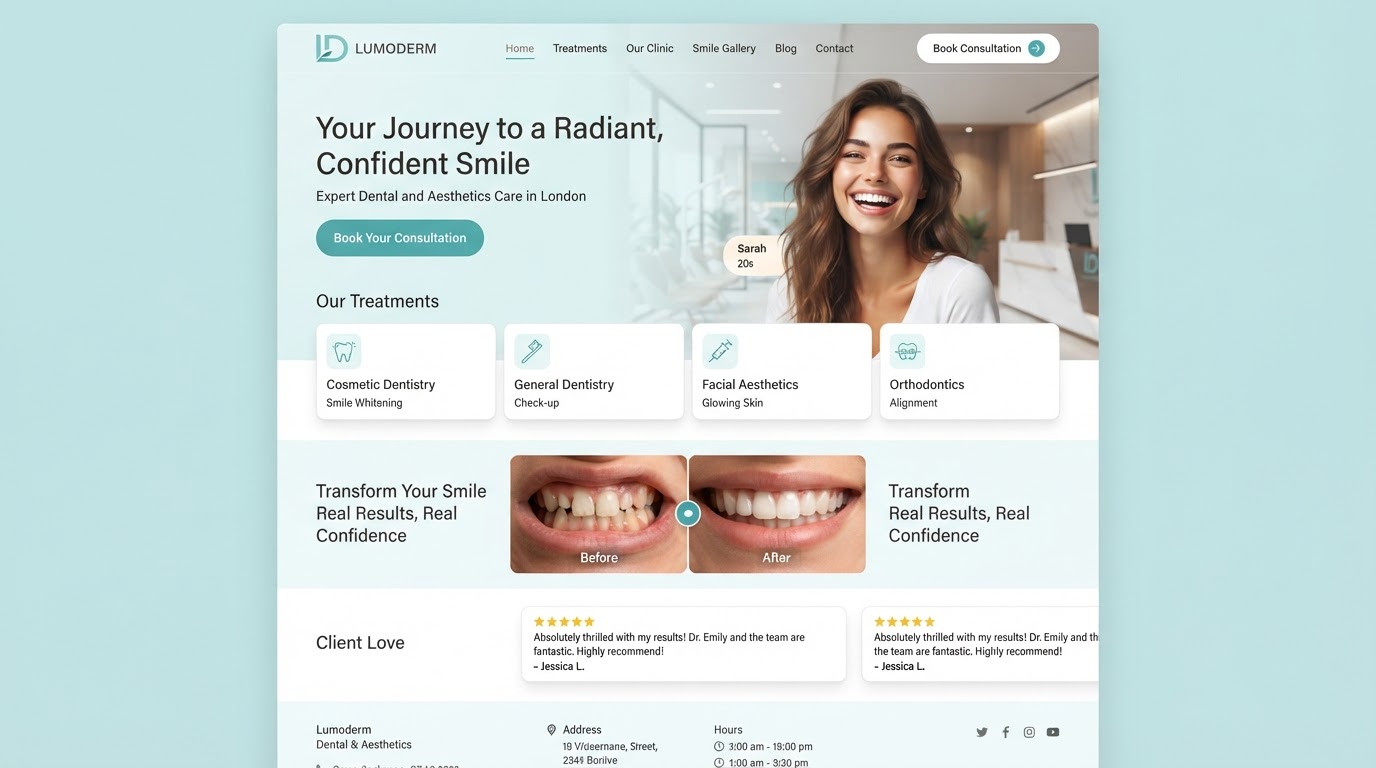
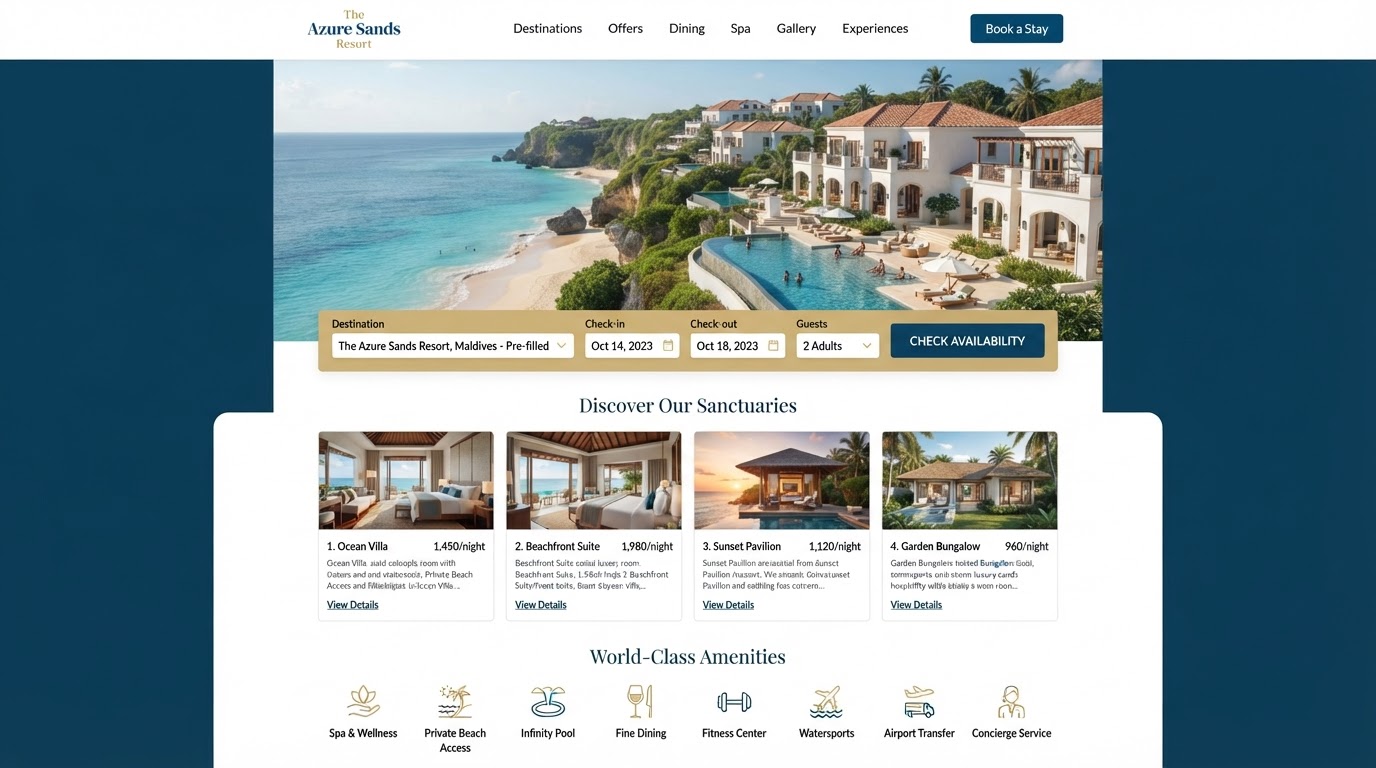
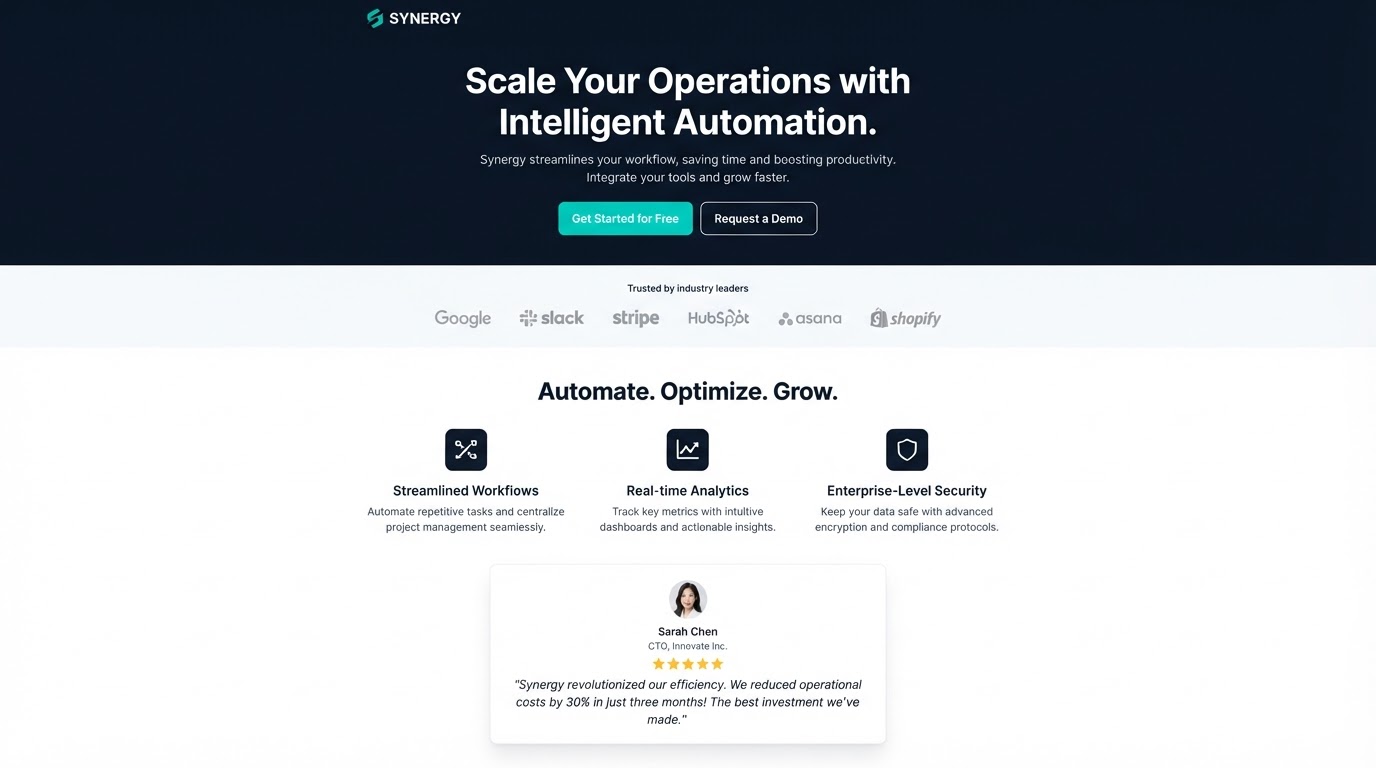
How no-code & low-code work runs with us
The same four steps every time, whether the engagement is one week or six months. Typical delivery is 1–5 weeks.
Step 1 · Day 0
Conversation
Twenty minutes on the actual problem. No deck, no discovery fee. You leave knowing whether we are the right team.
Step 2 · Within 2 days
Written scope
A document listing every deliverable, the price, the timeline and what is explicitly out of scope. Nothing starts until you approve it.
Step 3 · Delivery window
Build in the open
Work lands in reviewable increments on a staging URL you can open any time. You see progress weekly, not at the end.
Step 4 · Launch
Handover that sticks
Full ownership of code and accounts, a recorded walkthrough and written documentation. No lock-in, no hostage access.
Fixed price, agreed first
The number in the scope is the number you pay.
You own everything
Code, accounts and credentials are yours from day one.
No retainer required
Hire us for one job. Stay only if it was worth it.
Honest no
We turn work down when it will not pay for itself.
5average on Google, every review published in fullFixed price against a written scope23 disciplines in-house, briefed as one teamSee the work
Start small if you want to
Three ways to start with no-code & low-code
You do not have to pick the exact service first. Tell us the problem and we will point at the one that fits — or tell you it is not worth doing yet.
Smallest step
Ask one question
Send us the thing you are unsure about — whether no-code & low-code work is even the right work, or whether what you already have is close enough. You get a straight answer, not a proposal.
Free · usually answered same working day
Middle step
Get it looked at properly
We review what you have against how no-code & low-code work normally runs, and tell you what is actually worth doing.
Findings in writing · no obligation to book the work
Full engagement
Book the no-code & low-code work work
One fixed price for the agreed scope, written down before anything starts.
Typically 1–5 weeks · price agreed before work starts
What to send so the first reply is useful
- Your URL, or the platform you are on
- One sentence on what you want no-code & low-code work to change
- Any date that matters, and why it matters
- Whether anyone is already working on it
You do not need a brief, a budget or a spec. If no-code & low-code work turns out not to be what you need, we will say so and point you at the product engineering work that is — even where that is less for us to invoice.
Get a fixed price — No-Code & Low-Code work
Ship in days on Webflow, Bubble and Framer. Tell us where you are now and we will recommend the specific service that fits — with a written scope and a fixed price.
- No discovery fee, no deposit to hold a slot, and no retainer attached to a build.
- We usually reply within a couple of hours in working time.
- We write the scope down and attach one fixed price to it, before any work starts.
Questions
496 no-code & low-code questions, answered
Including the ones with awkward answers. If yours is not here, message us — we answer in writing before anyone books a call.
What is Bubble Development?
Bubble Development is a no-code & low-code service from Livin Services. In one line: build a full web app with logic and users without an engineering team. It's a defined piece of work with an agreed finish line, not an open-ended retainer, so you know what you're buying before you commit to it.
What is included in Bubble Development?
Bubble Development covers platform fit assessment and ceiling analysis for bubble development, build with reusable components and a clean naming convention, data structure designed for growth, not for the demo, integrations to your existing tools and payment provider, editor training so your team can run it unaided, written note of what the platform cannot do and what to do then, database structure designed for query performance, which is where bubble slows first, workflows documented so your own team can change them without breaking logic and the record volume at which this will need rebuilding, stated before we start. All of that gets written down before we start, so you know exactly what's landing and what isn't. Anything outside the list gets quoted separately — we won't quietly absorb it and we won't quietly bill for it either.
What is not included in Bubble Development?
Anything not named in the written scope. In practice that usually means ongoing management after handover, content and copy you have not supplied, third-party licence and subscription costs, and work in other disciplines — those are separate services with their own scopes. We list exclusions explicitly rather than leaving them to be discovered halfway through.
Who is Bubble Development for?
It fits teams where you need something live in weeks and a custom build cannot start that soon. The goal is simple: build a full web app with logic and users without an engineering team. If your situation is different, tell us and we will point you at the no-code & low-code service that actually fits — including one we do not sell.
When should I not buy Bubble Development?
When the underlying problem sits somewhere else. Buying Bubble Development to fix something it does not touch is expensive and disappointing in equal measure. Tell us what outcome you are actually after and we will say plainly whether this is the right service, a different one, or nothing at all right now.
How is this different from hiring a freelancer for Bubble Development?
A good freelancer is often the right answer for a narrow, well-defined task, and cheaper. What an agency adds is continuity when someone is unavailable, a second pair of eyes on decisions, and accountability that survives the individual. Judge it on whether your project needs those things — plenty do not.
Do you offer Bubble Development as an ongoing retainer?
This service is scoped as a defined piece of work with a handover at the end, which is deliberate: it means the engagement has a finish line rather than drifting into an indefinite monthly cost. If you need continuing support afterwards we can arrange it, but it is a separate agreement you enter knowingly.
How many rounds of revisions are included in Bubble Development?
Revisions within the agreed scope are part of the work, not a numbered allowance to be rationed. What is charged separately is a change of direction — new requirements, a reversed decision, or work outside what was scoped. The distinction is written into the scope so it is not decided by argument later.
Is Bubble Development worth it for a small business?
Sometimes, and sometimes not — it depends on whether the thing it fixes is actually what is holding you back. Smaller scopes are quoted the same way as large ones, with no minimum engagement, so size is not the barrier. Being honest about whether this is your highest-leverage move is more useful to you than a yes.
What is Webflow Development?
Webflow Development is a no-code & low-code service from Livin Services. In one line: ship a design-led marketing site your team can edit safely. It's a defined piece of work with an agreed finish line, not an open-ended retainer, so you know what you're buying before you commit to it.
What is included in Webflow Development?
Webflow Development covers platform fit assessment and ceiling analysis for webflow development, build with reusable components and a clean naming convention, data structure designed for growth, not for the demo, integrations to your existing tools and payment provider, editor training so your team can run it unaided, written note of what the platform cannot do and what to do then, cms collections structured so editors add pages without touching layout, class naming kept disciplined, since webflow projects usually rot through style sprawl and redirects and metadata handled properly if this replaces an existing site. All of that gets written down before we start, so you know exactly what's landing and what isn't. Anything outside the list gets quoted separately — we won't quietly absorb it and we won't quietly bill for it either.
What is not included in Webflow Development?
Anything not named in the written scope. In practice that usually means ongoing management after handover, content and copy you have not supplied, third-party licence and subscription costs, and work in other disciplines — those are separate services with their own scopes. We list exclusions explicitly rather than leaving them to be discovered halfway through.
Who is Webflow Development for?
It fits teams where you need something live in weeks and a custom build cannot start that soon. The goal is simple: ship a design-led marketing site your team can edit safely. If your situation is different, tell us and we will point you at the no-code & low-code service that actually fits — including one we do not sell.
When should I not buy Webflow Development?
When the underlying problem sits somewhere else. Buying Webflow Development to fix something it does not touch is expensive and disappointing in equal measure. Tell us what outcome you are actually after and we will say plainly whether this is the right service, a different one, or nothing at all right now.
How is this different from hiring a freelancer for Webflow Development?
A good freelancer is often the right answer for a narrow, well-defined task, and cheaper. What an agency adds is continuity when someone is unavailable, a second pair of eyes on decisions, and accountability that survives the individual. Judge it on whether your project needs those things — plenty do not.
Do you offer Webflow Development as an ongoing retainer?
This service is scoped as a defined piece of work with a handover at the end, which is deliberate: it means the engagement has a finish line rather than drifting into an indefinite monthly cost. If you need continuing support afterwards we can arrange it, but it is a separate agreement you enter knowingly.
How many rounds of revisions are included in Webflow Development?
Revisions within the agreed scope are part of the work, not a numbered allowance to be rationed. What is charged separately is a change of direction — new requirements, a reversed decision, or work outside what was scoped. The distinction is written into the scope so it is not decided by argument later.
Is Webflow Development worth it for a small business?
Sometimes, and sometimes not — it depends on whether the thing it fixes is actually what is holding you back. Smaller scopes are quoted the same way as large ones, with no minimum engagement, so size is not the barrier. Being honest about whether this is your highest-leverage move is more useful to you than a yes.
What is Framer Development?
Framer Development is a no-code & low-code service from Livin Services. In one line: launch a site with real motion design without hand-writing animation code. It's a defined piece of work with an agreed finish line, not an open-ended retainer, so you know what you're buying before you commit to it.
What is included in Framer Development?
Framer Development covers platform fit assessment and ceiling analysis for framer development, build with reusable components and a clean naming convention, data structure designed for growth, not for the demo, integrations to your existing tools and payment provider, editor training so your team can run it unaided, written note of what the platform cannot do and what to do then, motion used where it explains something, not on every section as decoration, reduced-motion honoured, and performance checked on a mid-range phone and an honest note on where framer is thinner than webflow — larger cms work especially. All of that gets written down before we start, so you know exactly what's landing and what isn't. Anything outside the list gets quoted separately — we won't quietly absorb it and we won't quietly bill for it either.
What is not included in Framer Development?
Anything not named in the written scope. In practice that usually means ongoing management after handover, content and copy you have not supplied, third-party licence and subscription costs, and work in other disciplines — those are separate services with their own scopes. We list exclusions explicitly rather than leaving them to be discovered halfway through.
Who is Framer Development for?
It fits teams where you need something live in weeks and a custom build cannot start that soon. The goal is simple: launch a site with real motion design without hand-writing animation code. If your situation is different, tell us and we will point you at the no-code & low-code service that actually fits — including one we do not sell.
When should I not buy Framer Development?
When the underlying problem sits somewhere else. Buying Framer Development to fix something it does not touch is expensive and disappointing in equal measure. Tell us what outcome you are actually after and we will say plainly whether this is the right service, a different one, or nothing at all right now.
How is this different from hiring a freelancer for Framer Development?
A good freelancer is often the right answer for a narrow, well-defined task, and cheaper. What an agency adds is continuity when someone is unavailable, a second pair of eyes on decisions, and accountability that survives the individual. Judge it on whether your project needs those things — plenty do not.
Do you offer Framer Development as an ongoing retainer?
This service is scoped as a defined piece of work with a handover at the end, which is deliberate: it means the engagement has a finish line rather than drifting into an indefinite monthly cost. If you need continuing support afterwards we can arrange it, but it is a separate agreement you enter knowingly.
How many rounds of revisions are included in Framer Development?
Revisions within the agreed scope are part of the work, not a numbered allowance to be rationed. What is charged separately is a change of direction — new requirements, a reversed decision, or work outside what was scoped. The distinction is written into the scope so it is not decided by argument later.
Is Framer Development worth it for a small business?
Sometimes, and sometimes not — it depends on whether the thing it fixes is actually what is holding you back. Smaller scopes are quoted the same way as large ones, with no minimum engagement, so size is not the barrier. Being honest about whether this is your highest-leverage move is more useful to you than a yes.
What is Glide Development?
Glide Development is a no-code & low-code service from Livin Services. In one line: turn a spreadsheet into an app your field team will actually open. It's a defined piece of work with an agreed finish line, not an open-ended retainer, so you know what you're buying before you commit to it.
What is included in Glide Development?
Glide Development covers platform fit assessment and ceiling analysis for glide development, build with reusable components and a clean naming convention, data structure designed for growth, not for the demo, integrations to your existing tools and payment provider, editor training so your team can run it unaided, written note of what the platform cannot do and what to do then, built around the one task your field team does most, tested on their own phones, row limits and per-user pricing explained before you scale into a surprise bill and offline behaviour stated plainly, because field work rarely has reliable signal. All of that gets written down before we start, so you know exactly what's landing and what isn't. Anything outside the list gets quoted separately — we won't quietly absorb it and we won't quietly bill for it either.
What is not included in Glide Development?
Anything not named in the written scope. In practice that usually means ongoing management after handover, content and copy you have not supplied, third-party licence and subscription costs, and work in other disciplines — those are separate services with their own scopes. We list exclusions explicitly rather than leaving them to be discovered halfway through.
Who is Glide Development for?
It fits teams where you need something live in weeks and a custom build cannot start that soon. The goal is simple: turn a spreadsheet into an app your field team will actually open. If your situation is different, tell us and we will point you at the no-code & low-code service that actually fits — including one we do not sell.
When should I not buy Glide Development?
When the underlying problem sits somewhere else. Buying Glide Development to fix something it does not touch is expensive and disappointing in equal measure. Tell us what outcome you are actually after and we will say plainly whether this is the right service, a different one, or nothing at all right now.
How is this different from hiring a freelancer for Glide Development?
A good freelancer is often the right answer for a narrow, well-defined task, and cheaper. What an agency adds is continuity when someone is unavailable, a second pair of eyes on decisions, and accountability that survives the individual. Judge it on whether your project needs those things — plenty do not.
Do you offer Glide Development as an ongoing retainer?
This service is scoped as a defined piece of work with a handover at the end, which is deliberate: it means the engagement has a finish line rather than drifting into an indefinite monthly cost. If you need continuing support afterwards we can arrange it, but it is a separate agreement you enter knowingly.
How many rounds of revisions are included in Glide Development?
Revisions within the agreed scope are part of the work, not a numbered allowance to be rationed. What is charged separately is a change of direction — new requirements, a reversed decision, or work outside what was scoped. The distinction is written into the scope so it is not decided by argument later.
Is Glide Development worth it for a small business?
Sometimes, and sometimes not — it depends on whether the thing it fixes is actually what is holding you back. Smaller scopes are quoted the same way as large ones, with no minimum engagement, so size is not the barrier. Being honest about whether this is your highest-leverage move is more useful to you than a yes.
What is Softr Development?
Softr Development is a no-code & low-code service from Livin Services. In one line: put a clean client portal on top of the data you already keep. It's a defined piece of work with an agreed finish line, not an open-ended retainer, so you know what you're buying before you commit to it.
What is included in Softr Development?
Softr Development covers platform fit assessment and ceiling analysis for softr development, build with reusable components and a clean naming convention, data structure designed for growth, not for the demo, integrations to your existing tools and payment provider, editor training so your team can run it unaided, written note of what the platform cannot do and what to do then, per-user permissions verified so no client can ever see another client record, your existing airtable kept as the source of truth, with no duplicate data layer and a written limit on what this can become before it needs a real application. All of that gets written down before we start, so you know exactly what's landing and what isn't. Anything outside the list gets quoted separately — we won't quietly absorb it and we won't quietly bill for it either.
What is not included in Softr Development?
Anything not named in the written scope. In practice that usually means ongoing management after handover, content and copy you have not supplied, third-party licence and subscription costs, and work in other disciplines — those are separate services with their own scopes. We list exclusions explicitly rather than leaving them to be discovered halfway through.
Who is Softr Development for?
It fits teams where you need something live in weeks and a custom build cannot start that soon. The goal is simple: put a clean client portal on top of the data you already keep. If your situation is different, tell us and we will point you at the no-code & low-code service that actually fits — including one we do not sell.
When should I not buy Softr Development?
When the underlying problem sits somewhere else. Buying Softr Development to fix something it does not touch is expensive and disappointing in equal measure. Tell us what outcome you are actually after and we will say plainly whether this is the right service, a different one, or nothing at all right now.
How is this different from hiring a freelancer for Softr Development?
A good freelancer is often the right answer for a narrow, well-defined task, and cheaper. What an agency adds is continuity when someone is unavailable, a second pair of eyes on decisions, and accountability that survives the individual. Judge it on whether your project needs those things — plenty do not.
Do you offer Softr Development as an ongoing retainer?
This service is scoped as a defined piece of work with a handover at the end, which is deliberate: it means the engagement has a finish line rather than drifting into an indefinite monthly cost. If you need continuing support afterwards we can arrange it, but it is a separate agreement you enter knowingly.
How many rounds of revisions are included in Softr Development?
Revisions within the agreed scope are part of the work, not a numbered allowance to be rationed. What is charged separately is a change of direction — new requirements, a reversed decision, or work outside what was scoped. The distinction is written into the scope so it is not decided by argument later.
Is Softr Development worth it for a small business?
Sometimes, and sometimes not — it depends on whether the thing it fixes is actually what is holding you back. Smaller scopes are quoted the same way as large ones, with no minimum engagement, so size is not the barrier. Being honest about whether this is your highest-leverage move is more useful to you than a yes.
What is Adalo Development?
Adalo Development is a no-code & low-code service from Livin Services. In one line: get a simple mobile app into both stores without native development. It's a defined piece of work with an agreed finish line, not an open-ended retainer, so you know what you're buying before you commit to it.
What is included in Adalo Development?
Adalo Development covers platform fit assessment and ceiling analysis for adalo development, build with reusable components and a clean naming convention, data structure designed for growth, not for the demo, integrations to your existing tools and payment provider, editor training so your team can run it unaided, written note of what the platform cannot do and what to do then, store submission handled under your own developer accounts, performance expectations set honestly — adalo is slower than native and we say so and a recommendation against it where your app needs speed or heavy device features. All of that gets written down before we start, so you know exactly what's landing and what isn't. Anything outside the list gets quoted separately — we won't quietly absorb it and we won't quietly bill for it either.
What is not included in Adalo Development?
Anything not named in the written scope. In practice that usually means ongoing management after handover, content and copy you have not supplied, third-party licence and subscription costs, and work in other disciplines — those are separate services with their own scopes. We list exclusions explicitly rather than leaving them to be discovered halfway through.
Who is Adalo Development for?
It fits teams where you need something live in weeks and a custom build cannot start that soon. The goal is simple: get a simple mobile app into both stores without native development. If your situation is different, tell us and we will point you at the no-code & low-code service that actually fits — including one we do not sell.
When should I not buy Adalo Development?
When the underlying problem sits somewhere else. Buying Adalo Development to fix something it does not touch is expensive and disappointing in equal measure. Tell us what outcome you are actually after and we will say plainly whether this is the right service, a different one, or nothing at all right now.
How is this different from hiring a freelancer for Adalo Development?
A good freelancer is often the right answer for a narrow, well-defined task, and cheaper. What an agency adds is continuity when someone is unavailable, a second pair of eyes on decisions, and accountability that survives the individual. Judge it on whether your project needs those things — plenty do not.
Do you offer Adalo Development as an ongoing retainer?
This service is scoped as a defined piece of work with a handover at the end, which is deliberate: it means the engagement has a finish line rather than drifting into an indefinite monthly cost. If you need continuing support afterwards we can arrange it, but it is a separate agreement you enter knowingly.
How many rounds of revisions are included in Adalo Development?
Revisions within the agreed scope are part of the work, not a numbered allowance to be rationed. What is charged separately is a change of direction — new requirements, a reversed decision, or work outside what was scoped. The distinction is written into the scope so it is not decided by argument later.
Is Adalo Development worth it for a small business?
Sometimes, and sometimes not — it depends on whether the thing it fixes is actually what is holding you back. Smaller scopes are quoted the same way as large ones, with no minimum engagement, so size is not the barrier. Being honest about whether this is your highest-leverage move is more useful to you than a yes.
What is WeWeb Development?
WeWeb Development is a no-code & low-code service from Livin Services. In one line: build a no-code front end that speaks to your real production database. It's a defined piece of work with an agreed finish line, not an open-ended retainer, so you know what you're buying before you commit to it.
What is included in WeWeb Development?
WeWeb Development covers platform fit assessment and ceiling analysis for weweb development, build with reusable components and a clean naming convention, data structure designed for growth, not for the demo, integrations to your existing tools and payment provider, editor training so your team can run it unaided, written note of what the platform cannot do and what to do then, connected to your own database, so your data never sits inside the builder, row-level security enforced at the backend rather than trusted to the front end and exportable front-end code, which is the main reason to choose weweb at all. All of that gets written down before we start, so you know exactly what's landing and what isn't. Anything outside the list gets quoted separately — we won't quietly absorb it and we won't quietly bill for it either.
What is not included in WeWeb Development?
Anything not named in the written scope. In practice that usually means ongoing management after handover, content and copy you have not supplied, third-party licence and subscription costs, and work in other disciplines — those are separate services with their own scopes. We list exclusions explicitly rather than leaving them to be discovered halfway through.
Who is WeWeb Development for?
It fits teams where you need something live in weeks and a custom build cannot start that soon. The goal is simple: build a no-code front end that speaks to your real production database. If your situation is different, tell us and we will point you at the no-code & low-code service that actually fits — including one we do not sell.
When should I not buy WeWeb Development?
When the underlying problem sits somewhere else. Buying WeWeb Development to fix something it does not touch is expensive and disappointing in equal measure. Tell us what outcome you are actually after and we will say plainly whether this is the right service, a different one, or nothing at all right now.
How is this different from hiring a freelancer for WeWeb Development?
A good freelancer is often the right answer for a narrow, well-defined task, and cheaper. What an agency adds is continuity when someone is unavailable, a second pair of eyes on decisions, and accountability that survives the individual. Judge it on whether your project needs those things — plenty do not.
Do you offer WeWeb Development as an ongoing retainer?
This service is scoped as a defined piece of work with a handover at the end, which is deliberate: it means the engagement has a finish line rather than drifting into an indefinite monthly cost. If you need continuing support afterwards we can arrange it, but it is a separate agreement you enter knowingly.
How many rounds of revisions are included in WeWeb Development?
Revisions within the agreed scope are part of the work, not a numbered allowance to be rationed. What is charged separately is a change of direction — new requirements, a reversed decision, or work outside what was scoped. The distinction is written into the scope so it is not decided by argument later.
Is WeWeb Development worth it for a small business?
Sometimes, and sometimes not — it depends on whether the thing it fixes is actually what is holding you back. Smaller scopes are quoted the same way as large ones, with no minimum engagement, so size is not the barrier. Being honest about whether this is your highest-leverage move is more useful to you than a yes.
What is Xano Development?
Xano Development is a no-code & low-code service from Livin Services. In one line: give a no-code product a backend that will not buckle at scale. It's a defined piece of work with an agreed finish line, not an open-ended retainer, so you know what you're buying before you commit to it.
What is included in Xano Development?
Xano Development covers platform fit assessment and ceiling analysis for xano development, build with reusable components and a clean naming convention, data structure designed for growth, not for the demo, integrations to your existing tools and payment provider, editor training so your team can run it unaided, written note of what the platform cannot do and what to do then, indexes and query design reviewed against realistic data volumes, api documentation your front-end builder or developers can work from directly and a stated path to plain postgresql if you later leave the platform. All of that gets written down before we start, so you know exactly what's landing and what isn't. Anything outside the list gets quoted separately — we won't quietly absorb it and we won't quietly bill for it either.
What is not included in Xano Development?
Anything not named in the written scope. In practice that usually means ongoing management after handover, content and copy you have not supplied, third-party licence and subscription costs, and work in other disciplines — those are separate services with their own scopes. We list exclusions explicitly rather than leaving them to be discovered halfway through.
Who is Xano Development for?
It fits teams where you need something live in weeks and a custom build cannot start that soon. The goal is simple: give a no-code product a backend that will not buckle at scale. If your situation is different, tell us and we will point you at the no-code & low-code service that actually fits — including one we do not sell.
When should I not buy Xano Development?
When the underlying problem sits somewhere else. Buying Xano Development to fix something it does not touch is expensive and disappointing in equal measure. Tell us what outcome you are actually after and we will say plainly whether this is the right service, a different one, or nothing at all right now.
How is this different from hiring a freelancer for Xano Development?
A good freelancer is often the right answer for a narrow, well-defined task, and cheaper. What an agency adds is continuity when someone is unavailable, a second pair of eyes on decisions, and accountability that survives the individual. Judge it on whether your project needs those things — plenty do not.
Do you offer Xano Development as an ongoing retainer?
This service is scoped as a defined piece of work with a handover at the end, which is deliberate: it means the engagement has a finish line rather than drifting into an indefinite monthly cost. If you need continuing support afterwards we can arrange it, but it is a separate agreement you enter knowingly.
How many rounds of revisions are included in Xano Development?
Revisions within the agreed scope are part of the work, not a numbered allowance to be rationed. What is charged separately is a change of direction — new requirements, a reversed decision, or work outside what was scoped. The distinction is written into the scope so it is not decided by argument later.
Is Xano Development worth it for a small business?
Sometimes, and sometimes not — it depends on whether the thing it fixes is actually what is holding you back. Smaller scopes are quoted the same way as large ones, with no minimum engagement, so size is not the barrier. Being honest about whether this is your highest-leverage move is more useful to you than a yes.
What is FlutterFlow Development?
FlutterFlow Development is a no-code & low-code service from Livin Services. In one line: design and ship a real mobile app visually, then export the code. It's a defined piece of work with an agreed finish line, not an open-ended retainer, so you know what you're buying before you commit to it.
What is included in FlutterFlow Development?
FlutterFlow Development covers platform fit assessment and ceiling analysis for flutterflow development, build with reusable components and a clean naming convention, data structure designed for growth, not for the demo, integrations to your existing tools and payment provider, editor training so your team can run it unaided, written note of what the platform cannot do and what to do then, code export enabled and verified to build outside the platform, custom dart functions where the visual builder genuinely cannot reach and both store builds produced under your accounts, with signing keys yours. All of that gets written down before we start, so you know exactly what's landing and what isn't. Anything outside the list gets quoted separately — we won't quietly absorb it and we won't quietly bill for it either.
What is not included in FlutterFlow Development?
Anything not named in the written scope. In practice that usually means ongoing management after handover, content and copy you have not supplied, third-party licence and subscription costs, and work in other disciplines — those are separate services with their own scopes. We list exclusions explicitly rather than leaving them to be discovered halfway through.
Who is FlutterFlow Development for?
It fits teams where you need something live in weeks and a custom build cannot start that soon. The goal is simple: design and ship a real mobile app visually, then export the code. If your situation is different, tell us and we will point you at the no-code & low-code service that actually fits — including one we do not sell.
When should I not buy FlutterFlow Development?
When the underlying problem sits somewhere else. Buying FlutterFlow Development to fix something it does not touch is expensive and disappointing in equal measure. Tell us what outcome you are actually after and we will say plainly whether this is the right service, a different one, or nothing at all right now.
How is this different from hiring a freelancer for FlutterFlow Development?
A good freelancer is often the right answer for a narrow, well-defined task, and cheaper. What an agency adds is continuity when someone is unavailable, a second pair of eyes on decisions, and accountability that survives the individual. Judge it on whether your project needs those things — plenty do not.
Do you offer FlutterFlow Development as an ongoing retainer?
This service is scoped as a defined piece of work with a handover at the end, which is deliberate: it means the engagement has a finish line rather than drifting into an indefinite monthly cost. If you need continuing support afterwards we can arrange it, but it is a separate agreement you enter knowingly.
How many rounds of revisions are included in FlutterFlow Development?
Revisions within the agreed scope are part of the work, not a numbered allowance to be rationed. What is charged separately is a change of direction — new requirements, a reversed decision, or work outside what was scoped. The distinction is written into the scope so it is not decided by argument later.
Is FlutterFlow Development worth it for a small business?
Sometimes, and sometimes not — it depends on whether the thing it fixes is actually what is holding you back. Smaller scopes are quoted the same way as large ones, with no minimum engagement, so size is not the barrier. Being honest about whether this is your highest-leverage move is more useful to you than a yes.
What is Lovable Development?
Lovable Development is a no-code & low-code service from Livin Services. In one line: go from prompt to working React app, then harden it for production. It's a defined piece of work with an agreed finish line, not an open-ended retainer, so you know what you're buying before you commit to it.
What is included in Lovable Development?
Lovable Development covers platform fit assessment and ceiling analysis for lovable development, build with reusable components and a clean naming convention, data structure designed for growth, not for the demo, integrations to your existing tools and payment provider, editor training so your team can run it unaided, written note of what the platform cannot do and what to do then, generated code reviewed line by line before it goes near real users, authentication, validation and database rules written properly rather than accepted as generated and the repository in your own account, so the app outlives the tool that started it. All of that gets written down before we start, so you know exactly what's landing and what isn't. Anything outside the list gets quoted separately — we won't quietly absorb it and we won't quietly bill for it either.
What is not included in Lovable Development?
Anything not named in the written scope. In practice that usually means ongoing management after handover, content and copy you have not supplied, third-party licence and subscription costs, and work in other disciplines — those are separate services with their own scopes. We list exclusions explicitly rather than leaving them to be discovered halfway through.
Who is Lovable Development for?
It fits teams where you need something live in weeks and a custom build cannot start that soon. The goal is simple: go from prompt to working React app, then harden it for production. If your situation is different, tell us and we will point you at the no-code & low-code service that actually fits — including one we do not sell.
When should I not buy Lovable Development?
When the underlying problem sits somewhere else. Buying Lovable Development to fix something it does not touch is expensive and disappointing in equal measure. Tell us what outcome you are actually after and we will say plainly whether this is the right service, a different one, or nothing at all right now.
How is this different from hiring a freelancer for Lovable Development?
A good freelancer is often the right answer for a narrow, well-defined task, and cheaper. What an agency adds is continuity when someone is unavailable, a second pair of eyes on decisions, and accountability that survives the individual. Judge it on whether your project needs those things — plenty do not.
Do you offer Lovable Development as an ongoing retainer?
This service is scoped as a defined piece of work with a handover at the end, which is deliberate: it means the engagement has a finish line rather than drifting into an indefinite monthly cost. If you need continuing support afterwards we can arrange it, but it is a separate agreement you enter knowingly.
How many rounds of revisions are included in Lovable Development?
Revisions within the agreed scope are part of the work, not a numbered allowance to be rationed. What is charged separately is a change of direction — new requirements, a reversed decision, or work outside what was scoped. The distinction is written into the scope so it is not decided by argument later.
Is Lovable Development worth it for a small business?
Sometimes, and sometimes not — it depends on whether the thing it fixes is actually what is holding you back. Smaller scopes are quoted the same way as large ones, with no minimum engagement, so size is not the barrier. Being honest about whether this is your highest-leverage move is more useful to you than a yes.
Is no-code cheaper than custom development?
Much cheaper to build, sometimes more expensive to own. Platform fees scale with users and records, and heavy customisation eventually costs more in workarounds than code would have. Under about eighteen months, no-code usually wins on total cost.
How long does Bubble Development take?
A typical Bubble Development engagement runs 3–8 weeks from kickoff to handover. That covers discovery and scoping, build or implementation, review with your team, and a final QA pass. Larger or multi-market builds extend this and we say so during scoping rather than after.
Can Bubble Development be delivered faster than 3–8 weeks?
Sometimes, if the scope is reduced rather than the care taken. We will tell you which parts can be deferred to a second phase to hit a date. What we will not do is compress testing and review to make a deadline look achievable — that moves the cost from the timeline to the month after launch.
How is Bubble Development quoted?
One fixed price against a written scope. Not an hourly rate. What moves that number is how many templates, integrations and awkward edge cases are involved — not how long we happen to take, which is our problem to manage, not yours. There's no price list because a real quote depends on your situation. Tell us what you need and you'll get a written scope and a fixed figure back, with anything that could change it flagged upfront rather than appearing on an invoice later.
What makes Bubble Development cost more or less?
Four things, roughly in order of how much they matter. How much is genuinely bespoke versus configuration. How many integrations and outside systems are in play. What state your starting point is in — inherited problems have to be sorted before anything new can sit on top of them. And how many people are in the approval chain. We'll name which of those apply to you in the quote, so you can see where the number came from.
Do I pay anything to get a quote for Bubble Development?
No. Scoping and quoting are free, and so is the conversation to get there. If it turns out Bubble Development isn't what you need, you'll hear that for free too — rather than being sold a paid discovery phase that arrives at the same answer three weeks later.
What happens if Bubble Development turns out to be bigger than quoted?
If we underestimated something inside the agreed scope, we absorb it. That's what a fixed price means. If the scope itself changes because a new requirement turns up, we quote that separately and you decide whether to go ahead before anyone touches it. You won't get an invoice for something you didn't approve.
What are the payment terms for Bubble Development?
Agreed in writing before work starts, as part of the scope. There is no deposit taken to hold a slot in the calendar and no charge for the scoping conversation. If the engagement is stopped partway by either side, you pay for the work completed to that point and you keep it.
How long until we see the effect of Bubble Development?
Depends entirely on what it is. Build work shows immediately because the thing either exists or it does not. Anything depending on user behaviour, search engines or list warm-up takes longer, and how much longer is a function of your traffic volume — low traffic means a longer wait before any change is distinguishable from noise. We say which category your work falls into up front.
We had a cheaper quote for Bubble Development. Why?
Usually one of three reasons: a narrower scope than ours, a junior person delivering it, or exclusions that surface as change requests later. Ask both suppliers for the written scope and compare those rather than the totals. If theirs genuinely covers the same ground for less, take it — and we will tell you so.
How long does Webflow Development take?
A typical Webflow Development engagement runs 2–5 weeks from kickoff to handover. That covers discovery and scoping, build or implementation, review with your team, and a final QA pass. Larger or multi-market builds extend this and we say so during scoping rather than after.
Can Webflow Development be delivered faster than 2–5 weeks?
Sometimes, if the scope is reduced rather than the care taken. We will tell you which parts can be deferred to a second phase to hit a date. What we will not do is compress testing and review to make a deadline look achievable — that moves the cost from the timeline to the month after launch.
How is Webflow Development quoted?
One fixed price against a written scope. Not an hourly rate. What moves that number is how many templates, integrations and awkward edge cases are involved — not how long we happen to take, which is our problem to manage, not yours. There's no price list because a real quote depends on your situation. Tell us what you need and you'll get a written scope and a fixed figure back, with anything that could change it flagged upfront rather than appearing on an invoice later.
What makes Webflow Development cost more or less?
Four things, roughly in order of how much they matter. How much is genuinely bespoke versus configuration. How many integrations and outside systems are in play. What state your starting point is in — inherited problems have to be sorted before anything new can sit on top of them. And how many people are in the approval chain. We'll name which of those apply to you in the quote, so you can see where the number came from.
Do I pay anything to get a quote for Webflow Development?
No. Scoping and quoting are free, and so is the conversation to get there. If it turns out Webflow Development isn't what you need, you'll hear that for free too — rather than being sold a paid discovery phase that arrives at the same answer three weeks later.
What happens if Webflow Development turns out to be bigger than quoted?
If we underestimated something inside the agreed scope, we absorb it. That's what a fixed price means. If the scope itself changes because a new requirement turns up, we quote that separately and you decide whether to go ahead before anyone touches it. You won't get an invoice for something you didn't approve.
What are the payment terms for Webflow Development?
Agreed in writing before work starts, as part of the scope. There is no deposit taken to hold a slot in the calendar and no charge for the scoping conversation. If the engagement is stopped partway by either side, you pay for the work completed to that point and you keep it.
How long until we see the effect of Webflow Development?
Depends entirely on what it is. Build work shows immediately because the thing either exists or it does not. Anything depending on user behaviour, search engines or list warm-up takes longer, and how much longer is a function of your traffic volume — low traffic means a longer wait before any change is distinguishable from noise. We say which category your work falls into up front.
We had a cheaper quote for Webflow Development. Why?
Usually one of three reasons: a narrower scope than ours, a junior person delivering it, or exclusions that surface as change requests later. Ask both suppliers for the written scope and compare those rather than the totals. If theirs genuinely covers the same ground for less, take it — and we will tell you so.
How long does Framer Development take?
A typical Framer Development engagement runs 1–4 weeks from kickoff to handover. That covers discovery and scoping, build or implementation, review with your team, and a final QA pass. Larger or multi-market builds extend this and we say so during scoping rather than after.
Can Framer Development be delivered faster than 1–4 weeks?
Sometimes, if the scope is reduced rather than the care taken. We will tell you which parts can be deferred to a second phase to hit a date. What we will not do is compress testing and review to make a deadline look achievable — that moves the cost from the timeline to the month after launch.
How is Framer Development quoted?
One fixed price against a written scope. Not an hourly rate. What moves that number is how many templates, integrations and awkward edge cases are involved — not how long we happen to take, which is our problem to manage, not yours. There's no price list because a real quote depends on your situation. Tell us what you need and you'll get a written scope and a fixed figure back, with anything that could change it flagged upfront rather than appearing on an invoice later.
What makes Framer Development cost more or less?
Four things, roughly in order of how much they matter. How much is genuinely bespoke versus configuration. How many integrations and outside systems are in play. What state your starting point is in — inherited problems have to be sorted before anything new can sit on top of them. And how many people are in the approval chain. We'll name which of those apply to you in the quote, so you can see where the number came from.
Do I pay anything to get a quote for Framer Development?
No. Scoping and quoting are free, and so is the conversation to get there. If it turns out Framer Development isn't what you need, you'll hear that for free too — rather than being sold a paid discovery phase that arrives at the same answer three weeks later.
What happens if Framer Development turns out to be bigger than quoted?
If we underestimated something inside the agreed scope, we absorb it. That's what a fixed price means. If the scope itself changes because a new requirement turns up, we quote that separately and you decide whether to go ahead before anyone touches it. You won't get an invoice for something you didn't approve.
What are the payment terms for Framer Development?
Agreed in writing before work starts, as part of the scope. There is no deposit taken to hold a slot in the calendar and no charge for the scoping conversation. If the engagement is stopped partway by either side, you pay for the work completed to that point and you keep it.
How long until we see the effect of Framer Development?
Depends entirely on what it is. Build work shows immediately because the thing either exists or it does not. Anything depending on user behaviour, search engines or list warm-up takes longer, and how much longer is a function of your traffic volume — low traffic means a longer wait before any change is distinguishable from noise. We say which category your work falls into up front.
We had a cheaper quote for Framer Development. Why?
Usually one of three reasons: a narrower scope than ours, a junior person delivering it, or exclusions that surface as change requests later. Ask both suppliers for the written scope and compare those rather than the totals. If theirs genuinely covers the same ground for less, take it — and we will tell you so.
How long does Glide Development take?
A typical Glide Development engagement runs 1–3 weeks from kickoff to handover. That covers discovery and scoping, build or implementation, review with your team, and a final QA pass. Larger or multi-market builds extend this and we say so during scoping rather than after.
Can Glide Development be delivered faster than 1–3 weeks?
Sometimes, if the scope is reduced rather than the care taken. We will tell you which parts can be deferred to a second phase to hit a date. What we will not do is compress testing and review to make a deadline look achievable — that moves the cost from the timeline to the month after launch.
How is Glide Development quoted?
One fixed price against a written scope. Not an hourly rate. What moves that number is how many templates, integrations and awkward edge cases are involved — not how long we happen to take, which is our problem to manage, not yours. There's no price list because a real quote depends on your situation. Tell us what you need and you'll get a written scope and a fixed figure back, with anything that could change it flagged upfront rather than appearing on an invoice later.
What makes Glide Development cost more or less?
Four things, roughly in order of how much they matter. How much is genuinely bespoke versus configuration. How many integrations and outside systems are in play. What state your starting point is in — inherited problems have to be sorted before anything new can sit on top of them. And how many people are in the approval chain. We'll name which of those apply to you in the quote, so you can see where the number came from.
Do I pay anything to get a quote for Glide Development?
No. Scoping and quoting are free, and so is the conversation to get there. If it turns out Glide Development isn't what you need, you'll hear that for free too — rather than being sold a paid discovery phase that arrives at the same answer three weeks later.
What happens if Glide Development turns out to be bigger than quoted?
If we underestimated something inside the agreed scope, we absorb it. That's what a fixed price means. If the scope itself changes because a new requirement turns up, we quote that separately and you decide whether to go ahead before anyone touches it. You won't get an invoice for something you didn't approve.
What are the payment terms for Glide Development?
Agreed in writing before work starts, as part of the scope. There is no deposit taken to hold a slot in the calendar and no charge for the scoping conversation. If the engagement is stopped partway by either side, you pay for the work completed to that point and you keep it.
How long until we see the effect of Glide Development?
Depends entirely on what it is. Build work shows immediately because the thing either exists or it does not. Anything depending on user behaviour, search engines or list warm-up takes longer, and how much longer is a function of your traffic volume — low traffic means a longer wait before any change is distinguishable from noise. We say which category your work falls into up front.
We had a cheaper quote for Glide Development. Why?
Usually one of three reasons: a narrower scope than ours, a junior person delivering it, or exclusions that surface as change requests later. Ask both suppliers for the written scope and compare those rather than the totals. If theirs genuinely covers the same ground for less, take it — and we will tell you so.
How long does Softr Development take?
A typical Softr Development engagement runs 1–3 weeks from kickoff to handover. That covers discovery and scoping, build or implementation, review with your team, and a final QA pass. Larger or multi-market builds extend this and we say so during scoping rather than after.
Can Softr Development be delivered faster than 1–3 weeks?
Sometimes, if the scope is reduced rather than the care taken. We will tell you which parts can be deferred to a second phase to hit a date. What we will not do is compress testing and review to make a deadline look achievable — that moves the cost from the timeline to the month after launch.
How is Softr Development quoted?
One fixed price against a written scope. Not an hourly rate. What moves that number is how many templates, integrations and awkward edge cases are involved — not how long we happen to take, which is our problem to manage, not yours. There's no price list because a real quote depends on your situation. Tell us what you need and you'll get a written scope and a fixed figure back, with anything that could change it flagged upfront rather than appearing on an invoice later.
What makes Softr Development cost more or less?
Four things, roughly in order of how much they matter. How much is genuinely bespoke versus configuration. How many integrations and outside systems are in play. What state your starting point is in — inherited problems have to be sorted before anything new can sit on top of them. And how many people are in the approval chain. We'll name which of those apply to you in the quote, so you can see where the number came from.
Do I pay anything to get a quote for Softr Development?
No. Scoping and quoting are free, and so is the conversation to get there. If it turns out Softr Development isn't what you need, you'll hear that for free too — rather than being sold a paid discovery phase that arrives at the same answer three weeks later.
What happens if Softr Development turns out to be bigger than quoted?
If we underestimated something inside the agreed scope, we absorb it. That's what a fixed price means. If the scope itself changes because a new requirement turns up, we quote that separately and you decide whether to go ahead before anyone touches it. You won't get an invoice for something you didn't approve.
What are the payment terms for Softr Development?
Agreed in writing before work starts, as part of the scope. There is no deposit taken to hold a slot in the calendar and no charge for the scoping conversation. If the engagement is stopped partway by either side, you pay for the work completed to that point and you keep it.
How long until we see the effect of Softr Development?
Depends entirely on what it is. Build work shows immediately because the thing either exists or it does not. Anything depending on user behaviour, search engines or list warm-up takes longer, and how much longer is a function of your traffic volume — low traffic means a longer wait before any change is distinguishable from noise. We say which category your work falls into up front.
We had a cheaper quote for Softr Development. Why?
Usually one of three reasons: a narrower scope than ours, a junior person delivering it, or exclusions that surface as change requests later. Ask both suppliers for the written scope and compare those rather than the totals. If theirs genuinely covers the same ground for less, take it — and we will tell you so.
How long does Adalo Development take?
A typical Adalo Development engagement runs 2–5 weeks from kickoff to handover. That covers discovery and scoping, build or implementation, review with your team, and a final QA pass. Larger or multi-market builds extend this and we say so during scoping rather than after.
Can Adalo Development be delivered faster than 2–5 weeks?
Sometimes, if the scope is reduced rather than the care taken. We will tell you which parts can be deferred to a second phase to hit a date. What we will not do is compress testing and review to make a deadline look achievable — that moves the cost from the timeline to the month after launch.
How is Adalo Development quoted?
One fixed price against a written scope. Not an hourly rate. What moves that number is how many templates, integrations and awkward edge cases are involved — not how long we happen to take, which is our problem to manage, not yours. There's no price list because a real quote depends on your situation. Tell us what you need and you'll get a written scope and a fixed figure back, with anything that could change it flagged upfront rather than appearing on an invoice later.
What makes Adalo Development cost more or less?
Four things, roughly in order of how much they matter. How much is genuinely bespoke versus configuration. How many integrations and outside systems are in play. What state your starting point is in — inherited problems have to be sorted before anything new can sit on top of them. And how many people are in the approval chain. We'll name which of those apply to you in the quote, so you can see where the number came from.
Do I pay anything to get a quote for Adalo Development?
No. Scoping and quoting are free, and so is the conversation to get there. If it turns out Adalo Development isn't what you need, you'll hear that for free too — rather than being sold a paid discovery phase that arrives at the same answer three weeks later.
What happens if Adalo Development turns out to be bigger than quoted?
If we underestimated something inside the agreed scope, we absorb it. That's what a fixed price means. If the scope itself changes because a new requirement turns up, we quote that separately and you decide whether to go ahead before anyone touches it. You won't get an invoice for something you didn't approve.
What are the payment terms for Adalo Development?
Agreed in writing before work starts, as part of the scope. There is no deposit taken to hold a slot in the calendar and no charge for the scoping conversation. If the engagement is stopped partway by either side, you pay for the work completed to that point and you keep it.
How long until we see the effect of Adalo Development?
Depends entirely on what it is. Build work shows immediately because the thing either exists or it does not. Anything depending on user behaviour, search engines or list warm-up takes longer, and how much longer is a function of your traffic volume — low traffic means a longer wait before any change is distinguishable from noise. We say which category your work falls into up front.
We had a cheaper quote for Adalo Development. Why?
Usually one of three reasons: a narrower scope than ours, a junior person delivering it, or exclusions that surface as change requests later. Ask both suppliers for the written scope and compare those rather than the totals. If theirs genuinely covers the same ground for less, take it — and we will tell you so.
How long does WeWeb Development take?
A typical WeWeb Development engagement runs 2–6 weeks from kickoff to handover. That covers discovery and scoping, build or implementation, review with your team, and a final QA pass. Larger or multi-market builds extend this and we say so during scoping rather than after.
Can WeWeb Development be delivered faster than 2–6 weeks?
Sometimes, if the scope is reduced rather than the care taken. We will tell you which parts can be deferred to a second phase to hit a date. What we will not do is compress testing and review to make a deadline look achievable — that moves the cost from the timeline to the month after launch.
How is WeWeb Development quoted?
One fixed price against a written scope. Not an hourly rate. What moves that number is how many templates, integrations and awkward edge cases are involved — not how long we happen to take, which is our problem to manage, not yours. There's no price list because a real quote depends on your situation. Tell us what you need and you'll get a written scope and a fixed figure back, with anything that could change it flagged upfront rather than appearing on an invoice later.
What makes WeWeb Development cost more or less?
Four things, roughly in order of how much they matter. How much is genuinely bespoke versus configuration. How many integrations and outside systems are in play. What state your starting point is in — inherited problems have to be sorted before anything new can sit on top of them. And how many people are in the approval chain. We'll name which of those apply to you in the quote, so you can see where the number came from.
Do I pay anything to get a quote for WeWeb Development?
No. Scoping and quoting are free, and so is the conversation to get there. If it turns out WeWeb Development isn't what you need, you'll hear that for free too — rather than being sold a paid discovery phase that arrives at the same answer three weeks later.
What happens if WeWeb Development turns out to be bigger than quoted?
If we underestimated something inside the agreed scope, we absorb it. That's what a fixed price means. If the scope itself changes because a new requirement turns up, we quote that separately and you decide whether to go ahead before anyone touches it. You won't get an invoice for something you didn't approve.
What are the payment terms for WeWeb Development?
Agreed in writing before work starts, as part of the scope. There is no deposit taken to hold a slot in the calendar and no charge for the scoping conversation. If the engagement is stopped partway by either side, you pay for the work completed to that point and you keep it.
How long until we see the effect of WeWeb Development?
Depends entirely on what it is. Build work shows immediately because the thing either exists or it does not. Anything depending on user behaviour, search engines or list warm-up takes longer, and how much longer is a function of your traffic volume — low traffic means a longer wait before any change is distinguishable from noise. We say which category your work falls into up front.
We had a cheaper quote for WeWeb Development. Why?
Usually one of three reasons: a narrower scope than ours, a junior person delivering it, or exclusions that surface as change requests later. Ask both suppliers for the written scope and compare those rather than the totals. If theirs genuinely covers the same ground for less, take it — and we will tell you so.
How long does Xano Development take?
A typical Xano Development engagement runs 2–6 weeks from kickoff to handover. That covers discovery and scoping, build or implementation, review with your team, and a final QA pass. Larger or multi-market builds extend this and we say so during scoping rather than after.
Can Xano Development be delivered faster than 2–6 weeks?
Sometimes, if the scope is reduced rather than the care taken. We will tell you which parts can be deferred to a second phase to hit a date. What we will not do is compress testing and review to make a deadline look achievable — that moves the cost from the timeline to the month after launch.
How is Xano Development quoted?
One fixed price against a written scope. Not an hourly rate. What moves that number is how many templates, integrations and awkward edge cases are involved — not how long we happen to take, which is our problem to manage, not yours. There's no price list because a real quote depends on your situation. Tell us what you need and you'll get a written scope and a fixed figure back, with anything that could change it flagged upfront rather than appearing on an invoice later.
What makes Xano Development cost more or less?
Four things, roughly in order of how much they matter. How much is genuinely bespoke versus configuration. How many integrations and outside systems are in play. What state your starting point is in — inherited problems have to be sorted before anything new can sit on top of them. And how many people are in the approval chain. We'll name which of those apply to you in the quote, so you can see where the number came from.
Do I pay anything to get a quote for Xano Development?
No. Scoping and quoting are free, and so is the conversation to get there. If it turns out Xano Development isn't what you need, you'll hear that for free too — rather than being sold a paid discovery phase that arrives at the same answer three weeks later.
What happens if Xano Development turns out to be bigger than quoted?
If we underestimated something inside the agreed scope, we absorb it. That's what a fixed price means. If the scope itself changes because a new requirement turns up, we quote that separately and you decide whether to go ahead before anyone touches it. You won't get an invoice for something you didn't approve.
What are the payment terms for Xano Development?
Agreed in writing before work starts, as part of the scope. There is no deposit taken to hold a slot in the calendar and no charge for the scoping conversation. If the engagement is stopped partway by either side, you pay for the work completed to that point and you keep it.
How long until we see the effect of Xano Development?
Depends entirely on what it is. Build work shows immediately because the thing either exists or it does not. Anything depending on user behaviour, search engines or list warm-up takes longer, and how much longer is a function of your traffic volume — low traffic means a longer wait before any change is distinguishable from noise. We say which category your work falls into up front.
We had a cheaper quote for Xano Development. Why?
Usually one of three reasons: a narrower scope than ours, a junior person delivering it, or exclusions that surface as change requests later. Ask both suppliers for the written scope and compare those rather than the totals. If theirs genuinely covers the same ground for less, take it — and we will tell you so.
How long does FlutterFlow Development take?
A typical FlutterFlow Development engagement runs 3–7 weeks from kickoff to handover. That covers discovery and scoping, build or implementation, review with your team, and a final QA pass. Larger or multi-market builds extend this and we say so during scoping rather than after.
Can FlutterFlow Development be delivered faster than 3–7 weeks?
Sometimes, if the scope is reduced rather than the care taken. We will tell you which parts can be deferred to a second phase to hit a date. What we will not do is compress testing and review to make a deadline look achievable — that moves the cost from the timeline to the month after launch.
How is FlutterFlow Development quoted?
One fixed price against a written scope. Not an hourly rate. What moves that number is how many templates, integrations and awkward edge cases are involved — not how long we happen to take, which is our problem to manage, not yours. There's no price list because a real quote depends on your situation. Tell us what you need and you'll get a written scope and a fixed figure back, with anything that could change it flagged upfront rather than appearing on an invoice later.
What makes FlutterFlow Development cost more or less?
Four things, roughly in order of how much they matter. How much is genuinely bespoke versus configuration. How many integrations and outside systems are in play. What state your starting point is in — inherited problems have to be sorted before anything new can sit on top of them. And how many people are in the approval chain. We'll name which of those apply to you in the quote, so you can see where the number came from.
Do I pay anything to get a quote for FlutterFlow Development?
No. Scoping and quoting are free, and so is the conversation to get there. If it turns out FlutterFlow Development isn't what you need, you'll hear that for free too — rather than being sold a paid discovery phase that arrives at the same answer three weeks later.
What happens if FlutterFlow Development turns out to be bigger than quoted?
If we underestimated something inside the agreed scope, we absorb it. That's what a fixed price means. If the scope itself changes because a new requirement turns up, we quote that separately and you decide whether to go ahead before anyone touches it. You won't get an invoice for something you didn't approve.
What are the payment terms for FlutterFlow Development?
Agreed in writing before work starts, as part of the scope. There is no deposit taken to hold a slot in the calendar and no charge for the scoping conversation. If the engagement is stopped partway by either side, you pay for the work completed to that point and you keep it.
How long until we see the effect of FlutterFlow Development?
Depends entirely on what it is. Build work shows immediately because the thing either exists or it does not. Anything depending on user behaviour, search engines or list warm-up takes longer, and how much longer is a function of your traffic volume — low traffic means a longer wait before any change is distinguishable from noise. We say which category your work falls into up front.
We had a cheaper quote for FlutterFlow Development. Why?
Usually one of three reasons: a narrower scope than ours, a junior person delivering it, or exclusions that surface as change requests later. Ask both suppliers for the written scope and compare those rather than the totals. If theirs genuinely covers the same ground for less, take it — and we will tell you so.
How long does Lovable Development take?
A typical Lovable Development engagement runs 1–4 weeks from kickoff to handover. That covers discovery and scoping, build or implementation, review with your team, and a final QA pass. Larger or multi-market builds extend this and we say so during scoping rather than after.
Can Lovable Development be delivered faster than 1–4 weeks?
Sometimes, if the scope is reduced rather than the care taken. We will tell you which parts can be deferred to a second phase to hit a date. What we will not do is compress testing and review to make a deadline look achievable — that moves the cost from the timeline to the month after launch.
How is Lovable Development quoted?
One fixed price against a written scope. Not an hourly rate. What moves that number is how many templates, integrations and awkward edge cases are involved — not how long we happen to take, which is our problem to manage, not yours. There's no price list because a real quote depends on your situation. Tell us what you need and you'll get a written scope and a fixed figure back, with anything that could change it flagged upfront rather than appearing on an invoice later.
What makes Lovable Development cost more or less?
Four things, roughly in order of how much they matter. How much is genuinely bespoke versus configuration. How many integrations and outside systems are in play. What state your starting point is in — inherited problems have to be sorted before anything new can sit on top of them. And how many people are in the approval chain. We'll name which of those apply to you in the quote, so you can see where the number came from.
Do I pay anything to get a quote for Lovable Development?
No. Scoping and quoting are free, and so is the conversation to get there. If it turns out Lovable Development isn't what you need, you'll hear that for free too — rather than being sold a paid discovery phase that arrives at the same answer three weeks later.
What happens if Lovable Development turns out to be bigger than quoted?
If we underestimated something inside the agreed scope, we absorb it. That's what a fixed price means. If the scope itself changes because a new requirement turns up, we quote that separately and you decide whether to go ahead before anyone touches it. You won't get an invoice for something you didn't approve.
What are the payment terms for Lovable Development?
Agreed in writing before work starts, as part of the scope. There is no deposit taken to hold a slot in the calendar and no charge for the scoping conversation. If the engagement is stopped partway by either side, you pay for the work completed to that point and you keep it.
How long until we see the effect of Lovable Development?
Depends entirely on what it is. Build work shows immediately because the thing either exists or it does not. Anything depending on user behaviour, search engines or list warm-up takes longer, and how much longer is a function of your traffic volume — low traffic means a longer wait before any change is distinguishable from noise. We say which category your work falls into up front.
We had a cheaper quote for Lovable Development. Why?
Usually one of three reasons: a narrower scope than ours, a junior person delivering it, or exclusions that surface as change requests later. Ask both suppliers for the written scope and compare those rather than the totals. If theirs genuinely covers the same ground for less, take it — and we will tell you so.
How do I brief a Bubble Development project?
Say what is happening now, what you want to be different, and by when. That is genuinely enough to get a scope back. You do not need to specify a solution — if you tell us the outcome, we will tell you what it takes, and sometimes that is less than you expected. What slows a brief down is a list of features with no stated problem behind them.
What should I ask before hiring anyone for Bubble Development?
Five questions worth asking any supplier. Who will actually do the work, not who is in the meeting. What is explicitly excluded. What happens if it takes longer than quoted. Whose name the accounts are in at the end. And what they would talk you out of — the last one is the hardest to fake, and the most revealing.
What does a good Bubble Development outcome look like?
Everything in the written scope delivered and verified, your team able to maintain it without us, and a recorded before-and-after on whatever measure you agreed at the start. Notably not: a slide deck, a vanity score, or a number with no baseline beside it.
How do I know if I need Bubble Development or something else?
Describe the symptom rather than the fix. If the symptom is one this service addresses, it is the right service. If it is not, we will name the one that is — including when that is a different discipline entirely, or nothing right now. Guessing at the service before naming the problem is how budgets get spent on the wrong thing.
How do I brief a Webflow Development project?
Say what is happening now, what you want to be different, and by when. That is genuinely enough to get a scope back. You do not need to specify a solution — if you tell us the outcome, we will tell you what it takes, and sometimes that is less than you expected. What slows a brief down is a list of features with no stated problem behind them.
What should I ask before hiring anyone for Webflow Development?
Five questions worth asking any supplier. Who will actually do the work, not who is in the meeting. What is explicitly excluded. What happens if it takes longer than quoted. Whose name the accounts are in at the end. And what they would talk you out of — the last one is the hardest to fake, and the most revealing.
What does a good Webflow Development outcome look like?
Everything in the written scope delivered and verified, your team able to maintain it without us, and a recorded before-and-after on whatever measure you agreed at the start. Notably not: a slide deck, a vanity score, or a number with no baseline beside it.
How do I know if I need Webflow Development or something else?
Describe the symptom rather than the fix. If the symptom is one this service addresses, it is the right service. If it is not, we will name the one that is — including when that is a different discipline entirely, or nothing right now. Guessing at the service before naming the problem is how budgets get spent on the wrong thing.
How do I brief a Framer Development project?
Say what is happening now, what you want to be different, and by when. That is genuinely enough to get a scope back. You do not need to specify a solution — if you tell us the outcome, we will tell you what it takes, and sometimes that is less than you expected. What slows a brief down is a list of features with no stated problem behind them.
What should I ask before hiring anyone for Framer Development?
Five questions worth asking any supplier. Who will actually do the work, not who is in the meeting. What is explicitly excluded. What happens if it takes longer than quoted. Whose name the accounts are in at the end. And what they would talk you out of — the last one is the hardest to fake, and the most revealing.
What does a good Framer Development outcome look like?
Everything in the written scope delivered and verified, your team able to maintain it without us, and a recorded before-and-after on whatever measure you agreed at the start. Notably not: a slide deck, a vanity score, or a number with no baseline beside it.
How do I know if I need Framer Development or something else?
Describe the symptom rather than the fix. If the symptom is one this service addresses, it is the right service. If it is not, we will name the one that is — including when that is a different discipline entirely, or nothing right now. Guessing at the service before naming the problem is how budgets get spent on the wrong thing.
How do I brief a Glide Development project?
Say what is happening now, what you want to be different, and by when. That is genuinely enough to get a scope back. You do not need to specify a solution — if you tell us the outcome, we will tell you what it takes, and sometimes that is less than you expected. What slows a brief down is a list of features with no stated problem behind them.
What should I ask before hiring anyone for Glide Development?
Five questions worth asking any supplier. Who will actually do the work, not who is in the meeting. What is explicitly excluded. What happens if it takes longer than quoted. Whose name the accounts are in at the end. And what they would talk you out of — the last one is the hardest to fake, and the most revealing.
What does a good Glide Development outcome look like?
Everything in the written scope delivered and verified, your team able to maintain it without us, and a recorded before-and-after on whatever measure you agreed at the start. Notably not: a slide deck, a vanity score, or a number with no baseline beside it.
How do I know if I need Glide Development or something else?
Describe the symptom rather than the fix. If the symptom is one this service addresses, it is the right service. If it is not, we will name the one that is — including when that is a different discipline entirely, or nothing right now. Guessing at the service before naming the problem is how budgets get spent on the wrong thing.
How do I brief a Softr Development project?
Say what is happening now, what you want to be different, and by when. That is genuinely enough to get a scope back. You do not need to specify a solution — if you tell us the outcome, we will tell you what it takes, and sometimes that is less than you expected. What slows a brief down is a list of features with no stated problem behind them.
What should I ask before hiring anyone for Softr Development?
Five questions worth asking any supplier. Who will actually do the work, not who is in the meeting. What is explicitly excluded. What happens if it takes longer than quoted. Whose name the accounts are in at the end. And what they would talk you out of — the last one is the hardest to fake, and the most revealing.
What does a good Softr Development outcome look like?
Everything in the written scope delivered and verified, your team able to maintain it without us, and a recorded before-and-after on whatever measure you agreed at the start. Notably not: a slide deck, a vanity score, or a number with no baseline beside it.
How do I know if I need Softr Development or something else?
Describe the symptom rather than the fix. If the symptom is one this service addresses, it is the right service. If it is not, we will name the one that is — including when that is a different discipline entirely, or nothing right now. Guessing at the service before naming the problem is how budgets get spent on the wrong thing.
How do I brief a Adalo Development project?
Say what is happening now, what you want to be different, and by when. That is genuinely enough to get a scope back. You do not need to specify a solution — if you tell us the outcome, we will tell you what it takes, and sometimes that is less than you expected. What slows a brief down is a list of features with no stated problem behind them.
What should I ask before hiring anyone for Adalo Development?
Five questions worth asking any supplier. Who will actually do the work, not who is in the meeting. What is explicitly excluded. What happens if it takes longer than quoted. Whose name the accounts are in at the end. And what they would talk you out of — the last one is the hardest to fake, and the most revealing.
What does a good Adalo Development outcome look like?
Everything in the written scope delivered and verified, your team able to maintain it without us, and a recorded before-and-after on whatever measure you agreed at the start. Notably not: a slide deck, a vanity score, or a number with no baseline beside it.
How do I know if I need Adalo Development or something else?
Describe the symptom rather than the fix. If the symptom is one this service addresses, it is the right service. If it is not, we will name the one that is — including when that is a different discipline entirely, or nothing right now. Guessing at the service before naming the problem is how budgets get spent on the wrong thing.
How do I brief a WeWeb Development project?
Say what is happening now, what you want to be different, and by when. That is genuinely enough to get a scope back. You do not need to specify a solution — if you tell us the outcome, we will tell you what it takes, and sometimes that is less than you expected. What slows a brief down is a list of features with no stated problem behind them.
What should I ask before hiring anyone for WeWeb Development?
Five questions worth asking any supplier. Who will actually do the work, not who is in the meeting. What is explicitly excluded. What happens if it takes longer than quoted. Whose name the accounts are in at the end. And what they would talk you out of — the last one is the hardest to fake, and the most revealing.
What does a good WeWeb Development outcome look like?
Everything in the written scope delivered and verified, your team able to maintain it without us, and a recorded before-and-after on whatever measure you agreed at the start. Notably not: a slide deck, a vanity score, or a number with no baseline beside it.
How do I know if I need WeWeb Development or something else?
Describe the symptom rather than the fix. If the symptom is one this service addresses, it is the right service. If it is not, we will name the one that is — including when that is a different discipline entirely, or nothing right now. Guessing at the service before naming the problem is how budgets get spent on the wrong thing.
How do I brief a Xano Development project?
Say what is happening now, what you want to be different, and by when. That is genuinely enough to get a scope back. You do not need to specify a solution — if you tell us the outcome, we will tell you what it takes, and sometimes that is less than you expected. What slows a brief down is a list of features with no stated problem behind them.
What should I ask before hiring anyone for Xano Development?
Five questions worth asking any supplier. Who will actually do the work, not who is in the meeting. What is explicitly excluded. What happens if it takes longer than quoted. Whose name the accounts are in at the end. And what they would talk you out of — the last one is the hardest to fake, and the most revealing.
What does a good Xano Development outcome look like?
Everything in the written scope delivered and verified, your team able to maintain it without us, and a recorded before-and-after on whatever measure you agreed at the start. Notably not: a slide deck, a vanity score, or a number with no baseline beside it.
How do I know if I need Xano Development or something else?
Describe the symptom rather than the fix. If the symptom is one this service addresses, it is the right service. If it is not, we will name the one that is — including when that is a different discipline entirely, or nothing right now. Guessing at the service before naming the problem is how budgets get spent on the wrong thing.
How do I brief a FlutterFlow Development project?
Say what is happening now, what you want to be different, and by when. That is genuinely enough to get a scope back. You do not need to specify a solution — if you tell us the outcome, we will tell you what it takes, and sometimes that is less than you expected. What slows a brief down is a list of features with no stated problem behind them.
What should I ask before hiring anyone for FlutterFlow Development?
Five questions worth asking any supplier. Who will actually do the work, not who is in the meeting. What is explicitly excluded. What happens if it takes longer than quoted. Whose name the accounts are in at the end. And what they would talk you out of — the last one is the hardest to fake, and the most revealing.
What does a good FlutterFlow Development outcome look like?
Everything in the written scope delivered and verified, your team able to maintain it without us, and a recorded before-and-after on whatever measure you agreed at the start. Notably not: a slide deck, a vanity score, or a number with no baseline beside it.
How do I know if I need FlutterFlow Development or something else?
Describe the symptom rather than the fix. If the symptom is one this service addresses, it is the right service. If it is not, we will name the one that is — including when that is a different discipline entirely, or nothing right now. Guessing at the service before naming the problem is how budgets get spent on the wrong thing.
How do I brief a Lovable Development project?
Say what is happening now, what you want to be different, and by when. That is genuinely enough to get a scope back. You do not need to specify a solution — if you tell us the outcome, we will tell you what it takes, and sometimes that is less than you expected. What slows a brief down is a list of features with no stated problem behind them.
What should I ask before hiring anyone for Lovable Development?
Five questions worth asking any supplier. Who will actually do the work, not who is in the meeting. What is explicitly excluded. What happens if it takes longer than quoted. Whose name the accounts are in at the end. And what they would talk you out of — the last one is the hardest to fake, and the most revealing.
What does a good Lovable Development outcome look like?
Everything in the written scope delivered and verified, your team able to maintain it without us, and a recorded before-and-after on whatever measure you agreed at the start. Notably not: a slide deck, a vanity score, or a number with no baseline beside it.
How do I know if I need Lovable Development or something else?
Describe the symptom rather than the fix. If the symptom is one this service addresses, it is the right service. If it is not, we will name the one that is — including when that is a different discipline entirely, or nothing right now. Guessing at the service before naming the problem is how budgets get spent on the wrong thing.
What are the risks with Bubble Development, honestly?
Three real ones. The starting point turning out to be worse than it looked, which extends the work. A dependency outside our control — a platform, a plugin, a third-party API — changing mid-project. And decisions on your side taking longer than planned, which is the most common of the three by a distance. We name whichever apply to you in the scope rather than after.
Will Bubble Development break anything that currently works?
That is the thing we test hardest against. Work happens on a copy or in a staging environment wherever the platform allows it, and we check the paths that already work before anything goes live. Where a change genuinely cannot be made without affecting something else, you hear that before it happens, not after.
What happens to our data during Bubble Development?
It stays yours and it stays in your systems. We work inside accounts you own, we do not export customer data to our own tools, and access is created so you can revoke it the moment the project ends. If a piece of work genuinely requires handling personal data, we say what, why and for how long, in writing.
Do you sign an NDA for Bubble Development work?
Yes, and without making it an event. Send yours over and we will sign it. We do not publish client names or work without permission either way — the example builds on this site are deliberately unnamed for that reason.
Can we stop the Bubble Development project partway through?
Yes. You pay for what has been completed and you take everything produced up to that point, including access and any partial documentation. Nothing is held back as leverage. We would rather stop a project that has stopped making sense than bill through to the end of it.
What are the risks with Webflow Development, honestly?
Three real ones. The starting point turning out to be worse than it looked, which extends the work. A dependency outside our control — a platform, a plugin, a third-party API — changing mid-project. And decisions on your side taking longer than planned, which is the most common of the three by a distance. We name whichever apply to you in the scope rather than after.
Will Webflow Development break anything that currently works?
That is the thing we test hardest against. Work happens on a copy or in a staging environment wherever the platform allows it, and we check the paths that already work before anything goes live. Where a change genuinely cannot be made without affecting something else, you hear that before it happens, not after.
What happens to our data during Webflow Development?
It stays yours and it stays in your systems. We work inside accounts you own, we do not export customer data to our own tools, and access is created so you can revoke it the moment the project ends. If a piece of work genuinely requires handling personal data, we say what, why and for how long, in writing.
Do you sign an NDA for Webflow Development work?
Yes, and without making it an event. Send yours over and we will sign it. We do not publish client names or work without permission either way — the example builds on this site are deliberately unnamed for that reason.
Can we stop the Webflow Development project partway through?
Yes. You pay for what has been completed and you take everything produced up to that point, including access and any partial documentation. Nothing is held back as leverage. We would rather stop a project that has stopped making sense than bill through to the end of it.
What are the risks with Framer Development, honestly?
Three real ones. The starting point turning out to be worse than it looked, which extends the work. A dependency outside our control — a platform, a plugin, a third-party API — changing mid-project. And decisions on your side taking longer than planned, which is the most common of the three by a distance. We name whichever apply to you in the scope rather than after.
Will Framer Development break anything that currently works?
That is the thing we test hardest against. Work happens on a copy or in a staging environment wherever the platform allows it, and we check the paths that already work before anything goes live. Where a change genuinely cannot be made without affecting something else, you hear that before it happens, not after.
What happens to our data during Framer Development?
It stays yours and it stays in your systems. We work inside accounts you own, we do not export customer data to our own tools, and access is created so you can revoke it the moment the project ends. If a piece of work genuinely requires handling personal data, we say what, why and for how long, in writing.
Do you sign an NDA for Framer Development work?
Yes, and without making it an event. Send yours over and we will sign it. We do not publish client names or work without permission either way — the example builds on this site are deliberately unnamed for that reason.
Can we stop the Framer Development project partway through?
Yes. You pay for what has been completed and you take everything produced up to that point, including access and any partial documentation. Nothing is held back as leverage. We would rather stop a project that has stopped making sense than bill through to the end of it.
What are the risks with Glide Development, honestly?
Three real ones. The starting point turning out to be worse than it looked, which extends the work. A dependency outside our control — a platform, a plugin, a third-party API — changing mid-project. And decisions on your side taking longer than planned, which is the most common of the three by a distance. We name whichever apply to you in the scope rather than after.
Will Glide Development break anything that currently works?
That is the thing we test hardest against. Work happens on a copy or in a staging environment wherever the platform allows it, and we check the paths that already work before anything goes live. Where a change genuinely cannot be made without affecting something else, you hear that before it happens, not after.
What happens to our data during Glide Development?
It stays yours and it stays in your systems. We work inside accounts you own, we do not export customer data to our own tools, and access is created so you can revoke it the moment the project ends. If a piece of work genuinely requires handling personal data, we say what, why and for how long, in writing.
Do you sign an NDA for Glide Development work?
Yes, and without making it an event. Send yours over and we will sign it. We do not publish client names or work without permission either way — the example builds on this site are deliberately unnamed for that reason.
Can we stop the Glide Development project partway through?
Yes. You pay for what has been completed and you take everything produced up to that point, including access and any partial documentation. Nothing is held back as leverage. We would rather stop a project that has stopped making sense than bill through to the end of it.
What are the risks with Softr Development, honestly?
Three real ones. The starting point turning out to be worse than it looked, which extends the work. A dependency outside our control — a platform, a plugin, a third-party API — changing mid-project. And decisions on your side taking longer than planned, which is the most common of the three by a distance. We name whichever apply to you in the scope rather than after.
Will Softr Development break anything that currently works?
That is the thing we test hardest against. Work happens on a copy or in a staging environment wherever the platform allows it, and we check the paths that already work before anything goes live. Where a change genuinely cannot be made without affecting something else, you hear that before it happens, not after.
What happens to our data during Softr Development?
It stays yours and it stays in your systems. We work inside accounts you own, we do not export customer data to our own tools, and access is created so you can revoke it the moment the project ends. If a piece of work genuinely requires handling personal data, we say what, why and for how long, in writing.
Do you sign an NDA for Softr Development work?
Yes, and without making it an event. Send yours over and we will sign it. We do not publish client names or work without permission either way — the example builds on this site are deliberately unnamed for that reason.
Can we stop the Softr Development project partway through?
Yes. You pay for what has been completed and you take everything produced up to that point, including access and any partial documentation. Nothing is held back as leverage. We would rather stop a project that has stopped making sense than bill through to the end of it.
What are the risks with Adalo Development, honestly?
Three real ones. The starting point turning out to be worse than it looked, which extends the work. A dependency outside our control — a platform, a plugin, a third-party API — changing mid-project. And decisions on your side taking longer than planned, which is the most common of the three by a distance. We name whichever apply to you in the scope rather than after.
Will Adalo Development break anything that currently works?
That is the thing we test hardest against. Work happens on a copy or in a staging environment wherever the platform allows it, and we check the paths that already work before anything goes live. Where a change genuinely cannot be made without affecting something else, you hear that before it happens, not after.
What happens to our data during Adalo Development?
It stays yours and it stays in your systems. We work inside accounts you own, we do not export customer data to our own tools, and access is created so you can revoke it the moment the project ends. If a piece of work genuinely requires handling personal data, we say what, why and for how long, in writing.
Do you sign an NDA for Adalo Development work?
Yes, and without making it an event. Send yours over and we will sign it. We do not publish client names or work without permission either way — the example builds on this site are deliberately unnamed for that reason.
Can we stop the Adalo Development project partway through?
Yes. You pay for what has been completed and you take everything produced up to that point, including access and any partial documentation. Nothing is held back as leverage. We would rather stop a project that has stopped making sense than bill through to the end of it.
What are the risks with WeWeb Development, honestly?
Three real ones. The starting point turning out to be worse than it looked, which extends the work. A dependency outside our control — a platform, a plugin, a third-party API — changing mid-project. And decisions on your side taking longer than planned, which is the most common of the three by a distance. We name whichever apply to you in the scope rather than after.
Will WeWeb Development break anything that currently works?
That is the thing we test hardest against. Work happens on a copy or in a staging environment wherever the platform allows it, and we check the paths that already work before anything goes live. Where a change genuinely cannot be made without affecting something else, you hear that before it happens, not after.
What happens to our data during WeWeb Development?
It stays yours and it stays in your systems. We work inside accounts you own, we do not export customer data to our own tools, and access is created so you can revoke it the moment the project ends. If a piece of work genuinely requires handling personal data, we say what, why and for how long, in writing.
Do you sign an NDA for WeWeb Development work?
Yes, and without making it an event. Send yours over and we will sign it. We do not publish client names or work without permission either way — the example builds on this site are deliberately unnamed for that reason.
Can we stop the WeWeb Development project partway through?
Yes. You pay for what has been completed and you take everything produced up to that point, including access and any partial documentation. Nothing is held back as leverage. We would rather stop a project that has stopped making sense than bill through to the end of it.
What are the risks with Xano Development, honestly?
Three real ones. The starting point turning out to be worse than it looked, which extends the work. A dependency outside our control — a platform, a plugin, a third-party API — changing mid-project. And decisions on your side taking longer than planned, which is the most common of the three by a distance. We name whichever apply to you in the scope rather than after.
Will Xano Development break anything that currently works?
That is the thing we test hardest against. Work happens on a copy or in a staging environment wherever the platform allows it, and we check the paths that already work before anything goes live. Where a change genuinely cannot be made without affecting something else, you hear that before it happens, not after.
What happens to our data during Xano Development?
It stays yours and it stays in your systems. We work inside accounts you own, we do not export customer data to our own tools, and access is created so you can revoke it the moment the project ends. If a piece of work genuinely requires handling personal data, we say what, why and for how long, in writing.
Do you sign an NDA for Xano Development work?
Yes, and without making it an event. Send yours over and we will sign it. We do not publish client names or work without permission either way — the example builds on this site are deliberately unnamed for that reason.
Can we stop the Xano Development project partway through?
Yes. You pay for what has been completed and you take everything produced up to that point, including access and any partial documentation. Nothing is held back as leverage. We would rather stop a project that has stopped making sense than bill through to the end of it.
What are the risks with FlutterFlow Development, honestly?
Three real ones. The starting point turning out to be worse than it looked, which extends the work. A dependency outside our control — a platform, a plugin, a third-party API — changing mid-project. And decisions on your side taking longer than planned, which is the most common of the three by a distance. We name whichever apply to you in the scope rather than after.
Will FlutterFlow Development break anything that currently works?
That is the thing we test hardest against. Work happens on a copy or in a staging environment wherever the platform allows it, and we check the paths that already work before anything goes live. Where a change genuinely cannot be made without affecting something else, you hear that before it happens, not after.
What happens to our data during FlutterFlow Development?
It stays yours and it stays in your systems. We work inside accounts you own, we do not export customer data to our own tools, and access is created so you can revoke it the moment the project ends. If a piece of work genuinely requires handling personal data, we say what, why and for how long, in writing.
Do you sign an NDA for FlutterFlow Development work?
Yes, and without making it an event. Send yours over and we will sign it. We do not publish client names or work without permission either way — the example builds on this site are deliberately unnamed for that reason.
Can we stop the FlutterFlow Development project partway through?
Yes. You pay for what has been completed and you take everything produced up to that point, including access and any partial documentation. Nothing is held back as leverage. We would rather stop a project that has stopped making sense than bill through to the end of it.
What are the risks with Lovable Development, honestly?
Three real ones. The starting point turning out to be worse than it looked, which extends the work. A dependency outside our control — a platform, a plugin, a third-party API — changing mid-project. And decisions on your side taking longer than planned, which is the most common of the three by a distance. We name whichever apply to you in the scope rather than after.
Will Lovable Development break anything that currently works?
That is the thing we test hardest against. Work happens on a copy or in a staging environment wherever the platform allows it, and we check the paths that already work before anything goes live. Where a change genuinely cannot be made without affecting something else, you hear that before it happens, not after.
What happens to our data during Lovable Development?
It stays yours and it stays in your systems. We work inside accounts you own, we do not export customer data to our own tools, and access is created so you can revoke it the moment the project ends. If a piece of work genuinely requires handling personal data, we say what, why and for how long, in writing.
Do you sign an NDA for Lovable Development work?
Yes, and without making it an event. Send yours over and we will sign it. We do not publish client names or work without permission either way — the example builds on this site are deliberately unnamed for that reason.
Can we stop the Lovable Development project partway through?
Yes. You pay for what has been completed and you take everything produced up to that point, including access and any partial documentation. Nothing is held back as leverage. We would rather stop a project that has stopped making sense than bill through to the end of it.
How does the Bubble Development process work?
Four stages, and none of them are a surprise. First a conversation about what you actually need. Then a written scope with a fixed price and a start date, sent before you commit to anything. Then the build, which you can see as it happens rather than being shown at the end. Then handover — documentation and everything you need to run it without us.
Who will actually do my Bubble Development work?
The people who scoped it. There is no arrangement here where a senior person wins the work and a junior delivers it — you will know who is on your project and you will speak to them directly rather than through an account manager relaying messages.
How will we communicate during Bubble Development?
WhatsApp or email for day-to-day, whichever you prefer, plus a written update at each milestone. We do not require you to attend a standing weekly call to receive information that fits in a message. If something is going wrong you hear it when we find out, not at the next scheduled meeting.
What do you need from us to start Bubble Development?
Access to the relevant systems, one person on your side who can make decisions, and any content or assets the scope depends on. The most common cause of delay on this kind of work is not the build — it is waiting on approvals and material from the client side, so we agree who owns those before we begin.
Which platforms and tools do you use for Bubble Development?
We work with Bubble, Stripe and API Connector for this. If your stack differs we will tell you honestly whether we are the right team before you commit — we would rather turn work down than learn a platform on your budget.
Can you work with our existing Bubble setup?
Usually yes, and we prefer to. Rebuilding something that works is a cost with no return. We review what you have first and tell you plainly which parts are worth keeping, which need repair, and which are cheaper to replace than to maintain — including when the honest answer is that nothing needs to change.
How do we get started with Bubble Development?
Message us with what you need. One paragraph is plenty. You'll hear back within a business day, either with a written scope and a fixed price, or with a couple of questions if something important is missing. There's no form to fill in before you get to speak to a person.
Can you work alongside our existing agency or developer on Bubble Development?
Regularly, and it usually goes fine. What makes it work is a clear split of who owns what, written down before anyone starts. What makes it fail is two suppliers with overlapping scope and no agreed boundary, which turns into a blame conversation the first time something breaks.
Can you take over Bubble Development work someone else started?
Often yes. We will review what exists and tell you plainly whether it is worth continuing or cheaper to redo — and we will say "continue" when that is true, even though a rebuild is the larger invoice. What we will not do is quote a rescue without looking at the state of it first.
Will you train our team on Bubble Development?
A walkthrough at handover is included, and the documentation is written for a person who was not in the build. If you want structured training beyond that — several sessions, multiple people, recorded material — say so during scoping and it goes in as a line item rather than being assumed either way.
Who do we contact if something goes wrong during Bubble Development?
The person doing the work, directly. There is no account manager relaying messages, and no ticket queue between you and the answer. If it is urgent, WhatsApp reaches someone faster than email during either office's working day.
How does the Webflow Development process work?
Four stages, and none of them are a surprise. First a conversation about what you actually need. Then a written scope with a fixed price and a start date, sent before you commit to anything. Then the build, which you can see as it happens rather than being shown at the end. Then handover — documentation and everything you need to run it without us.
Who will actually do my Webflow Development work?
The people who scoped it. There is no arrangement here where a senior person wins the work and a junior delivers it — you will know who is on your project and you will speak to them directly rather than through an account manager relaying messages.
How will we communicate during Webflow Development?
WhatsApp or email for day-to-day, whichever you prefer, plus a written update at each milestone. We do not require you to attend a standing weekly call to receive information that fits in a message. If something is going wrong you hear it when we find out, not at the next scheduled meeting.
What do you need from us to start Webflow Development?
Access to the relevant systems, one person on your side who can make decisions, and any content or assets the scope depends on. The most common cause of delay on this kind of work is not the build — it is waiting on approvals and material from the client side, so we agree who owns those before we begin.
Which platforms and tools do you use for Webflow Development?
We work with Webflow, Webflow CMS, Finsweet and Zapier for this. If your stack differs we will tell you honestly whether we are the right team before you commit — we would rather turn work down than learn a platform on your budget.
Can you work with our existing Webflow setup?
Usually yes, and we prefer to. Rebuilding something that works is a cost with no return. We review what you have first and tell you plainly which parts are worth keeping, which need repair, and which are cheaper to replace than to maintain — including when the honest answer is that nothing needs to change.
How do we get started with Webflow Development?
Message us with what you need. One paragraph is plenty. You'll hear back within a business day, either with a written scope and a fixed price, or with a couple of questions if something important is missing. There's no form to fill in before you get to speak to a person.
Can you work alongside our existing agency or developer on Webflow Development?
Regularly, and it usually goes fine. What makes it work is a clear split of who owns what, written down before anyone starts. What makes it fail is two suppliers with overlapping scope and no agreed boundary, which turns into a blame conversation the first time something breaks.
Can you take over Webflow Development work someone else started?
Often yes. We will review what exists and tell you plainly whether it is worth continuing or cheaper to redo — and we will say "continue" when that is true, even though a rebuild is the larger invoice. What we will not do is quote a rescue without looking at the state of it first.
Will you train our team on Webflow Development?
A walkthrough at handover is included, and the documentation is written for a person who was not in the build. If you want structured training beyond that — several sessions, multiple people, recorded material — say so during scoping and it goes in as a line item rather than being assumed either way.
Who do we contact if something goes wrong during Webflow Development?
The person doing the work, directly. There is no account manager relaying messages, and no ticket queue between you and the answer. If it is urgent, WhatsApp reaches someone faster than email during either office's working day.
How does the Framer Development process work?
Four stages, and none of them are a surprise. First a conversation about what you actually need. Then a written scope with a fixed price and a start date, sent before you commit to anything. Then the build, which you can see as it happens rather than being shown at the end. Then handover — documentation and everything you need to run it without us.
Who will actually do my Framer Development work?
The people who scoped it. There is no arrangement here where a senior person wins the work and a junior delivers it — you will know who is on your project and you will speak to them directly rather than through an account manager relaying messages.
How will we communicate during Framer Development?
WhatsApp or email for day-to-day, whichever you prefer, plus a written update at each milestone. We do not require you to attend a standing weekly call to receive information that fits in a message. If something is going wrong you hear it when we find out, not at the next scheduled meeting.
What do you need from us to start Framer Development?
Access to the relevant systems, one person on your side who can make decisions, and any content or assets the scope depends on. The most common cause of delay on this kind of work is not the build — it is waiting on approvals and material from the client side, so we agree who owns those before we begin.
Which platforms and tools do you use for Framer Development?
We work with Framer and Framer CMS for this. If your stack differs we will tell you honestly whether we are the right team before you commit — we would rather turn work down than learn a platform on your budget.
Can you work with our existing Framer setup?
Usually yes, and we prefer to. Rebuilding something that works is a cost with no return. We review what you have first and tell you plainly which parts are worth keeping, which need repair, and which are cheaper to replace than to maintain — including when the honest answer is that nothing needs to change.
How do we get started with Framer Development?
Message us with what you need. One paragraph is plenty. You'll hear back within a business day, either with a written scope and a fixed price, or with a couple of questions if something important is missing. There's no form to fill in before you get to speak to a person.
Can you work alongside our existing agency or developer on Framer Development?
Regularly, and it usually goes fine. What makes it work is a clear split of who owns what, written down before anyone starts. What makes it fail is two suppliers with overlapping scope and no agreed boundary, which turns into a blame conversation the first time something breaks.
Can you take over Framer Development work someone else started?
Often yes. We will review what exists and tell you plainly whether it is worth continuing or cheaper to redo — and we will say "continue" when that is true, even though a rebuild is the larger invoice. What we will not do is quote a rescue without looking at the state of it first.
Will you train our team on Framer Development?
A walkthrough at handover is included, and the documentation is written for a person who was not in the build. If you want structured training beyond that — several sessions, multiple people, recorded material — say so during scoping and it goes in as a line item rather than being assumed either way.
Who do we contact if something goes wrong during Framer Development?
The person doing the work, directly. There is no account manager relaying messages, and no ticket queue between you and the answer. If it is urgent, WhatsApp reaches someone faster than email during either office's working day.
How does the Glide Development process work?
Four stages, and none of them are a surprise. First a conversation about what you actually need. Then a written scope with a fixed price and a start date, sent before you commit to anything. Then the build, which you can see as it happens rather than being shown at the end. Then handover — documentation and everything you need to run it without us.
Who will actually do my Glide Development work?
The people who scoped it. There is no arrangement here where a senior person wins the work and a junior delivers it — you will know who is on your project and you will speak to them directly rather than through an account manager relaying messages.
How will we communicate during Glide Development?
WhatsApp or email for day-to-day, whichever you prefer, plus a written update at each milestone. We do not require you to attend a standing weekly call to receive information that fits in a message. If something is going wrong you hear it when we find out, not at the next scheduled meeting.
What do you need from us to start Glide Development?
Access to the relevant systems, one person on your side who can make decisions, and any content or assets the scope depends on. The most common cause of delay on this kind of work is not the build — it is waiting on approvals and material from the client side, so we agree who owns those before we begin.
Which platforms and tools do you use for Glide Development?
We work with Glide, Google Sheets and Airtable for this. If your stack differs we will tell you honestly whether we are the right team before you commit — we would rather turn work down than learn a platform on your budget.
Can you work with our existing Glide setup?
Usually yes, and we prefer to. Rebuilding something that works is a cost with no return. We review what you have first and tell you plainly which parts are worth keeping, which need repair, and which are cheaper to replace than to maintain — including when the honest answer is that nothing needs to change.
How do we get started with Glide Development?
Message us with what you need. One paragraph is plenty. You'll hear back within a business day, either with a written scope and a fixed price, or with a couple of questions if something important is missing. There's no form to fill in before you get to speak to a person.
Can you work alongside our existing agency or developer on Glide Development?
Regularly, and it usually goes fine. What makes it work is a clear split of who owns what, written down before anyone starts. What makes it fail is two suppliers with overlapping scope and no agreed boundary, which turns into a blame conversation the first time something breaks.
Can you take over Glide Development work someone else started?
Often yes. We will review what exists and tell you plainly whether it is worth continuing or cheaper to redo — and we will say "continue" when that is true, even though a rebuild is the larger invoice. What we will not do is quote a rescue without looking at the state of it first.
Will you train our team on Glide Development?
A walkthrough at handover is included, and the documentation is written for a person who was not in the build. If you want structured training beyond that — several sessions, multiple people, recorded material — say so during scoping and it goes in as a line item rather than being assumed either way.
Who do we contact if something goes wrong during Glide Development?
The person doing the work, directly. There is no account manager relaying messages, and no ticket queue between you and the answer. If it is urgent, WhatsApp reaches someone faster than email during either office's working day.
How does the Softr Development process work?
Four stages, and none of them are a surprise. First a conversation about what you actually need. Then a written scope with a fixed price and a start date, sent before you commit to anything. Then the build, which you can see as it happens rather than being shown at the end. Then handover — documentation and everything you need to run it without us.
Who will actually do my Softr Development work?
The people who scoped it. There is no arrangement here where a senior person wins the work and a junior delivers it — you will know who is on your project and you will speak to them directly rather than through an account manager relaying messages.
How will we communicate during Softr Development?
WhatsApp or email for day-to-day, whichever you prefer, plus a written update at each milestone. We do not require you to attend a standing weekly call to receive information that fits in a message. If something is going wrong you hear it when we find out, not at the next scheduled meeting.
What do you need from us to start Softr Development?
Access to the relevant systems, one person on your side who can make decisions, and any content or assets the scope depends on. The most common cause of delay on this kind of work is not the build — it is waiting on approvals and material from the client side, so we agree who owns those before we begin.
Which platforms and tools do you use for Softr Development?
We work with Softr, Airtable and Stripe for this. If your stack differs we will tell you honestly whether we are the right team before you commit — we would rather turn work down than learn a platform on your budget.
Can you work with our existing Softr setup?
Usually yes, and we prefer to. Rebuilding something that works is a cost with no return. We review what you have first and tell you plainly which parts are worth keeping, which need repair, and which are cheaper to replace than to maintain — including when the honest answer is that nothing needs to change.
How do we get started with Softr Development?
Message us with what you need. One paragraph is plenty. You'll hear back within a business day, either with a written scope and a fixed price, or with a couple of questions if something important is missing. There's no form to fill in before you get to speak to a person.
Can you work alongside our existing agency or developer on Softr Development?
Regularly, and it usually goes fine. What makes it work is a clear split of who owns what, written down before anyone starts. What makes it fail is two suppliers with overlapping scope and no agreed boundary, which turns into a blame conversation the first time something breaks.
Can you take over Softr Development work someone else started?
Often yes. We will review what exists and tell you plainly whether it is worth continuing or cheaper to redo — and we will say "continue" when that is true, even though a rebuild is the larger invoice. What we will not do is quote a rescue without looking at the state of it first.
Will you train our team on Softr Development?
A walkthrough at handover is included, and the documentation is written for a person who was not in the build. If you want structured training beyond that — several sessions, multiple people, recorded material — say so during scoping and it goes in as a line item rather than being assumed either way.
Who do we contact if something goes wrong during Softr Development?
The person doing the work, directly. There is no account manager relaying messages, and no ticket queue between you and the answer. If it is urgent, WhatsApp reaches someone faster than email during either office's working day.
How does the Adalo Development process work?
Four stages, and none of them are a surprise. First a conversation about what you actually need. Then a written scope with a fixed price and a start date, sent before you commit to anything. Then the build, which you can see as it happens rather than being shown at the end. Then handover — documentation and everything you need to run it without us.
Who will actually do my Adalo Development work?
The people who scoped it. There is no arrangement here where a senior person wins the work and a junior delivers it — you will know who is on your project and you will speak to them directly rather than through an account manager relaying messages.
How will we communicate during Adalo Development?
WhatsApp or email for day-to-day, whichever you prefer, plus a written update at each milestone. We do not require you to attend a standing weekly call to receive information that fits in a message. If something is going wrong you hear it when we find out, not at the next scheduled meeting.
What do you need from us to start Adalo Development?
Access to the relevant systems, one person on your side who can make decisions, and any content or assets the scope depends on. The most common cause of delay on this kind of work is not the build — it is waiting on approvals and material from the client side, so we agree who owns those before we begin.
Which platforms and tools do you use for Adalo Development?
We work with Adalo, Xano and Stripe for this. If your stack differs we will tell you honestly whether we are the right team before you commit — we would rather turn work down than learn a platform on your budget.
Can you work with our existing Adalo setup?
Usually yes, and we prefer to. Rebuilding something that works is a cost with no return. We review what you have first and tell you plainly which parts are worth keeping, which need repair, and which are cheaper to replace than to maintain — including when the honest answer is that nothing needs to change.
How do we get started with Adalo Development?
Message us with what you need. One paragraph is plenty. You'll hear back within a business day, either with a written scope and a fixed price, or with a couple of questions if something important is missing. There's no form to fill in before you get to speak to a person.
Can you work alongside our existing agency or developer on Adalo Development?
Regularly, and it usually goes fine. What makes it work is a clear split of who owns what, written down before anyone starts. What makes it fail is two suppliers with overlapping scope and no agreed boundary, which turns into a blame conversation the first time something breaks.
Can you take over Adalo Development work someone else started?
Often yes. We will review what exists and tell you plainly whether it is worth continuing or cheaper to redo — and we will say "continue" when that is true, even though a rebuild is the larger invoice. What we will not do is quote a rescue without looking at the state of it first.
Will you train our team on Adalo Development?
A walkthrough at handover is included, and the documentation is written for a person who was not in the build. If you want structured training beyond that — several sessions, multiple people, recorded material — say so during scoping and it goes in as a line item rather than being assumed either way.
Who do we contact if something goes wrong during Adalo Development?
The person doing the work, directly. There is no account manager relaying messages, and no ticket queue between you and the answer. If it is urgent, WhatsApp reaches someone faster than email during either office's working day.
How does the WeWeb Development process work?
Four stages, and none of them are a surprise. First a conversation about what you actually need. Then a written scope with a fixed price and a start date, sent before you commit to anything. Then the build, which you can see as it happens rather than being shown at the end. Then handover — documentation and everything you need to run it without us.
Who will actually do my WeWeb Development work?
The people who scoped it. There is no arrangement here where a senior person wins the work and a junior delivers it — you will know who is on your project and you will speak to them directly rather than through an account manager relaying messages.
How will we communicate during WeWeb Development?
WhatsApp or email for day-to-day, whichever you prefer, plus a written update at each milestone. We do not require you to attend a standing weekly call to receive information that fits in a message. If something is going wrong you hear it when we find out, not at the next scheduled meeting.
What do you need from us to start WeWeb Development?
Access to the relevant systems, one person on your side who can make decisions, and any content or assets the scope depends on. The most common cause of delay on this kind of work is not the build — it is waiting on approvals and material from the client side, so we agree who owns those before we begin.
Which platforms and tools do you use for WeWeb Development?
We work with WeWeb, Supabase and Xano for this. If your stack differs we will tell you honestly whether we are the right team before you commit — we would rather turn work down than learn a platform on your budget.
Can you work with our existing WeWeb setup?
Usually yes, and we prefer to. Rebuilding something that works is a cost with no return. We review what you have first and tell you plainly which parts are worth keeping, which need repair, and which are cheaper to replace than to maintain — including when the honest answer is that nothing needs to change.
How do we get started with WeWeb Development?
Message us with what you need. One paragraph is plenty. You'll hear back within a business day, either with a written scope and a fixed price, or with a couple of questions if something important is missing. There's no form to fill in before you get to speak to a person.
Can you work alongside our existing agency or developer on WeWeb Development?
Regularly, and it usually goes fine. What makes it work is a clear split of who owns what, written down before anyone starts. What makes it fail is two suppliers with overlapping scope and no agreed boundary, which turns into a blame conversation the first time something breaks.
Can you take over WeWeb Development work someone else started?
Often yes. We will review what exists and tell you plainly whether it is worth continuing or cheaper to redo — and we will say "continue" when that is true, even though a rebuild is the larger invoice. What we will not do is quote a rescue without looking at the state of it first.
Will you train our team on WeWeb Development?
A walkthrough at handover is included, and the documentation is written for a person who was not in the build. If you want structured training beyond that — several sessions, multiple people, recorded material — say so during scoping and it goes in as a line item rather than being assumed either way.
Who do we contact if something goes wrong during WeWeb Development?
The person doing the work, directly. There is no account manager relaying messages, and no ticket queue between you and the answer. If it is urgent, WhatsApp reaches someone faster than email during either office's working day.
How does the Xano Development process work?
Four stages, and none of them are a surprise. First a conversation about what you actually need. Then a written scope with a fixed price and a start date, sent before you commit to anything. Then the build, which you can see as it happens rather than being shown at the end. Then handover — documentation and everything you need to run it without us.
Who will actually do my Xano Development work?
The people who scoped it. There is no arrangement here where a senior person wins the work and a junior delivers it — you will know who is on your project and you will speak to them directly rather than through an account manager relaying messages.
How will we communicate during Xano Development?
WhatsApp or email for day-to-day, whichever you prefer, plus a written update at each milestone. We do not require you to attend a standing weekly call to receive information that fits in a message. If something is going wrong you hear it when we find out, not at the next scheduled meeting.
What do you need from us to start Xano Development?
Access to the relevant systems, one person on your side who can make decisions, and any content or assets the scope depends on. The most common cause of delay on this kind of work is not the build — it is waiting on approvals and material from the client side, so we agree who owns those before we begin.
Which platforms and tools do you use for Xano Development?
We work with Xano, PostgreSQL and REST for this. If your stack differs we will tell you honestly whether we are the right team before you commit — we would rather turn work down than learn a platform on your budget.
Can you work with our existing Xano setup?
Usually yes, and we prefer to. Rebuilding something that works is a cost with no return. We review what you have first and tell you plainly which parts are worth keeping, which need repair, and which are cheaper to replace than to maintain — including when the honest answer is that nothing needs to change.
How do we get started with Xano Development?
Message us with what you need. One paragraph is plenty. You'll hear back within a business day, either with a written scope and a fixed price, or with a couple of questions if something important is missing. There's no form to fill in before you get to speak to a person.
Can you work alongside our existing agency or developer on Xano Development?
Regularly, and it usually goes fine. What makes it work is a clear split of who owns what, written down before anyone starts. What makes it fail is two suppliers with overlapping scope and no agreed boundary, which turns into a blame conversation the first time something breaks.
Can you take over Xano Development work someone else started?
Often yes. We will review what exists and tell you plainly whether it is worth continuing or cheaper to redo — and we will say "continue" when that is true, even though a rebuild is the larger invoice. What we will not do is quote a rescue without looking at the state of it first.
Will you train our team on Xano Development?
A walkthrough at handover is included, and the documentation is written for a person who was not in the build. If you want structured training beyond that — several sessions, multiple people, recorded material — say so during scoping and it goes in as a line item rather than being assumed either way.
Who do we contact if something goes wrong during Xano Development?
The person doing the work, directly. There is no account manager relaying messages, and no ticket queue between you and the answer. If it is urgent, WhatsApp reaches someone faster than email during either office's working day.
How does the FlutterFlow Development process work?
Four stages, and none of them are a surprise. First a conversation about what you actually need. Then a written scope with a fixed price and a start date, sent before you commit to anything. Then the build, which you can see as it happens rather than being shown at the end. Then handover — documentation and everything you need to run it without us.
Who will actually do my FlutterFlow Development work?
The people who scoped it. There is no arrangement here where a senior person wins the work and a junior delivers it — you will know who is on your project and you will speak to them directly rather than through an account manager relaying messages.
How will we communicate during FlutterFlow Development?
WhatsApp or email for day-to-day, whichever you prefer, plus a written update at each milestone. We do not require you to attend a standing weekly call to receive information that fits in a message. If something is going wrong you hear it when we find out, not at the next scheduled meeting.
What do you need from us to start FlutterFlow Development?
Access to the relevant systems, one person on your side who can make decisions, and any content or assets the scope depends on. The most common cause of delay on this kind of work is not the build — it is waiting on approvals and material from the client side, so we agree who owns those before we begin.
Which platforms and tools do you use for FlutterFlow Development?
We work with FlutterFlow, Firebase and Supabase for this. If your stack differs we will tell you honestly whether we are the right team before you commit — we would rather turn work down than learn a platform on your budget.
Can you work with our existing FlutterFlow setup?
Usually yes, and we prefer to. Rebuilding something that works is a cost with no return. We review what you have first and tell you plainly which parts are worth keeping, which need repair, and which are cheaper to replace than to maintain — including when the honest answer is that nothing needs to change.
How do we get started with FlutterFlow Development?
Message us with what you need. One paragraph is plenty. You'll hear back within a business day, either with a written scope and a fixed price, or with a couple of questions if something important is missing. There's no form to fill in before you get to speak to a person.
Can you work alongside our existing agency or developer on FlutterFlow Development?
Regularly, and it usually goes fine. What makes it work is a clear split of who owns what, written down before anyone starts. What makes it fail is two suppliers with overlapping scope and no agreed boundary, which turns into a blame conversation the first time something breaks.
Can you take over FlutterFlow Development work someone else started?
Often yes. We will review what exists and tell you plainly whether it is worth continuing or cheaper to redo — and we will say "continue" when that is true, even though a rebuild is the larger invoice. What we will not do is quote a rescue without looking at the state of it first.
Will you train our team on FlutterFlow Development?
A walkthrough at handover is included, and the documentation is written for a person who was not in the build. If you want structured training beyond that — several sessions, multiple people, recorded material — say so during scoping and it goes in as a line item rather than being assumed either way.
Who do we contact if something goes wrong during FlutterFlow Development?
The person doing the work, directly. There is no account manager relaying messages, and no ticket queue between you and the answer. If it is urgent, WhatsApp reaches someone faster than email during either office's working day.
How does the Lovable Development process work?
Four stages, and none of them are a surprise. First a conversation about what you actually need. Then a written scope with a fixed price and a start date, sent before you commit to anything. Then the build, which you can see as it happens rather than being shown at the end. Then handover — documentation and everything you need to run it without us.
Who will actually do my Lovable Development work?
The people who scoped it. There is no arrangement here where a senior person wins the work and a junior delivers it — you will know who is on your project and you will speak to them directly rather than through an account manager relaying messages.
How will we communicate during Lovable Development?
WhatsApp or email for day-to-day, whichever you prefer, plus a written update at each milestone. We do not require you to attend a standing weekly call to receive information that fits in a message. If something is going wrong you hear it when we find out, not at the next scheduled meeting.
What do you need from us to start Lovable Development?
Access to the relevant systems, one person on your side who can make decisions, and any content or assets the scope depends on. The most common cause of delay on this kind of work is not the build — it is waiting on approvals and material from the client side, so we agree who owns those before we begin.
Which platforms and tools do you use for Lovable Development?
We work with Lovable, React and Supabase for this. If your stack differs we will tell you honestly whether we are the right team before you commit — we would rather turn work down than learn a platform on your budget.
Can you work with our existing Lovable setup?
Usually yes, and we prefer to. Rebuilding something that works is a cost with no return. We review what you have first and tell you plainly which parts are worth keeping, which need repair, and which are cheaper to replace than to maintain — including when the honest answer is that nothing needs to change.
How do we get started with Lovable Development?
Message us with what you need. One paragraph is plenty. You'll hear back within a business day, either with a written scope and a fixed price, or with a couple of questions if something important is missing. There's no form to fill in before you get to speak to a person.
Can you work alongside our existing agency or developer on Lovable Development?
Regularly, and it usually goes fine. What makes it work is a clear split of who owns what, written down before anyone starts. What makes it fail is two suppliers with overlapping scope and no agreed boundary, which turns into a blame conversation the first time something breaks.
Can you take over Lovable Development work someone else started?
Often yes. We will review what exists and tell you plainly whether it is worth continuing or cheaper to redo — and we will say "continue" when that is true, even though a rebuild is the larger invoice. What we will not do is quote a rescue without looking at the state of it first.
Will you train our team on Lovable Development?
A walkthrough at handover is included, and the documentation is written for a person who was not in the build. If you want structured training beyond that — several sessions, multiple people, recorded material — say so during scoping and it goes in as a line item rather than being assumed either way.
Who do we contact if something goes wrong during Lovable Development?
The person doing the work, directly. There is no account manager relaying messages, and no ticket queue between you and the answer. If it is urgent, WhatsApp reaches someone faster than email during either office's working day.
Is accessibility part of Bubble Development?
The basics are, and they are not optional extras: keyboard navigation, sensible labelling, and colour contrast that a person can actually read. A full WCAG audit and remediation is a bigger piece of work with its own scope — we will tell you which you need rather than quietly implying the basics are the same thing.
Will Bubble Development affect our site speed?
We check. Anything we add is measured on a real mid-range phone before and after, because that is the device most of your traffic is on and it is where slowness actually shows. If a requested feature would cost real performance, you get told the trade-off and you decide — rather than discovering it in a report later.
Will Bubble Development affect our search rankings?
Where the work touches URLs, content or page structure, yes — and we plan for it. Redirects mapped, structure preserved, nothing silently dropped. Where it does not touch those things, it will not, and we will not claim it as an SEO benefit to make the quote look better.
Do you test Bubble Development on mobile?
On real devices, not just a resized desktop browser. The two are not the same: touch targets, keyboard behaviour on forms, and how it performs on a mid-range Android are all things a resized window will happily lie about.
Is accessibility part of Webflow Development?
The basics are, and they are not optional extras: keyboard navigation, sensible labelling, and colour contrast that a person can actually read. A full WCAG audit and remediation is a bigger piece of work with its own scope — we will tell you which you need rather than quietly implying the basics are the same thing.
Will Webflow Development affect our site speed?
We check. Anything we add is measured on a real mid-range phone before and after, because that is the device most of your traffic is on and it is where slowness actually shows. If a requested feature would cost real performance, you get told the trade-off and you decide — rather than discovering it in a report later.
Will Webflow Development affect our search rankings?
Where the work touches URLs, content or page structure, yes — and we plan for it. Redirects mapped, structure preserved, nothing silently dropped. Where it does not touch those things, it will not, and we will not claim it as an SEO benefit to make the quote look better.
Do you test Webflow Development on mobile?
On real devices, not just a resized desktop browser. The two are not the same: touch targets, keyboard behaviour on forms, and how it performs on a mid-range Android are all things a resized window will happily lie about.
Is accessibility part of Framer Development?
The basics are, and they are not optional extras: keyboard navigation, sensible labelling, and colour contrast that a person can actually read. A full WCAG audit and remediation is a bigger piece of work with its own scope — we will tell you which you need rather than quietly implying the basics are the same thing.
Will Framer Development affect our site speed?
We check. Anything we add is measured on a real mid-range phone before and after, because that is the device most of your traffic is on and it is where slowness actually shows. If a requested feature would cost real performance, you get told the trade-off and you decide — rather than discovering it in a report later.
Will Framer Development affect our search rankings?
Where the work touches URLs, content or page structure, yes — and we plan for it. Redirects mapped, structure preserved, nothing silently dropped. Where it does not touch those things, it will not, and we will not claim it as an SEO benefit to make the quote look better.
Do you test Framer Development on mobile?
On real devices, not just a resized desktop browser. The two are not the same: touch targets, keyboard behaviour on forms, and how it performs on a mid-range Android are all things a resized window will happily lie about.
Is accessibility part of Glide Development?
The basics are, and they are not optional extras: keyboard navigation, sensible labelling, and colour contrast that a person can actually read. A full WCAG audit and remediation is a bigger piece of work with its own scope — we will tell you which you need rather than quietly implying the basics are the same thing.
Will Glide Development affect our site speed?
We check. Anything we add is measured on a real mid-range phone before and after, because that is the device most of your traffic is on and it is where slowness actually shows. If a requested feature would cost real performance, you get told the trade-off and you decide — rather than discovering it in a report later.
Will Glide Development affect our search rankings?
Where the work touches URLs, content or page structure, yes — and we plan for it. Redirects mapped, structure preserved, nothing silently dropped. Where it does not touch those things, it will not, and we will not claim it as an SEO benefit to make the quote look better.
Do you test Glide Development on mobile?
On real devices, not just a resized desktop browser. The two are not the same: touch targets, keyboard behaviour on forms, and how it performs on a mid-range Android are all things a resized window will happily lie about.
Is accessibility part of Softr Development?
The basics are, and they are not optional extras: keyboard navigation, sensible labelling, and colour contrast that a person can actually read. A full WCAG audit and remediation is a bigger piece of work with its own scope — we will tell you which you need rather than quietly implying the basics are the same thing.
Will Softr Development affect our site speed?
We check. Anything we add is measured on a real mid-range phone before and after, because that is the device most of your traffic is on and it is where slowness actually shows. If a requested feature would cost real performance, you get told the trade-off and you decide — rather than discovering it in a report later.
Will Softr Development affect our search rankings?
Where the work touches URLs, content or page structure, yes — and we plan for it. Redirects mapped, structure preserved, nothing silently dropped. Where it does not touch those things, it will not, and we will not claim it as an SEO benefit to make the quote look better.
Do you test Softr Development on mobile?
On real devices, not just a resized desktop browser. The two are not the same: touch targets, keyboard behaviour on forms, and how it performs on a mid-range Android are all things a resized window will happily lie about.
Is accessibility part of Adalo Development?
The basics are, and they are not optional extras: keyboard navigation, sensible labelling, and colour contrast that a person can actually read. A full WCAG audit and remediation is a bigger piece of work with its own scope — we will tell you which you need rather than quietly implying the basics are the same thing.
Will Adalo Development affect our site speed?
We check. Anything we add is measured on a real mid-range phone before and after, because that is the device most of your traffic is on and it is where slowness actually shows. If a requested feature would cost real performance, you get told the trade-off and you decide — rather than discovering it in a report later.
Will Adalo Development affect our search rankings?
Where the work touches URLs, content or page structure, yes — and we plan for it. Redirects mapped, structure preserved, nothing silently dropped. Where it does not touch those things, it will not, and we will not claim it as an SEO benefit to make the quote look better.
Do you test Adalo Development on mobile?
On real devices, not just a resized desktop browser. The two are not the same: touch targets, keyboard behaviour on forms, and how it performs on a mid-range Android are all things a resized window will happily lie about.
Is accessibility part of WeWeb Development?
The basics are, and they are not optional extras: keyboard navigation, sensible labelling, and colour contrast that a person can actually read. A full WCAG audit and remediation is a bigger piece of work with its own scope — we will tell you which you need rather than quietly implying the basics are the same thing.
Will WeWeb Development affect our site speed?
We check. Anything we add is measured on a real mid-range phone before and after, because that is the device most of your traffic is on and it is where slowness actually shows. If a requested feature would cost real performance, you get told the trade-off and you decide — rather than discovering it in a report later.
Will WeWeb Development affect our search rankings?
Where the work touches URLs, content or page structure, yes — and we plan for it. Redirects mapped, structure preserved, nothing silently dropped. Where it does not touch those things, it will not, and we will not claim it as an SEO benefit to make the quote look better.
Do you test WeWeb Development on mobile?
On real devices, not just a resized desktop browser. The two are not the same: touch targets, keyboard behaviour on forms, and how it performs on a mid-range Android are all things a resized window will happily lie about.
Is accessibility part of Xano Development?
The basics are, and they are not optional extras: keyboard navigation, sensible labelling, and colour contrast that a person can actually read. A full WCAG audit and remediation is a bigger piece of work with its own scope — we will tell you which you need rather than quietly implying the basics are the same thing.
Will Xano Development affect our site speed?
We check. Anything we add is measured on a real mid-range phone before and after, because that is the device most of your traffic is on and it is where slowness actually shows. If a requested feature would cost real performance, you get told the trade-off and you decide — rather than discovering it in a report later.
Will Xano Development affect our search rankings?
Where the work touches URLs, content or page structure, yes — and we plan for it. Redirects mapped, structure preserved, nothing silently dropped. Where it does not touch those things, it will not, and we will not claim it as an SEO benefit to make the quote look better.
Do you test Xano Development on mobile?
On real devices, not just a resized desktop browser. The two are not the same: touch targets, keyboard behaviour on forms, and how it performs on a mid-range Android are all things a resized window will happily lie about.
Is accessibility part of FlutterFlow Development?
The basics are, and they are not optional extras: keyboard navigation, sensible labelling, and colour contrast that a person can actually read. A full WCAG audit and remediation is a bigger piece of work with its own scope — we will tell you which you need rather than quietly implying the basics are the same thing.
Will FlutterFlow Development affect our site speed?
We check. Anything we add is measured on a real mid-range phone before and after, because that is the device most of your traffic is on and it is where slowness actually shows. If a requested feature would cost real performance, you get told the trade-off and you decide — rather than discovering it in a report later.
Will FlutterFlow Development affect our search rankings?
Where the work touches URLs, content or page structure, yes — and we plan for it. Redirects mapped, structure preserved, nothing silently dropped. Where it does not touch those things, it will not, and we will not claim it as an SEO benefit to make the quote look better.
Do you test FlutterFlow Development on mobile?
On real devices, not just a resized desktop browser. The two are not the same: touch targets, keyboard behaviour on forms, and how it performs on a mid-range Android are all things a resized window will happily lie about.
Is accessibility part of Lovable Development?
The basics are, and they are not optional extras: keyboard navigation, sensible labelling, and colour contrast that a person can actually read. A full WCAG audit and remediation is a bigger piece of work with its own scope — we will tell you which you need rather than quietly implying the basics are the same thing.
Will Lovable Development affect our site speed?
We check. Anything we add is measured on a real mid-range phone before and after, because that is the device most of your traffic is on and it is where slowness actually shows. If a requested feature would cost real performance, you get told the trade-off and you decide — rather than discovering it in a report later.
Will Lovable Development affect our search rankings?
Where the work touches URLs, content or page structure, yes — and we plan for it. Redirects mapped, structure preserved, nothing silently dropped. Where it does not touch those things, it will not, and we will not claim it as an SEO benefit to make the quote look better.
Do you test Lovable Development on mobile?
On real devices, not just a resized desktop browser. The two are not the same: touch targets, keyboard behaviour on forms, and how it performs on a mid-range Android are all things a resized window will happily lie about.
Who owns the work after Bubble Development is finished?
You do, outright, on final payment. Code, files, accounts, assets. Nothing sits on our infrastructure holding you in place and no licence quietly reverts to us. If you move to someone else next year, everything you need goes with you.
What happens after Bubble Development is delivered?
You get a handover: the work itself, documentation of how it is put together, and access to everything involved. We stay available for questions afterwards. There is no automatic rollover into a monthly fee — if you want ongoing support you ask for it, rather than having to cancel something you never chose.
What if something breaks after handover?
If it is a defect in what we built, we fix it — that is not a support contract, it is finishing the job properly. If it breaks because something else changed, a platform update or a third-party service, we will tell you what happened and what it would take to resolve, and you decide.
Can we make changes ourselves after Bubble Development?
That is the intention. The handover exists so your team is not dependent on us for routine changes. Where the work involves something your team genuinely cannot maintain, we say so during scoping rather than presenting it as a feature after the fact.
Do you provide reporting after Bubble Development?
You get the before-and-after on whatever measure was agreed at the start, using the same method both times. Ongoing monthly reporting is a separate arrangement — a recurring report is a recurring cost, and it should be something you chose rather than something that appeared.
Who owns the work after Webflow Development is finished?
You do, outright, on final payment. Code, files, accounts, assets. Nothing sits on our infrastructure holding you in place and no licence quietly reverts to us. If you move to someone else next year, everything you need goes with you.
What happens after Webflow Development is delivered?
You get a handover: the work itself, documentation of how it is put together, and access to everything involved. We stay available for questions afterwards. There is no automatic rollover into a monthly fee — if you want ongoing support you ask for it, rather than having to cancel something you never chose.
Can we make changes ourselves after Webflow Development?
That is the intention. The handover exists so your team is not dependent on us for routine changes. Where the work involves something your team genuinely cannot maintain, we say so during scoping rather than presenting it as a feature after the fact.
Do you provide reporting after Webflow Development?
You get the before-and-after on whatever measure was agreed at the start, using the same method both times. Ongoing monthly reporting is a separate arrangement — a recurring report is a recurring cost, and it should be something you chose rather than something that appeared.
Who owns the work after Framer Development is finished?
You do, outright, on final payment. Code, files, accounts, assets. Nothing sits on our infrastructure holding you in place and no licence quietly reverts to us. If you move to someone else next year, everything you need goes with you.
What happens after Framer Development is delivered?
You get a handover: the work itself, documentation of how it is put together, and access to everything involved. We stay available for questions afterwards. There is no automatic rollover into a monthly fee — if you want ongoing support you ask for it, rather than having to cancel something you never chose.
Can we make changes ourselves after Framer Development?
That is the intention. The handover exists so your team is not dependent on us for routine changes. Where the work involves something your team genuinely cannot maintain, we say so during scoping rather than presenting it as a feature after the fact.
Do you provide reporting after Framer Development?
You get the before-and-after on whatever measure was agreed at the start, using the same method both times. Ongoing monthly reporting is a separate arrangement — a recurring report is a recurring cost, and it should be something you chose rather than something that appeared.
Who owns the work after Glide Development is finished?
You do, outright, on final payment. Code, files, accounts, assets. Nothing sits on our infrastructure holding you in place and no licence quietly reverts to us. If you move to someone else next year, everything you need goes with you.
What happens after Glide Development is delivered?
You get a handover: the work itself, documentation of how it is put together, and access to everything involved. We stay available for questions afterwards. There is no automatic rollover into a monthly fee — if you want ongoing support you ask for it, rather than having to cancel something you never chose.
Can we make changes ourselves after Glide Development?
That is the intention. The handover exists so your team is not dependent on us for routine changes. Where the work involves something your team genuinely cannot maintain, we say so during scoping rather than presenting it as a feature after the fact.
Do you provide reporting after Glide Development?
You get the before-and-after on whatever measure was agreed at the start, using the same method both times. Ongoing monthly reporting is a separate arrangement — a recurring report is a recurring cost, and it should be something you chose rather than something that appeared.
Who owns the work after Softr Development is finished?
You do, outright, on final payment. Code, files, accounts, assets. Nothing sits on our infrastructure holding you in place and no licence quietly reverts to us. If you move to someone else next year, everything you need goes with you.
What happens after Softr Development is delivered?
You get a handover: the work itself, documentation of how it is put together, and access to everything involved. We stay available for questions afterwards. There is no automatic rollover into a monthly fee — if you want ongoing support you ask for it, rather than having to cancel something you never chose.
Can we make changes ourselves after Softr Development?
That is the intention. The handover exists so your team is not dependent on us for routine changes. Where the work involves something your team genuinely cannot maintain, we say so during scoping rather than presenting it as a feature after the fact.
Do you provide reporting after Softr Development?
You get the before-and-after on whatever measure was agreed at the start, using the same method both times. Ongoing monthly reporting is a separate arrangement — a recurring report is a recurring cost, and it should be something you chose rather than something that appeared.
Who owns the work after Adalo Development is finished?
You do, outright, on final payment. Code, files, accounts, assets. Nothing sits on our infrastructure holding you in place and no licence quietly reverts to us. If you move to someone else next year, everything you need goes with you.
What happens after Adalo Development is delivered?
You get a handover: the work itself, documentation of how it is put together, and access to everything involved. We stay available for questions afterwards. There is no automatic rollover into a monthly fee — if you want ongoing support you ask for it, rather than having to cancel something you never chose.
Can we make changes ourselves after Adalo Development?
That is the intention. The handover exists so your team is not dependent on us for routine changes. Where the work involves something your team genuinely cannot maintain, we say so during scoping rather than presenting it as a feature after the fact.
Do you provide reporting after Adalo Development?
You get the before-and-after on whatever measure was agreed at the start, using the same method both times. Ongoing monthly reporting is a separate arrangement — a recurring report is a recurring cost, and it should be something you chose rather than something that appeared.
Who owns the work after WeWeb Development is finished?
You do, outright, on final payment. Code, files, accounts, assets. Nothing sits on our infrastructure holding you in place and no licence quietly reverts to us. If you move to someone else next year, everything you need goes with you.
What happens after WeWeb Development is delivered?
You get a handover: the work itself, documentation of how it is put together, and access to everything involved. We stay available for questions afterwards. There is no automatic rollover into a monthly fee — if you want ongoing support you ask for it, rather than having to cancel something you never chose.
Can we make changes ourselves after WeWeb Development?
That is the intention. The handover exists so your team is not dependent on us for routine changes. Where the work involves something your team genuinely cannot maintain, we say so during scoping rather than presenting it as a feature after the fact.
Do you provide reporting after WeWeb Development?
You get the before-and-after on whatever measure was agreed at the start, using the same method both times. Ongoing monthly reporting is a separate arrangement — a recurring report is a recurring cost, and it should be something you chose rather than something that appeared.
Who owns the work after Xano Development is finished?
You do, outright, on final payment. Code, files, accounts, assets. Nothing sits on our infrastructure holding you in place and no licence quietly reverts to us. If you move to someone else next year, everything you need goes with you.
What happens after Xano Development is delivered?
You get a handover: the work itself, documentation of how it is put together, and access to everything involved. We stay available for questions afterwards. There is no automatic rollover into a monthly fee — if you want ongoing support you ask for it, rather than having to cancel something you never chose.
Can we make changes ourselves after Xano Development?
That is the intention. The handover exists so your team is not dependent on us for routine changes. Where the work involves something your team genuinely cannot maintain, we say so during scoping rather than presenting it as a feature after the fact.
Do you provide reporting after Xano Development?
You get the before-and-after on whatever measure was agreed at the start, using the same method both times. Ongoing monthly reporting is a separate arrangement — a recurring report is a recurring cost, and it should be something you chose rather than something that appeared.
Who owns the work after FlutterFlow Development is finished?
You do, outright, on final payment. Code, files, accounts, assets. Nothing sits on our infrastructure holding you in place and no licence quietly reverts to us. If you move to someone else next year, everything you need goes with you.
What happens after FlutterFlow Development is delivered?
You get a handover: the work itself, documentation of how it is put together, and access to everything involved. We stay available for questions afterwards. There is no automatic rollover into a monthly fee — if you want ongoing support you ask for it, rather than having to cancel something you never chose.
Can we make changes ourselves after FlutterFlow Development?
That is the intention. The handover exists so your team is not dependent on us for routine changes. Where the work involves something your team genuinely cannot maintain, we say so during scoping rather than presenting it as a feature after the fact.
Do you provide reporting after FlutterFlow Development?
You get the before-and-after on whatever measure was agreed at the start, using the same method both times. Ongoing monthly reporting is a separate arrangement — a recurring report is a recurring cost, and it should be something you chose rather than something that appeared.
Who owns the work after Lovable Development is finished?
You do, outright, on final payment. Code, files, accounts, assets. Nothing sits on our infrastructure holding you in place and no licence quietly reverts to us. If you move to someone else next year, everything you need goes with you.
What happens after Lovable Development is delivered?
You get a handover: the work itself, documentation of how it is put together, and access to everything involved. We stay available for questions afterwards. There is no automatic rollover into a monthly fee — if you want ongoing support you ask for it, rather than having to cancel something you never chose.
Can we make changes ourselves after Lovable Development?
That is the intention. The handover exists so your team is not dependent on us for routine changes. Where the work involves something your team genuinely cannot maintain, we say so during scoping rather than presenting it as a feature after the fact.
Do you provide reporting after Lovable Development?
You get the before-and-after on whatever measure was agreed at the start, using the same method both times. Ongoing monthly reporting is a separate arrangement — a recurring report is a recurring cost, and it should be something you chose rather than something that appeared.
Can you guarantee results from Bubble Development?
We'll guarantee the scope, the date and the quality of the work, because those are ours to control and they're written down. We won't guarantee an outcome that depends on your market, your competitors and platforms none of us own. Anyone promising you a specific number there is either guessing or selling.
How do we know Bubble Development worked?
We agree what success looks like before starting, and it has to be something measurable rather than a feeling. Whichever measure applies to your situation, you get the before figure as well as the after — reporting a result without a baseline is not evidence of anything.
Do you work with businesses outside the UK and Pakistan?
Yes. This work is delivered remotely and we work with clients across time zones. We have offices in both countries, which in practice means a wide window of overlap with most of Europe, the Middle East and North America. Where a project needs live hours, we agree them up front.
Can you guarantee results from Webflow Development?
We'll guarantee the scope, the date and the quality of the work, because those are ours to control and they're written down. We won't guarantee an outcome that depends on your market, your competitors and platforms none of us own. Anyone promising you a specific number there is either guessing or selling.
How do we know Webflow Development worked?
We agree what success looks like before starting, and it has to be something measurable rather than a feeling. Whichever measure applies to your situation, you get the before figure as well as the after — reporting a result without a baseline is not evidence of anything.
Can you guarantee results from Framer Development?
We'll guarantee the scope, the date and the quality of the work, because those are ours to control and they're written down. We won't guarantee an outcome that depends on your market, your competitors and platforms none of us own. Anyone promising you a specific number there is either guessing or selling.
How do we know Framer Development worked?
We agree what success looks like before starting, and it has to be something measurable rather than a feeling. Whichever measure applies to your situation, you get the before figure as well as the after — reporting a result without a baseline is not evidence of anything.
Can you guarantee results from Glide Development?
We'll guarantee the scope, the date and the quality of the work, because those are ours to control and they're written down. We won't guarantee an outcome that depends on your market, your competitors and platforms none of us own. Anyone promising you a specific number there is either guessing or selling.
How do we know Glide Development worked?
We agree what success looks like before starting, and it has to be something measurable rather than a feeling. Whichever measure applies to your situation, you get the before figure as well as the after — reporting a result without a baseline is not evidence of anything.
Can you guarantee results from Softr Development?
We'll guarantee the scope, the date and the quality of the work, because those are ours to control and they're written down. We won't guarantee an outcome that depends on your market, your competitors and platforms none of us own. Anyone promising you a specific number there is either guessing or selling.
How do we know Softr Development worked?
We agree what success looks like before starting, and it has to be something measurable rather than a feeling. Whichever measure applies to your situation, you get the before figure as well as the after — reporting a result without a baseline is not evidence of anything.
Can you guarantee results from Adalo Development?
We'll guarantee the scope, the date and the quality of the work, because those are ours to control and they're written down. We won't guarantee an outcome that depends on your market, your competitors and platforms none of us own. Anyone promising you a specific number there is either guessing or selling.
How do we know Adalo Development worked?
We agree what success looks like before starting, and it has to be something measurable rather than a feeling. Whichever measure applies to your situation, you get the before figure as well as the after — reporting a result without a baseline is not evidence of anything.
Can you guarantee results from WeWeb Development?
We'll guarantee the scope, the date and the quality of the work, because those are ours to control and they're written down. We won't guarantee an outcome that depends on your market, your competitors and platforms none of us own. Anyone promising you a specific number there is either guessing or selling.
How do we know WeWeb Development worked?
We agree what success looks like before starting, and it has to be something measurable rather than a feeling. Whichever measure applies to your situation, you get the before figure as well as the after — reporting a result without a baseline is not evidence of anything.
Can you guarantee results from Xano Development?
We'll guarantee the scope, the date and the quality of the work, because those are ours to control and they're written down. We won't guarantee an outcome that depends on your market, your competitors and platforms none of us own. Anyone promising you a specific number there is either guessing or selling.
How do we know Xano Development worked?
We agree what success looks like before starting, and it has to be something measurable rather than a feeling. Whichever measure applies to your situation, you get the before figure as well as the after — reporting a result without a baseline is not evidence of anything.
Can you guarantee results from FlutterFlow Development?
We'll guarantee the scope, the date and the quality of the work, because those are ours to control and they're written down. We won't guarantee an outcome that depends on your market, your competitors and platforms none of us own. Anyone promising you a specific number there is either guessing or selling.
How do we know FlutterFlow Development worked?
We agree what success looks like before starting, and it has to be something measurable rather than a feeling. Whichever measure applies to your situation, you get the before figure as well as the after — reporting a result without a baseline is not evidence of anything.
Can you guarantee results from Lovable Development?
We'll guarantee the scope, the date and the quality of the work, because those are ours to control and they're written down. We won't guarantee an outcome that depends on your market, your competitors and platforms none of us own. Anyone promising you a specific number there is either guessing or selling.
How do we know Lovable Development worked?
We agree what success looks like before starting, and it has to be something measurable rather than a feeling. Whichever measure applies to your situation, you get the before figure as well as the after — reporting a result without a baseline is not evidence of anything.
Will we outgrow a no-code platform?
Possibly, and that is fine if you go in knowing where the ceiling is. Webflow rarely limits marketing sites. Bubble slows noticeably with complex queries at scale. We document the ceiling and the exit path before we build, so the decision is yours rather than a surprise.
Can you migrate us off a no-code platform later?
Yes, and we build with that in mind — clean data structures and exports available from day one. Migration is a real project, not a button, but it is far easier when the original build did not depend on platform-specific tricks.
Do you hand over the project or keep control?
It sits in your account under your billing from the start. We are added as collaborators and removed at handover. You never need our permission to change or leave.
Could my own team do Bubble Development instead?
Often, yes — and if we think so, we'll tell you. Bringing us in makes sense when your team hasn't done this particular thing before, when it's a one-off that doesn't justify a hire, or when time rather than skill is what you're short of. If it's that last one, be clear with yourself that you're buying time back, not expertise you don't have.
Could my own team do Webflow Development instead?
Often, yes — and if we think so, we'll tell you. Bringing us in makes sense when your team hasn't done this particular thing before, when it's a one-off that doesn't justify a hire, or when time rather than skill is what you're short of. If it's that last one, be clear with yourself that you're buying time back, not expertise you don't have.
Could my own team do Framer Development instead?
Often, yes — and if we think so, we'll tell you. Bringing us in makes sense when your team hasn't done this particular thing before, when it's a one-off that doesn't justify a hire, or when time rather than skill is what you're short of. If it's that last one, be clear with yourself that you're buying time back, not expertise you don't have.
Could my own team do Glide Development instead?
Often, yes — and if we think so, we'll tell you. Bringing us in makes sense when your team hasn't done this particular thing before, when it's a one-off that doesn't justify a hire, or when time rather than skill is what you're short of. If it's that last one, be clear with yourself that you're buying time back, not expertise you don't have.
Could my own team do Softr Development instead?
Often, yes — and if we think so, we'll tell you. Bringing us in makes sense when your team hasn't done this particular thing before, when it's a one-off that doesn't justify a hire, or when time rather than skill is what you're short of. If it's that last one, be clear with yourself that you're buying time back, not expertise you don't have.
Could my own team do Adalo Development instead?
Often, yes — and if we think so, we'll tell you. Bringing us in makes sense when your team hasn't done this particular thing before, when it's a one-off that doesn't justify a hire, or when time rather than skill is what you're short of. If it's that last one, be clear with yourself that you're buying time back, not expertise you don't have.
Could my own team do WeWeb Development instead?
Often, yes — and if we think so, we'll tell you. Bringing us in makes sense when your team hasn't done this particular thing before, when it's a one-off that doesn't justify a hire, or when time rather than skill is what you're short of. If it's that last one, be clear with yourself that you're buying time back, not expertise you don't have.
Could my own team do Xano Development instead?
Often, yes — and if we think so, we'll tell you. Bringing us in makes sense when your team hasn't done this particular thing before, when it's a one-off that doesn't justify a hire, or when time rather than skill is what you're short of. If it's that last one, be clear with yourself that you're buying time back, not expertise you don't have.
Could my own team do FlutterFlow Development instead?
Often, yes — and if we think so, we'll tell you. Bringing us in makes sense when your team hasn't done this particular thing before, when it's a one-off that doesn't justify a hire, or when time rather than skill is what you're short of. If it's that last one, be clear with yourself that you're buying time back, not expertise you don't have.
Could my own team do Lovable Development instead?
Often, yes — and if we think so, we'll tell you. Bringing us in makes sense when your team hasn't done this particular thing before, when it's a one-off that doesn't justify a hire, or when time rather than skill is what you're short of. If it's that last one, be clear with yourself that you're buying time back, not expertise you don't have.
Not the question you had? Send it to us on WhatsApp or email it. We answer in writing — no call required, and no obligation.