Platform & Infrastructure
Security services
Livin Services provides website and application security: security audits, malware removal and recovery, penetration testing, SSL and firewall configuration, backup strategy, monitoring, DDoS protection, API security and authentication hardening. Findings come with severity, evidence and a fix, not a scanner export.
10 servicesTypical delivery 1–4 weeksFixed written scope
+92 337 0330012 · contact@livinservices.com — no discovery fee, no sales call. A written scope and a fixed price, or an honest no.
Full list
All 10 Security services
Every one is a real page with its own scope, timeline, tools and deliverables — not a keyword in a list. Each also says plainly when it is the wrong thing to buy.
- Website Security AuditPopularFind out where you are actually exposed before somebody else does
- Malware Removal & RecoveryPopularClean the site, close the door and prove it stayed closed
- Penetration TestingPopularHave a person try to break in and document exactly how far they got
- SSL & HTTPS SetupEncrypt everything, redirect properly and stop mixed-content warnings
- Firewall ConfigurationStop the obvious attacks before they ever reach your application
- Backup Strategy SetupHave a restore you have actually tested, not just a scheduled job
- Security MonitoringKnow within minutes when a file or permission changes unexpectedly
- DDoS ProtectionStay online through a flood instead of waiting it out
- API SecurityLock down authentication, rate limits and data exposure on public endpoints
- Authentication HardeningClose the login, session and reset gaps attackers actually use
Before you ask us
Work out the shape of a security project yourself
Three questions, no email address, no call. You get the scope written out — what is included, what is not, and what we would need from you — which you are free to take to another agency and compare. It is genuinely useful on its own, which is the only reason anyone finishes one of these.
- What you are building, and on which platform
- How much already exists, and what has to be migrated
- Which parts you want us to own and which stay with you
What you get at the end is a written scope, not a price plucked from a range. We do not publish project prices because a price without a scope is a guess — and a guess published as a price is one that gets revised upwards later.
Build your scopeHow we quote, in fullIn detail
Security: what the work actually involves
Security work is unglamorous and cheap compared to the alternative. Most breaches we clean up came through an unpatched plugin, a reused admin password or a forgotten staging site left publicly indexed. We look at all three before anything exotic.
What you get from security work
- A prioritised findings report with evidence and remediation steps
- The specific vulnerability closed, not just the symptom removed
- Backups verified by performing an actual restore
- Monitoring that alerts a person when something changes
Signs this is what you need
If none of these sound like you, this probably is not the work to buy — and we will say so.
- You have been hacked before and are not certain it is fully gone
- Nobody has reviewed who still has admin access in two years
- Backups run nightly and have never once been restored
- A customer or scanner reported a vulnerability you cannot assess
What we deliver, every time
- Scoped assessment and rules of engagement for Website Security Audit
- Findings report ranked by severity with reproduction steps
- Remediation performed or specified for your developers
- Access, credential and permission review
- Backup and recovery verification
- Retest confirming each finding is genuinely closed
- Findings ranked by real exploitability, not by scanner severity score
- Each item with the fix written out, so your developer can act without us
- A plain statement that an audit reduces risk and cannot eliminate it
Tools and platforms we work in
OWASP ZAPBurp SuiteCloudflare WAFWazuhNmap
+92 337 0330012 · contact@livinservices.com
Choose
Which one do you need?
Most people arrive here knowing what is wrong but not what the work is called, which is completely normal. Find the row that sounds like your situation. If none of them do, message us and we will tell you which security service fits — including when the honest answer is that none of them do.
| If this is your situation | Start here |
|---|---|
| General posture review | Website Security Audit |
| Site is infected right now | Malware Removal & Recovery |
| Prove resilience to a buyer | Penetration Testing |
| Block attacks at the edge | Firewall Configuration |
| Recover from anything | Backup Strategy Setup |
| Public API exposed | API Security |
| Login and session risks | Authentication Hardening |
How it runs
How security work actually runs
- 01
Scope honestly
What is in scope, what is not, and what the assessment can and cannot prove.
- 02
Assess
Configuration, dependencies, access control and exposure — findings written so a non-specialist can act on them.
- 03
Fix by severity
Ranked by real risk to you, not by scanner score, so the limited time goes where it matters.
- 04
Harden and monitor
Backups verified by restoring them, and monitoring that tells you before your customers do.
We favour removing attack surface over adding security products. Fewer plugins, fewer integrations and fewer admin accounts beat another dashboard.
Straight answer
When not to hire us for this
We would rather lose the enquiry here than three weeks in.
- You need a compliance certificate signed off. We improve security posture; formal certification requires an accredited auditor.
- You want a scan report with no remediation budget. A list of findings nobody fixes is a liability in writing.
- You are mid-breach and need forensics for legal proceedings. Call an incident response firm first.
Example builds
What security looks like in practice
Representative engagements across different sectors — the brief, the written scope, the stack and what shipped. These are example builds rather than named client stories; our attributable proof is the verified Google reviews.
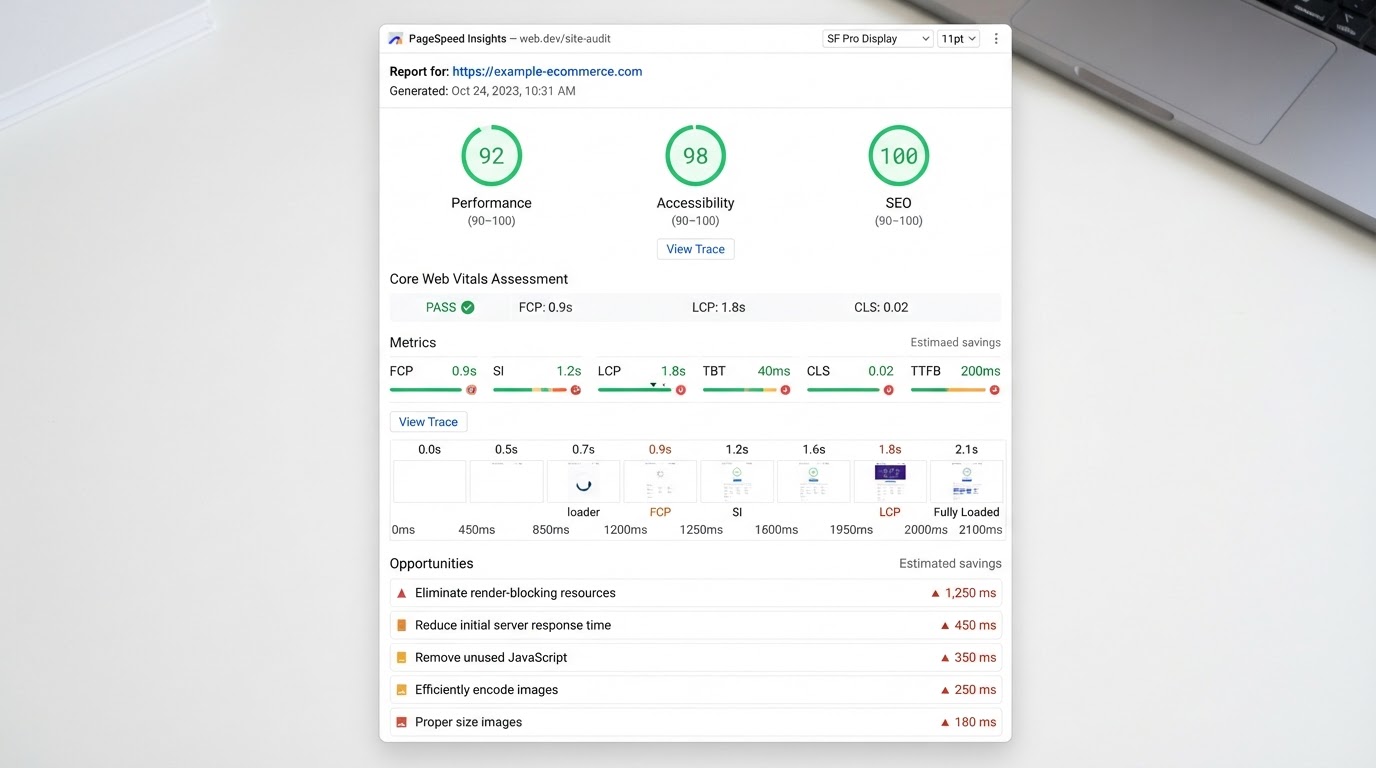
How security work runs with us
The same four steps every time, whether the engagement is one week or six months. Typical delivery is 1–4 weeks.
Step 1 · Day 0
Conversation
Twenty minutes on the actual problem. No deck, no discovery fee. You leave knowing whether we are the right team.
Step 2 · Within 2 days
Written scope
A document listing every deliverable, the price, the timeline and what is explicitly out of scope. Nothing starts until you approve it.
Step 3 · Delivery window
Build in the open
Work lands in reviewable increments on a staging URL you can open any time. You see progress weekly, not at the end.
Step 4 · Launch
Handover that sticks
Full ownership of code and accounts, a recorded walkthrough and written documentation. No lock-in, no hostage access.
Fixed price, agreed first
The number in the scope is the number you pay.
You own everything
Code, accounts and credentials are yours from day one.
No retainer required
Hire us for one job. Stay only if it was worth it.
Honest no
We turn work down when it will not pay for itself.
5average on Google, every review published in fullFixed price against a written scope23 disciplines in-house, briefed as one teamSee the work
Start small if you want to
Three ways to start with security
You do not have to pick the exact service first. Tell us the problem and we will point at the one that fits — or tell you it is not worth doing yet.
Smallest step
Ask one question
Send us the thing you are unsure about — whether security work is even the right work, or whether what you already have is close enough. You get a straight answer, not a proposal.
Free · usually answered same working day
Middle step
Get it looked at properly
We review what you have against how security work normally runs, and tell you what is actually worth doing.
Findings in writing · no obligation to book the work
Full engagement
Book the security work work
One fixed price for the agreed scope, written down before anything starts.
Typically 1–4 weeks · price agreed before work starts
What to send so the first reply is useful
- Your URL, or the platform you are on
- One sentence on what you want security work to change
- Any date that matters, and why it matters
- Whether anyone is already working on it
You do not need a brief, a budget or a spec. If security work turns out not to be what you need, we will say so and point you at the platform & infrastructure work that is — even where that is less for us to invoice.
Get a fixed price — Security work
Audits, hardening, monitoring and recovery. Tell us where you are now and we will recommend the specific service that fits — with a written scope and a fixed price.
- No discovery fee, no deposit to hold a slot, and no retainer attached to a build.
- We usually reply within a couple of hours in working time.
- We write the scope down and attach one fixed price to it, before any work starts.
Questions
495 security questions, answered
Including the ones with awkward answers. If yours is not here, message us — we answer in writing before anyone books a call.
What is Website Security Audit?
Website Security Audit is a security service from Livin Services. In one line: find out where you are actually exposed before somebody else does. It's a defined piece of work with an agreed finish line, not an open-ended retainer, so you know what you're buying before you commit to it.
What is included in Website Security Audit?
Website Security Audit covers scoped assessment and rules of engagement for website security audit, findings report ranked by severity with reproduction steps, remediation performed or specified for your developers, access, credential and permission review, backup and recovery verification, retest confirming each finding is genuinely closed, findings ranked by real exploitability, not by scanner severity score, each item with the fix written out, so your developer can act without us and a plain statement that an audit reduces risk and cannot eliminate it. All of that gets written down before we start, so you know exactly what's landing and what isn't. Anything outside the list gets quoted separately — we won't quietly absorb it and we won't quietly bill for it either.
What is not included in Website Security Audit?
Anything not named in the written scope. In practice that usually means ongoing management after handover, content and copy you have not supplied, third-party licence and subscription costs, and work in other disciplines — those are separate services with their own scopes. We list exclusions explicitly rather than leaving them to be discovered halfway through.
Who is Website Security Audit for?
It fits teams where you have been hacked before and are not certain it is fully gone. The goal is simple: find out where you are actually exposed before somebody else does. If your situation is different, tell us and we will point you at the security service that actually fits — including one we do not sell.
When should I not buy Website Security Audit?
When the underlying problem sits somewhere else. Buying Website Security Audit to fix something it does not touch is expensive and disappointing in equal measure. Tell us what outcome you are actually after and we will say plainly whether this is the right service, a different one, or nothing at all right now.
How is this different from hiring a freelancer for Website Security Audit?
A good freelancer is often the right answer for a narrow, well-defined task, and cheaper. What an agency adds is continuity when someone is unavailable, a second pair of eyes on decisions, and accountability that survives the individual. Judge it on whether your project needs those things — plenty do not.
Do you offer Website Security Audit as an ongoing retainer?
This service is scoped as a defined piece of work with a handover at the end, which is deliberate: it means the engagement has a finish line rather than drifting into an indefinite monthly cost. If you need continuing support afterwards we can arrange it, but it is a separate agreement you enter knowingly.
How many rounds of revisions are included in Website Security Audit?
Revisions within the agreed scope are part of the work, not a numbered allowance to be rationed. What is charged separately is a change of direction — new requirements, a reversed decision, or work outside what was scoped. The distinction is written into the scope so it is not decided by argument later.
Is Website Security Audit worth it for a small business?
Sometimes, and sometimes not — it depends on whether the thing it fixes is actually what is holding you back. Smaller scopes are quoted the same way as large ones, with no minimum engagement, so size is not the barrier. Being honest about whether this is your highest-leverage move is more useful to you than a yes.
What is Malware Removal & Recovery?
Malware Removal & Recovery is a security service from Livin Services. In one line: clean the site, close the door and prove it stayed closed. It's a defined piece of work with an agreed finish line, not an open-ended retainer, so you know what you're buying before you commit to it.
What is included in Malware Removal & Recovery?
Malware Removal & Recovery covers scoped assessment and rules of engagement for malware removal & recovery, findings report ranked by severity with reproduction steps, remediation performed or specified for your developers, access, credential and permission review, backup and recovery verification, retest confirming each finding is genuinely closed, the entry point identified and closed, because cleaning alone means it returns, post-clean monitoring for a period afterwards, with the findings shown to you and search console and blocklist removal handled, since a clean site can still be flagged. All of that gets written down before we start, so you know exactly what's landing and what isn't. Anything outside the list gets quoted separately — we won't quietly absorb it and we won't quietly bill for it either.
What is not included in Malware Removal & Recovery?
Anything not named in the written scope. In practice that usually means ongoing management after handover, content and copy you have not supplied, third-party licence and subscription costs, and work in other disciplines — those are separate services with their own scopes. We list exclusions explicitly rather than leaving them to be discovered halfway through.
Who is Malware Removal & Recovery for?
It fits teams where you have been hacked before and are not certain it is fully gone. The goal is simple: clean the site, close the door and prove it stayed closed. If your situation is different, tell us and we will point you at the security service that actually fits — including one we do not sell.
When should I not buy Malware Removal & Recovery?
When the underlying problem sits somewhere else. Buying Malware Removal & Recovery to fix something it does not touch is expensive and disappointing in equal measure. Tell us what outcome you are actually after and we will say plainly whether this is the right service, a different one, or nothing at all right now.
How is this different from hiring a freelancer for Malware Removal & Recovery?
A good freelancer is often the right answer for a narrow, well-defined task, and cheaper. What an agency adds is continuity when someone is unavailable, a second pair of eyes on decisions, and accountability that survives the individual. Judge it on whether your project needs those things — plenty do not.
Do you offer Malware Removal & Recovery as an ongoing retainer?
This service is scoped as a defined piece of work with a handover at the end, which is deliberate: it means the engagement has a finish line rather than drifting into an indefinite monthly cost. If you need continuing support afterwards we can arrange it, but it is a separate agreement you enter knowingly.
How many rounds of revisions are included in Malware Removal & Recovery?
Revisions within the agreed scope are part of the work, not a numbered allowance to be rationed. What is charged separately is a change of direction — new requirements, a reversed decision, or work outside what was scoped. The distinction is written into the scope so it is not decided by argument later.
Is Malware Removal & Recovery worth it for a small business?
Sometimes, and sometimes not — it depends on whether the thing it fixes is actually what is holding you back. Smaller scopes are quoted the same way as large ones, with no minimum engagement, so size is not the barrier. Being honest about whether this is your highest-leverage move is more useful to you than a yes.
What is Penetration Testing?
Penetration Testing is a security service from Livin Services. In one line: have a person try to break in and document exactly how far they got. It's a defined piece of work with an agreed finish line, not an open-ended retainer, so you know what you're buying before you commit to it.
What is included in Penetration Testing?
Penetration Testing covers scoped assessment and rules of engagement for penetration testing, findings report ranked by severity with reproduction steps, remediation performed or specified for your developers, access, credential and permission review, backup and recovery verification, retest confirming each finding is genuinely closed, scope and rules of engagement agreed in writing before anything begins, reproduction steps for every finding, so a fix can be verified rather than assumed and a retest of the fixes included, since an unverified fix is not a fix. All of that gets written down before we start, so you know exactly what's landing and what isn't. Anything outside the list gets quoted separately — we won't quietly absorb it and we won't quietly bill for it either.
What is not included in Penetration Testing?
Anything not named in the written scope. In practice that usually means ongoing management after handover, content and copy you have not supplied, third-party licence and subscription costs, and work in other disciplines — those are separate services with their own scopes. We list exclusions explicitly rather than leaving them to be discovered halfway through.
Who is Penetration Testing for?
It fits teams where you have been hacked before and are not certain it is fully gone. The goal is simple: have a person try to break in and document exactly how far they got. If your situation is different, tell us and we will point you at the security service that actually fits — including one we do not sell.
When should I not buy Penetration Testing?
When the underlying problem sits somewhere else. Buying Penetration Testing to fix something it does not touch is expensive and disappointing in equal measure. Tell us what outcome you are actually after and we will say plainly whether this is the right service, a different one, or nothing at all right now.
How is this different from hiring a freelancer for Penetration Testing?
A good freelancer is often the right answer for a narrow, well-defined task, and cheaper. What an agency adds is continuity when someone is unavailable, a second pair of eyes on decisions, and accountability that survives the individual. Judge it on whether your project needs those things — plenty do not.
Do you offer Penetration Testing as an ongoing retainer?
This service is scoped as a defined piece of work with a handover at the end, which is deliberate: it means the engagement has a finish line rather than drifting into an indefinite monthly cost. If you need continuing support afterwards we can arrange it, but it is a separate agreement you enter knowingly.
How many rounds of revisions are included in Penetration Testing?
Revisions within the agreed scope are part of the work, not a numbered allowance to be rationed. What is charged separately is a change of direction — new requirements, a reversed decision, or work outside what was scoped. The distinction is written into the scope so it is not decided by argument later.
Is Penetration Testing worth it for a small business?
Sometimes, and sometimes not — it depends on whether the thing it fixes is actually what is holding you back. Smaller scopes are quoted the same way as large ones, with no minimum engagement, so size is not the barrier. Being honest about whether this is your highest-leverage move is more useful to you than a yes.
What is SSL & HTTPS Setup?
SSL & HTTPS Setup is a security service from Livin Services. In one line: encrypt everything, redirect properly and stop mixed-content warnings. It's a defined piece of work with an agreed finish line, not an open-ended retainer, so you know what you're buying before you commit to it.
What is included in SSL & HTTPS Setup?
SSL & HTTPS Setup covers scoped assessment and rules of engagement for ssl & https setup, findings report ranked by severity with reproduction steps, remediation performed or specified for your developers, access, credential and permission review, backup and recovery verification, retest confirming each finding is genuinely closed, automatic renewal configured and tested, so nothing expires unnoticed, every mixed-content warning found and fixed, not only the ones on the homepage and redirects consolidated to one hop, because chains cost speed and search signals. All of that gets written down before we start, so you know exactly what's landing and what isn't. Anything outside the list gets quoted separately — we won't quietly absorb it and we won't quietly bill for it either.
What is not included in SSL & HTTPS Setup?
Anything not named in the written scope. In practice that usually means ongoing management after handover, content and copy you have not supplied, third-party licence and subscription costs, and work in other disciplines — those are separate services with their own scopes. We list exclusions explicitly rather than leaving them to be discovered halfway through.
Who is SSL & HTTPS Setup for?
It fits teams where you have been hacked before and are not certain it is fully gone. The goal is simple: encrypt everything, redirect properly and stop mixed-content warnings. If your situation is different, tell us and we will point you at the security service that actually fits — including one we do not sell.
When should I not buy SSL & HTTPS Setup?
When the underlying problem sits somewhere else. Buying SSL & HTTPS Setup to fix something it does not touch is expensive and disappointing in equal measure. Tell us what outcome you are actually after and we will say plainly whether this is the right service, a different one, or nothing at all right now.
How is this different from hiring a freelancer for SSL & HTTPS Setup?
A good freelancer is often the right answer for a narrow, well-defined task, and cheaper. What an agency adds is continuity when someone is unavailable, a second pair of eyes on decisions, and accountability that survives the individual. Judge it on whether your project needs those things — plenty do not.
Do you offer SSL & HTTPS Setup as an ongoing retainer?
This service is scoped as a defined piece of work with a handover at the end, which is deliberate: it means the engagement has a finish line rather than drifting into an indefinite monthly cost. If you need continuing support afterwards we can arrange it, but it is a separate agreement you enter knowingly.
How many rounds of revisions are included in SSL & HTTPS Setup?
Revisions within the agreed scope are part of the work, not a numbered allowance to be rationed. What is charged separately is a change of direction — new requirements, a reversed decision, or work outside what was scoped. The distinction is written into the scope so it is not decided by argument later.
Is SSL & HTTPS Setup worth it for a small business?
Sometimes, and sometimes not — it depends on whether the thing it fixes is actually what is holding you back. Smaller scopes are quoted the same way as large ones, with no minimum engagement, so size is not the barrier. Being honest about whether this is your highest-leverage move is more useful to you than a yes.
What is Firewall Configuration?
Firewall Configuration is a security service from Livin Services. In one line: stop the obvious attacks before they ever reach your application. It's a defined piece of work with an agreed finish line, not an open-ended retainer, so you know what you're buying before you commit to it.
What is included in Firewall Configuration?
Firewall Configuration covers scoped assessment and rules of engagement for firewall configuration, findings report ranked by severity with reproduction steps, remediation performed or specified for your developers, access, credential and permission review, backup and recovery verification, retest confirming each finding is genuinely closed, rules tuned against your real traffic, so legitimate customers are never blocked, run in monitoring mode first, because a badly tuned firewall costs orders and rules documented, so a future false positive can be diagnosed quickly. All of that gets written down before we start, so you know exactly what's landing and what isn't. Anything outside the list gets quoted separately — we won't quietly absorb it and we won't quietly bill for it either.
What is not included in Firewall Configuration?
Anything not named in the written scope. In practice that usually means ongoing management after handover, content and copy you have not supplied, third-party licence and subscription costs, and work in other disciplines — those are separate services with their own scopes. We list exclusions explicitly rather than leaving them to be discovered halfway through.
Who is Firewall Configuration for?
It fits teams where you have been hacked before and are not certain it is fully gone. The goal is simple: stop the obvious attacks before they ever reach your application. If your situation is different, tell us and we will point you at the security service that actually fits — including one we do not sell.
When should I not buy Firewall Configuration?
When the underlying problem sits somewhere else. Buying Firewall Configuration to fix something it does not touch is expensive and disappointing in equal measure. Tell us what outcome you are actually after and we will say plainly whether this is the right service, a different one, or nothing at all right now.
How is this different from hiring a freelancer for Firewall Configuration?
A good freelancer is often the right answer for a narrow, well-defined task, and cheaper. What an agency adds is continuity when someone is unavailable, a second pair of eyes on decisions, and accountability that survives the individual. Judge it on whether your project needs those things — plenty do not.
Do you offer Firewall Configuration as an ongoing retainer?
This service is scoped as a defined piece of work with a handover at the end, which is deliberate: it means the engagement has a finish line rather than drifting into an indefinite monthly cost. If you need continuing support afterwards we can arrange it, but it is a separate agreement you enter knowingly.
How many rounds of revisions are included in Firewall Configuration?
Revisions within the agreed scope are part of the work, not a numbered allowance to be rationed. What is charged separately is a change of direction — new requirements, a reversed decision, or work outside what was scoped. The distinction is written into the scope so it is not decided by argument later.
Is Firewall Configuration worth it for a small business?
Sometimes, and sometimes not — it depends on whether the thing it fixes is actually what is holding you back. Smaller scopes are quoted the same way as large ones, with no minimum engagement, so size is not the barrier. Being honest about whether this is your highest-leverage move is more useful to you than a yes.
What is Backup Strategy Setup?
Backup Strategy Setup is a security service from Livin Services. In one line: have a restore you have actually tested, not just a scheduled job. It's a defined piece of work with an agreed finish line, not an open-ended retainer, so you know what you're buying before you commit to it.
What is included in Backup Strategy Setup?
Backup Strategy Setup covers scoped assessment and rules of engagement for backup strategy setup, findings report ranked by severity with reproduction steps, remediation performed or specified for your developers, access, credential and permission review, backup and recovery verification, retest confirming each finding is genuinely closed, a full restore performed and timed, because an untested backup is only a hope, copies held somewhere separate from the server, so one compromise cannot take both and the restore procedure written down plainly, so it works when we are unavailable. All of that gets written down before we start, so you know exactly what's landing and what isn't. Anything outside the list gets quoted separately — we won't quietly absorb it and we won't quietly bill for it either.
What is not included in Backup Strategy Setup?
Anything not named in the written scope. In practice that usually means ongoing management after handover, content and copy you have not supplied, third-party licence and subscription costs, and work in other disciplines — those are separate services with their own scopes. We list exclusions explicitly rather than leaving them to be discovered halfway through.
Who is Backup Strategy Setup for?
It fits teams where you have been hacked before and are not certain it is fully gone. The goal is simple: have a restore you have actually tested, not just a scheduled job. If your situation is different, tell us and we will point you at the security service that actually fits — including one we do not sell.
When should I not buy Backup Strategy Setup?
When the underlying problem sits somewhere else. Buying Backup Strategy Setup to fix something it does not touch is expensive and disappointing in equal measure. Tell us what outcome you are actually after and we will say plainly whether this is the right service, a different one, or nothing at all right now.
How is this different from hiring a freelancer for Backup Strategy Setup?
A good freelancer is often the right answer for a narrow, well-defined task, and cheaper. What an agency adds is continuity when someone is unavailable, a second pair of eyes on decisions, and accountability that survives the individual. Judge it on whether your project needs those things — plenty do not.
Do you offer Backup Strategy Setup as an ongoing retainer?
This service is scoped as a defined piece of work with a handover at the end, which is deliberate: it means the engagement has a finish line rather than drifting into an indefinite monthly cost. If you need continuing support afterwards we can arrange it, but it is a separate agreement you enter knowingly.
How many rounds of revisions are included in Backup Strategy Setup?
Revisions within the agreed scope are part of the work, not a numbered allowance to be rationed. What is charged separately is a change of direction — new requirements, a reversed decision, or work outside what was scoped. The distinction is written into the scope so it is not decided by argument later.
Is Backup Strategy Setup worth it for a small business?
Sometimes, and sometimes not — it depends on whether the thing it fixes is actually what is holding you back. Smaller scopes are quoted the same way as large ones, with no minimum engagement, so size is not the barrier. Being honest about whether this is your highest-leverage move is more useful to you than a yes.
What is Security Monitoring?
Security Monitoring is a security service from Livin Services. In one line: know within minutes when a file or permission changes unexpectedly. It's a defined piece of work with an agreed finish line, not an open-ended retainer, so you know what you're buying before you commit to it.
What is included in Security Monitoring?
Security Monitoring covers scoped assessment and rules of engagement for security monitoring, findings report ranked by severity with reproduction steps, remediation performed or specified for your developers, access, credential and permission review, backup and recovery verification, retest confirming each finding is genuinely closed, alerts tuned to be few and meaningful, because a noisy feed gets ignored, who is notified and what they should do agreed before anything is switched on and a monthly summary of what was seen, including the quiet months. All of that gets written down before we start, so you know exactly what's landing and what isn't. Anything outside the list gets quoted separately — we won't quietly absorb it and we won't quietly bill for it either.
What is not included in Security Monitoring?
Anything not named in the written scope. In practice that usually means ongoing management after handover, content and copy you have not supplied, third-party licence and subscription costs, and work in other disciplines — those are separate services with their own scopes. We list exclusions explicitly rather than leaving them to be discovered halfway through.
Who is Security Monitoring for?
It fits teams where you have been hacked before and are not certain it is fully gone. The goal is simple: know within minutes when a file or permission changes unexpectedly. If your situation is different, tell us and we will point you at the security service that actually fits — including one we do not sell.
When should I not buy Security Monitoring?
When the underlying problem sits somewhere else. Buying Security Monitoring to fix something it does not touch is expensive and disappointing in equal measure. Tell us what outcome you are actually after and we will say plainly whether this is the right service, a different one, or nothing at all right now.
How is this different from hiring a freelancer for Security Monitoring?
A good freelancer is often the right answer for a narrow, well-defined task, and cheaper. What an agency adds is continuity when someone is unavailable, a second pair of eyes on decisions, and accountability that survives the individual. Judge it on whether your project needs those things — plenty do not.
Do you offer Security Monitoring as an ongoing retainer?
This service is scoped as a defined piece of work with a handover at the end, which is deliberate: it means the engagement has a finish line rather than drifting into an indefinite monthly cost. If you need continuing support afterwards we can arrange it, but it is a separate agreement you enter knowingly.
How many rounds of revisions are included in Security Monitoring?
Revisions within the agreed scope are part of the work, not a numbered allowance to be rationed. What is charged separately is a change of direction — new requirements, a reversed decision, or work outside what was scoped. The distinction is written into the scope so it is not decided by argument later.
Is Security Monitoring worth it for a small business?
Sometimes, and sometimes not — it depends on whether the thing it fixes is actually what is holding you back. Smaller scopes are quoted the same way as large ones, with no minimum engagement, so size is not the barrier. Being honest about whether this is your highest-leverage move is more useful to you than a yes.
What is DDoS Protection?
DDoS Protection is a security service from Livin Services. In one line: stay online through a flood instead of waiting it out. It's a defined piece of work with an agreed finish line, not an open-ended retainer, so you know what you're buying before you commit to it.
What is included in DDoS Protection?
DDoS Protection covers scoped assessment and rules of engagement for ddos protection, findings report ranked by severity with reproduction steps, remediation performed or specified for your developers, access, credential and permission review, backup and recovery verification, retest confirming each finding is genuinely closed, origin server addresses hidden, since protection is bypassed if they are public, rate limits tuned so real customers and payment callbacks are never caught and an honest note on where the paid tiers are worth it and where they are not. All of that gets written down before we start, so you know exactly what's landing and what isn't. Anything outside the list gets quoted separately — we won't quietly absorb it and we won't quietly bill for it either.
What is not included in DDoS Protection?
Anything not named in the written scope. In practice that usually means ongoing management after handover, content and copy you have not supplied, third-party licence and subscription costs, and work in other disciplines — those are separate services with their own scopes. We list exclusions explicitly rather than leaving them to be discovered halfway through.
Who is DDoS Protection for?
It fits teams where you have been hacked before and are not certain it is fully gone. The goal is simple: stay online through a flood instead of waiting it out. If your situation is different, tell us and we will point you at the security service that actually fits — including one we do not sell.
When should I not buy DDoS Protection?
When the underlying problem sits somewhere else. Buying DDoS Protection to fix something it does not touch is expensive and disappointing in equal measure. Tell us what outcome you are actually after and we will say plainly whether this is the right service, a different one, or nothing at all right now.
How is this different from hiring a freelancer for DDoS Protection?
A good freelancer is often the right answer for a narrow, well-defined task, and cheaper. What an agency adds is continuity when someone is unavailable, a second pair of eyes on decisions, and accountability that survives the individual. Judge it on whether your project needs those things — plenty do not.
Do you offer DDoS Protection as an ongoing retainer?
This service is scoped as a defined piece of work with a handover at the end, which is deliberate: it means the engagement has a finish line rather than drifting into an indefinite monthly cost. If you need continuing support afterwards we can arrange it, but it is a separate agreement you enter knowingly.
How many rounds of revisions are included in DDoS Protection?
Revisions within the agreed scope are part of the work, not a numbered allowance to be rationed. What is charged separately is a change of direction — new requirements, a reversed decision, or work outside what was scoped. The distinction is written into the scope so it is not decided by argument later.
Is DDoS Protection worth it for a small business?
Sometimes, and sometimes not — it depends on whether the thing it fixes is actually what is holding you back. Smaller scopes are quoted the same way as large ones, with no minimum engagement, so size is not the barrier. Being honest about whether this is your highest-leverage move is more useful to you than a yes.
What is API Security?
API Security is a security service from Livin Services. In one line: lock down authentication, rate limits and data exposure on public endpoints. It's a defined piece of work with an agreed finish line, not an open-ended retainer, so you know what you're buying before you commit to it.
What is included in API Security?
API Security covers scoped assessment and rules of engagement for api security, findings report ranked by severity with reproduction steps, remediation performed or specified for your developers, access, credential and permission review, backup and recovery verification, retest confirming each finding is genuinely closed, every endpoint checked for data it returns but should not, not only for access control, rate limits per client, so one integration cannot take the api down for everyone and secrets moved out of code and rotated, with the rotation process documented. All of that gets written down before we start, so you know exactly what's landing and what isn't. Anything outside the list gets quoted separately — we won't quietly absorb it and we won't quietly bill for it either.
What is not included in API Security?
Anything not named in the written scope. In practice that usually means ongoing management after handover, content and copy you have not supplied, third-party licence and subscription costs, and work in other disciplines — those are separate services with their own scopes. We list exclusions explicitly rather than leaving them to be discovered halfway through.
Who is API Security for?
It fits teams where you have been hacked before and are not certain it is fully gone. The goal is simple: lock down authentication, rate limits and data exposure on public endpoints. If your situation is different, tell us and we will point you at the security service that actually fits — including one we do not sell.
When should I not buy API Security?
When the underlying problem sits somewhere else. Buying API Security to fix something it does not touch is expensive and disappointing in equal measure. Tell us what outcome you are actually after and we will say plainly whether this is the right service, a different one, or nothing at all right now.
How is this different from hiring a freelancer for API Security?
A good freelancer is often the right answer for a narrow, well-defined task, and cheaper. What an agency adds is continuity when someone is unavailable, a second pair of eyes on decisions, and accountability that survives the individual. Judge it on whether your project needs those things — plenty do not.
Do you offer API Security as an ongoing retainer?
This service is scoped as a defined piece of work with a handover at the end, which is deliberate: it means the engagement has a finish line rather than drifting into an indefinite monthly cost. If you need continuing support afterwards we can arrange it, but it is a separate agreement you enter knowingly.
How many rounds of revisions are included in API Security?
Revisions within the agreed scope are part of the work, not a numbered allowance to be rationed. What is charged separately is a change of direction — new requirements, a reversed decision, or work outside what was scoped. The distinction is written into the scope so it is not decided by argument later.
Is API Security worth it for a small business?
Sometimes, and sometimes not — it depends on whether the thing it fixes is actually what is holding you back. Smaller scopes are quoted the same way as large ones, with no minimum engagement, so size is not the barrier. Being honest about whether this is your highest-leverage move is more useful to you than a yes.
What is Authentication Hardening?
Authentication Hardening is a security service from Livin Services. In one line: close the login, session and reset gaps attackers actually use. It's a defined piece of work with an agreed finish line, not an open-ended retainer, so you know what you're buying before you commit to it.
What is included in Authentication Hardening?
Authentication Hardening covers scoped assessment and rules of engagement for authentication hardening, findings report ranked by severity with reproduction steps, remediation performed or specified for your developers, access, credential and permission review, backup and recovery verification, retest confirming each finding is genuinely closed, password reset and session expiry fixed, since those are the routes actually used, second factor added without locking out the people who lose their phone and tested against real attempts rather than assumed secure after configuration. All of that gets written down before we start, so you know exactly what's landing and what isn't. Anything outside the list gets quoted separately — we won't quietly absorb it and we won't quietly bill for it either.
What is not included in Authentication Hardening?
Anything not named in the written scope. In practice that usually means ongoing management after handover, content and copy you have not supplied, third-party licence and subscription costs, and work in other disciplines — those are separate services with their own scopes. We list exclusions explicitly rather than leaving them to be discovered halfway through.
Who is Authentication Hardening for?
It fits teams where you have been hacked before and are not certain it is fully gone. The goal is simple: close the login, session and reset gaps attackers actually use. If your situation is different, tell us and we will point you at the security service that actually fits — including one we do not sell.
When should I not buy Authentication Hardening?
When the underlying problem sits somewhere else. Buying Authentication Hardening to fix something it does not touch is expensive and disappointing in equal measure. Tell us what outcome you are actually after and we will say plainly whether this is the right service, a different one, or nothing at all right now.
How is this different from hiring a freelancer for Authentication Hardening?
A good freelancer is often the right answer for a narrow, well-defined task, and cheaper. What an agency adds is continuity when someone is unavailable, a second pair of eyes on decisions, and accountability that survives the individual. Judge it on whether your project needs those things — plenty do not.
Do you offer Authentication Hardening as an ongoing retainer?
This service is scoped as a defined piece of work with a handover at the end, which is deliberate: it means the engagement has a finish line rather than drifting into an indefinite monthly cost. If you need continuing support afterwards we can arrange it, but it is a separate agreement you enter knowingly.
How many rounds of revisions are included in Authentication Hardening?
Revisions within the agreed scope are part of the work, not a numbered allowance to be rationed. What is charged separately is a change of direction — new requirements, a reversed decision, or work outside what was scoped. The distinction is written into the scope so it is not decided by argument later.
Is Authentication Hardening worth it for a small business?
Sometimes, and sometimes not — it depends on whether the thing it fixes is actually what is holding you back. Smaller scopes are quoted the same way as large ones, with no minimum engagement, so size is not the barrier. Being honest about whether this is your highest-leverage move is more useful to you than a yes.
How long does Website Security Audit take?
A typical Website Security Audit engagement runs 1–2 weeks from kickoff to handover. That covers discovery and scoping, build or implementation, review with your team, and a final QA pass. Larger or multi-market builds extend this and we say so during scoping rather than after.
Can Website Security Audit be delivered faster than 1–2 weeks?
Sometimes, if the scope is reduced rather than the care taken. We will tell you which parts can be deferred to a second phase to hit a date. What we will not do is compress testing and review to make a deadline look achievable — that moves the cost from the timeline to the month after launch.
How is Website Security Audit quoted?
One fixed price against a written scope. Not an hourly rate. What moves that number is how many templates, integrations and awkward edge cases are involved — not how long we happen to take, which is our problem to manage, not yours. There's no price list because a real quote depends on your situation. Tell us what you need and you'll get a written scope and a fixed figure back, with anything that could change it flagged upfront rather than appearing on an invoice later.
What makes Website Security Audit cost more or less?
Four things, roughly in order of how much they matter. How much is genuinely bespoke versus configuration. How many integrations and outside systems are in play. What state your starting point is in — inherited problems have to be sorted before anything new can sit on top of them. And how many people are in the approval chain. We'll name which of those apply to you in the quote, so you can see where the number came from.
Do I pay anything to get a quote for Website Security Audit?
No. Scoping and quoting are free, and so is the conversation to get there. If it turns out Website Security Audit isn't what you need, you'll hear that for free too — rather than being sold a paid discovery phase that arrives at the same answer three weeks later.
What happens if Website Security Audit turns out to be bigger than quoted?
If we underestimated something inside the agreed scope, we absorb it. That's what a fixed price means. If the scope itself changes because a new requirement turns up, we quote that separately and you decide whether to go ahead before anyone touches it. You won't get an invoice for something you didn't approve.
What are the payment terms for Website Security Audit?
Agreed in writing before work starts, as part of the scope. There is no deposit taken to hold a slot in the calendar and no charge for the scoping conversation. If the engagement is stopped partway by either side, you pay for the work completed to that point and you keep it.
How long until we see the effect of Website Security Audit?
Depends entirely on what it is. Build work shows immediately because the thing either exists or it does not. Anything depending on user behaviour, search engines or list warm-up takes longer, and how much longer is a function of your traffic volume — low traffic means a longer wait before any change is distinguishable from noise. We say which category your work falls into up front.
We had a cheaper quote for Website Security Audit. Why?
Usually one of three reasons: a narrower scope than ours, a junior person delivering it, or exclusions that surface as change requests later. Ask both suppliers for the written scope and compare those rather than the totals. If theirs genuinely covers the same ground for less, take it — and we will tell you so.
How long does Malware Removal & Recovery take?
A typical Malware Removal & Recovery engagement runs 1–5 days from kickoff to handover. That covers discovery and scoping, build or implementation, review with your team, and a final QA pass. Larger or multi-market builds extend this and we say so during scoping rather than after.
Can Malware Removal & Recovery be delivered faster than 1–5 days?
Sometimes, if the scope is reduced rather than the care taken. We will tell you which parts can be deferred to a second phase to hit a date. What we will not do is compress testing and review to make a deadline look achievable — that moves the cost from the timeline to the month after launch.
How is Malware Removal & Recovery quoted?
One fixed price against a written scope. Not an hourly rate. What moves that number is how many templates, integrations and awkward edge cases are involved — not how long we happen to take, which is our problem to manage, not yours. There's no price list because a real quote depends on your situation. Tell us what you need and you'll get a written scope and a fixed figure back, with anything that could change it flagged upfront rather than appearing on an invoice later.
What makes Malware Removal & Recovery cost more or less?
Four things, roughly in order of how much they matter. How much is genuinely bespoke versus configuration. How many integrations and outside systems are in play. What state your starting point is in — inherited problems have to be sorted before anything new can sit on top of them. And how many people are in the approval chain. We'll name which of those apply to you in the quote, so you can see where the number came from.
Do I pay anything to get a quote for Malware Removal & Recovery?
No. Scoping and quoting are free, and so is the conversation to get there. If it turns out Malware Removal & Recovery isn't what you need, you'll hear that for free too — rather than being sold a paid discovery phase that arrives at the same answer three weeks later.
What happens if Malware Removal & Recovery turns out to be bigger than quoted?
If we underestimated something inside the agreed scope, we absorb it. That's what a fixed price means. If the scope itself changes because a new requirement turns up, we quote that separately and you decide whether to go ahead before anyone touches it. You won't get an invoice for something you didn't approve.
What are the payment terms for Malware Removal & Recovery?
Agreed in writing before work starts, as part of the scope. There is no deposit taken to hold a slot in the calendar and no charge for the scoping conversation. If the engagement is stopped partway by either side, you pay for the work completed to that point and you keep it.
How long until we see the effect of Malware Removal & Recovery?
Depends entirely on what it is. Build work shows immediately because the thing either exists or it does not. Anything depending on user behaviour, search engines or list warm-up takes longer, and how much longer is a function of your traffic volume — low traffic means a longer wait before any change is distinguishable from noise. We say which category your work falls into up front.
We had a cheaper quote for Malware Removal & Recovery. Why?
Usually one of three reasons: a narrower scope than ours, a junior person delivering it, or exclusions that surface as change requests later. Ask both suppliers for the written scope and compare those rather than the totals. If theirs genuinely covers the same ground for less, take it — and we will tell you so.
How long does Penetration Testing take?
A typical Penetration Testing engagement runs 2–4 weeks from kickoff to handover. That covers discovery and scoping, build or implementation, review with your team, and a final QA pass. Larger or multi-market builds extend this and we say so during scoping rather than after.
Can Penetration Testing be delivered faster than 2–4 weeks?
Sometimes, if the scope is reduced rather than the care taken. We will tell you which parts can be deferred to a second phase to hit a date. What we will not do is compress testing and review to make a deadline look achievable — that moves the cost from the timeline to the month after launch.
How is Penetration Testing quoted?
One fixed price against a written scope. Not an hourly rate. What moves that number is how many templates, integrations and awkward edge cases are involved — not how long we happen to take, which is our problem to manage, not yours. There's no price list because a real quote depends on your situation. Tell us what you need and you'll get a written scope and a fixed figure back, with anything that could change it flagged upfront rather than appearing on an invoice later.
What makes Penetration Testing cost more or less?
Four things, roughly in order of how much they matter. How much is genuinely bespoke versus configuration. How many integrations and outside systems are in play. What state your starting point is in — inherited problems have to be sorted before anything new can sit on top of them. And how many people are in the approval chain. We'll name which of those apply to you in the quote, so you can see where the number came from.
Do I pay anything to get a quote for Penetration Testing?
No. Scoping and quoting are free, and so is the conversation to get there. If it turns out Penetration Testing isn't what you need, you'll hear that for free too — rather than being sold a paid discovery phase that arrives at the same answer three weeks later.
What happens if Penetration Testing turns out to be bigger than quoted?
If we underestimated something inside the agreed scope, we absorb it. That's what a fixed price means. If the scope itself changes because a new requirement turns up, we quote that separately and you decide whether to go ahead before anyone touches it. You won't get an invoice for something you didn't approve.
What are the payment terms for Penetration Testing?
Agreed in writing before work starts, as part of the scope. There is no deposit taken to hold a slot in the calendar and no charge for the scoping conversation. If the engagement is stopped partway by either side, you pay for the work completed to that point and you keep it.
How long until we see the effect of Penetration Testing?
Depends entirely on what it is. Build work shows immediately because the thing either exists or it does not. Anything depending on user behaviour, search engines or list warm-up takes longer, and how much longer is a function of your traffic volume — low traffic means a longer wait before any change is distinguishable from noise. We say which category your work falls into up front.
We had a cheaper quote for Penetration Testing. Why?
Usually one of three reasons: a narrower scope than ours, a junior person delivering it, or exclusions that surface as change requests later. Ask both suppliers for the written scope and compare those rather than the totals. If theirs genuinely covers the same ground for less, take it — and we will tell you so.
How long does SSL & HTTPS Setup take?
A typical SSL & HTTPS Setup engagement runs 1–3 days from kickoff to handover. That covers discovery and scoping, build or implementation, review with your team, and a final QA pass. Larger or multi-market builds extend this and we say so during scoping rather than after.
Can SSL & HTTPS Setup be delivered faster than 1–3 days?
Sometimes, if the scope is reduced rather than the care taken. We will tell you which parts can be deferred to a second phase to hit a date. What we will not do is compress testing and review to make a deadline look achievable — that moves the cost from the timeline to the month after launch.
How is SSL & HTTPS Setup quoted?
One fixed price against a written scope. Not an hourly rate. What moves that number is how many templates, integrations and awkward edge cases are involved — not how long we happen to take, which is our problem to manage, not yours. There's no price list because a real quote depends on your situation. Tell us what you need and you'll get a written scope and a fixed figure back, with anything that could change it flagged upfront rather than appearing on an invoice later.
What makes SSL & HTTPS Setup cost more or less?
Four things, roughly in order of how much they matter. How much is genuinely bespoke versus configuration. How many integrations and outside systems are in play. What state your starting point is in — inherited problems have to be sorted before anything new can sit on top of them. And how many people are in the approval chain. We'll name which of those apply to you in the quote, so you can see where the number came from.
Do I pay anything to get a quote for SSL & HTTPS Setup?
No. Scoping and quoting are free, and so is the conversation to get there. If it turns out SSL & HTTPS Setup isn't what you need, you'll hear that for free too — rather than being sold a paid discovery phase that arrives at the same answer three weeks later.
What happens if SSL & HTTPS Setup turns out to be bigger than quoted?
If we underestimated something inside the agreed scope, we absorb it. That's what a fixed price means. If the scope itself changes because a new requirement turns up, we quote that separately and you decide whether to go ahead before anyone touches it. You won't get an invoice for something you didn't approve.
What are the payment terms for SSL & HTTPS Setup?
Agreed in writing before work starts, as part of the scope. There is no deposit taken to hold a slot in the calendar and no charge for the scoping conversation. If the engagement is stopped partway by either side, you pay for the work completed to that point and you keep it.
How long until we see the effect of SSL & HTTPS Setup?
Depends entirely on what it is. Build work shows immediately because the thing either exists or it does not. Anything depending on user behaviour, search engines or list warm-up takes longer, and how much longer is a function of your traffic volume — low traffic means a longer wait before any change is distinguishable from noise. We say which category your work falls into up front.
We had a cheaper quote for SSL & HTTPS Setup. Why?
Usually one of three reasons: a narrower scope than ours, a junior person delivering it, or exclusions that surface as change requests later. Ask both suppliers for the written scope and compare those rather than the totals. If theirs genuinely covers the same ground for less, take it — and we will tell you so.
How long does Firewall Configuration take?
A typical Firewall Configuration engagement runs 3 days–1 week from kickoff to handover. That covers discovery and scoping, build or implementation, review with your team, and a final QA pass. Larger or multi-market builds extend this and we say so during scoping rather than after.
Can Firewall Configuration be delivered faster than 3 days–1 week?
Sometimes, if the scope is reduced rather than the care taken. We will tell you which parts can be deferred to a second phase to hit a date. What we will not do is compress testing and review to make a deadline look achievable — that moves the cost from the timeline to the month after launch.
How is Firewall Configuration quoted?
One fixed price against a written scope. Not an hourly rate. What moves that number is how many templates, integrations and awkward edge cases are involved — not how long we happen to take, which is our problem to manage, not yours. There's no price list because a real quote depends on your situation. Tell us what you need and you'll get a written scope and a fixed figure back, with anything that could change it flagged upfront rather than appearing on an invoice later.
What makes Firewall Configuration cost more or less?
Four things, roughly in order of how much they matter. How much is genuinely bespoke versus configuration. How many integrations and outside systems are in play. What state your starting point is in — inherited problems have to be sorted before anything new can sit on top of them. And how many people are in the approval chain. We'll name which of those apply to you in the quote, so you can see where the number came from.
Do I pay anything to get a quote for Firewall Configuration?
No. Scoping and quoting are free, and so is the conversation to get there. If it turns out Firewall Configuration isn't what you need, you'll hear that for free too — rather than being sold a paid discovery phase that arrives at the same answer three weeks later.
What happens if Firewall Configuration turns out to be bigger than quoted?
If we underestimated something inside the agreed scope, we absorb it. That's what a fixed price means. If the scope itself changes because a new requirement turns up, we quote that separately and you decide whether to go ahead before anyone touches it. You won't get an invoice for something you didn't approve.
What are the payment terms for Firewall Configuration?
Agreed in writing before work starts, as part of the scope. There is no deposit taken to hold a slot in the calendar and no charge for the scoping conversation. If the engagement is stopped partway by either side, you pay for the work completed to that point and you keep it.
How long until we see the effect of Firewall Configuration?
Depends entirely on what it is. Build work shows immediately because the thing either exists or it does not. Anything depending on user behaviour, search engines or list warm-up takes longer, and how much longer is a function of your traffic volume — low traffic means a longer wait before any change is distinguishable from noise. We say which category your work falls into up front.
We had a cheaper quote for Firewall Configuration. Why?
Usually one of three reasons: a narrower scope than ours, a junior person delivering it, or exclusions that surface as change requests later. Ask both suppliers for the written scope and compare those rather than the totals. If theirs genuinely covers the same ground for less, take it — and we will tell you so.
How long does Backup Strategy Setup take?
A typical Backup Strategy Setup engagement runs 3 days–1 week from kickoff to handover. That covers discovery and scoping, build or implementation, review with your team, and a final QA pass. Larger or multi-market builds extend this and we say so during scoping rather than after.
Can Backup Strategy Setup be delivered faster than 3 days–1 week?
Sometimes, if the scope is reduced rather than the care taken. We will tell you which parts can be deferred to a second phase to hit a date. What we will not do is compress testing and review to make a deadline look achievable — that moves the cost from the timeline to the month after launch.
How is Backup Strategy Setup quoted?
One fixed price against a written scope. Not an hourly rate. What moves that number is how many templates, integrations and awkward edge cases are involved — not how long we happen to take, which is our problem to manage, not yours. There's no price list because a real quote depends on your situation. Tell us what you need and you'll get a written scope and a fixed figure back, with anything that could change it flagged upfront rather than appearing on an invoice later.
What makes Backup Strategy Setup cost more or less?
Four things, roughly in order of how much they matter. How much is genuinely bespoke versus configuration. How many integrations and outside systems are in play. What state your starting point is in — inherited problems have to be sorted before anything new can sit on top of them. And how many people are in the approval chain. We'll name which of those apply to you in the quote, so you can see where the number came from.
Do I pay anything to get a quote for Backup Strategy Setup?
No. Scoping and quoting are free, and so is the conversation to get there. If it turns out Backup Strategy Setup isn't what you need, you'll hear that for free too — rather than being sold a paid discovery phase that arrives at the same answer three weeks later.
What happens if Backup Strategy Setup turns out to be bigger than quoted?
If we underestimated something inside the agreed scope, we absorb it. That's what a fixed price means. If the scope itself changes because a new requirement turns up, we quote that separately and you decide whether to go ahead before anyone touches it. You won't get an invoice for something you didn't approve.
What are the payment terms for Backup Strategy Setup?
Agreed in writing before work starts, as part of the scope. There is no deposit taken to hold a slot in the calendar and no charge for the scoping conversation. If the engagement is stopped partway by either side, you pay for the work completed to that point and you keep it.
How long until we see the effect of Backup Strategy Setup?
Depends entirely on what it is. Build work shows immediately because the thing either exists or it does not. Anything depending on user behaviour, search engines or list warm-up takes longer, and how much longer is a function of your traffic volume — low traffic means a longer wait before any change is distinguishable from noise. We say which category your work falls into up front.
We had a cheaper quote for Backup Strategy Setup. Why?
Usually one of three reasons: a narrower scope than ours, a junior person delivering it, or exclusions that surface as change requests later. Ask both suppliers for the written scope and compare those rather than the totals. If theirs genuinely covers the same ground for less, take it — and we will tell you so.
How long does Security Monitoring take?
A typical Security Monitoring engagement runs ongoing from kickoff to handover. That covers discovery and scoping, build or implementation, review with your team, and a final QA pass. Larger or multi-market builds extend this and we say so during scoping rather than after.
Can Security Monitoring be delivered faster than ongoing?
Sometimes, if the scope is reduced rather than the care taken. We will tell you which parts can be deferred to a second phase to hit a date. What we will not do is compress testing and review to make a deadline look achievable — that moves the cost from the timeline to the month after launch.
How is Security Monitoring quoted?
One fixed price against a written scope. Not an hourly rate. What moves that number is how many templates, integrations and awkward edge cases are involved — not how long we happen to take, which is our problem to manage, not yours. There's no price list because a real quote depends on your situation. Tell us what you need and you'll get a written scope and a fixed figure back, with anything that could change it flagged upfront rather than appearing on an invoice later.
What makes Security Monitoring cost more or less?
Four things, roughly in order of how much they matter. How much is genuinely bespoke versus configuration. How many integrations and outside systems are in play. What state your starting point is in — inherited problems have to be sorted before anything new can sit on top of them. And how many people are in the approval chain. We'll name which of those apply to you in the quote, so you can see where the number came from.
Do I pay anything to get a quote for Security Monitoring?
No. Scoping and quoting are free, and so is the conversation to get there. If it turns out Security Monitoring isn't what you need, you'll hear that for free too — rather than being sold a paid discovery phase that arrives at the same answer three weeks later.
What happens if Security Monitoring turns out to be bigger than quoted?
If we underestimated something inside the agreed scope, we absorb it. That's what a fixed price means. If the scope itself changes because a new requirement turns up, we quote that separately and you decide whether to go ahead before anyone touches it. You won't get an invoice for something you didn't approve.
What are the payment terms for Security Monitoring?
Agreed in writing before work starts, as part of the scope. There is no deposit taken to hold a slot in the calendar and no charge for the scoping conversation. If the engagement is stopped partway by either side, you pay for the work completed to that point and you keep it.
How long until we see the effect of Security Monitoring?
Depends entirely on what it is. Build work shows immediately because the thing either exists or it does not. Anything depending on user behaviour, search engines or list warm-up takes longer, and how much longer is a function of your traffic volume — low traffic means a longer wait before any change is distinguishable from noise. We say which category your work falls into up front.
We had a cheaper quote for Security Monitoring. Why?
Usually one of three reasons: a narrower scope than ours, a junior person delivering it, or exclusions that surface as change requests later. Ask both suppliers for the written scope and compare those rather than the totals. If theirs genuinely covers the same ground for less, take it — and we will tell you so.
How long does DDoS Protection take?
A typical DDoS Protection engagement runs 3 days–1 week from kickoff to handover. That covers discovery and scoping, build or implementation, review with your team, and a final QA pass. Larger or multi-market builds extend this and we say so during scoping rather than after.
Can DDoS Protection be delivered faster than 3 days–1 week?
Sometimes, if the scope is reduced rather than the care taken. We will tell you which parts can be deferred to a second phase to hit a date. What we will not do is compress testing and review to make a deadline look achievable — that moves the cost from the timeline to the month after launch.
How is DDoS Protection quoted?
One fixed price against a written scope. Not an hourly rate. What moves that number is how many templates, integrations and awkward edge cases are involved — not how long we happen to take, which is our problem to manage, not yours. There's no price list because a real quote depends on your situation. Tell us what you need and you'll get a written scope and a fixed figure back, with anything that could change it flagged upfront rather than appearing on an invoice later.
What makes DDoS Protection cost more or less?
Four things, roughly in order of how much they matter. How much is genuinely bespoke versus configuration. How many integrations and outside systems are in play. What state your starting point is in — inherited problems have to be sorted before anything new can sit on top of them. And how many people are in the approval chain. We'll name which of those apply to you in the quote, so you can see where the number came from.
Do I pay anything to get a quote for DDoS Protection?
No. Scoping and quoting are free, and so is the conversation to get there. If it turns out DDoS Protection isn't what you need, you'll hear that for free too — rather than being sold a paid discovery phase that arrives at the same answer three weeks later.
What happens if DDoS Protection turns out to be bigger than quoted?
If we underestimated something inside the agreed scope, we absorb it. That's what a fixed price means. If the scope itself changes because a new requirement turns up, we quote that separately and you decide whether to go ahead before anyone touches it. You won't get an invoice for something you didn't approve.
What are the payment terms for DDoS Protection?
Agreed in writing before work starts, as part of the scope. There is no deposit taken to hold a slot in the calendar and no charge for the scoping conversation. If the engagement is stopped partway by either side, you pay for the work completed to that point and you keep it.
How long until we see the effect of DDoS Protection?
Depends entirely on what it is. Build work shows immediately because the thing either exists or it does not. Anything depending on user behaviour, search engines or list warm-up takes longer, and how much longer is a function of your traffic volume — low traffic means a longer wait before any change is distinguishable from noise. We say which category your work falls into up front.
We had a cheaper quote for DDoS Protection. Why?
Usually one of three reasons: a narrower scope than ours, a junior person delivering it, or exclusions that surface as change requests later. Ask both suppliers for the written scope and compare those rather than the totals. If theirs genuinely covers the same ground for less, take it — and we will tell you so.
How long does API Security take?
A typical API Security engagement runs 1–3 weeks from kickoff to handover. That covers discovery and scoping, build or implementation, review with your team, and a final QA pass. Larger or multi-market builds extend this and we say so during scoping rather than after.
Can API Security be delivered faster than 1–3 weeks?
Sometimes, if the scope is reduced rather than the care taken. We will tell you which parts can be deferred to a second phase to hit a date. What we will not do is compress testing and review to make a deadline look achievable — that moves the cost from the timeline to the month after launch.
How is API Security quoted?
One fixed price against a written scope. Not an hourly rate. What moves that number is how many templates, integrations and awkward edge cases are involved — not how long we happen to take, which is our problem to manage, not yours. There's no price list because a real quote depends on your situation. Tell us what you need and you'll get a written scope and a fixed figure back, with anything that could change it flagged upfront rather than appearing on an invoice later.
What makes API Security cost more or less?
Four things, roughly in order of how much they matter. How much is genuinely bespoke versus configuration. How many integrations and outside systems are in play. What state your starting point is in — inherited problems have to be sorted before anything new can sit on top of them. And how many people are in the approval chain. We'll name which of those apply to you in the quote, so you can see where the number came from.
Do I pay anything to get a quote for API Security?
No. Scoping and quoting are free, and so is the conversation to get there. If it turns out API Security isn't what you need, you'll hear that for free too — rather than being sold a paid discovery phase that arrives at the same answer three weeks later.
What happens if API Security turns out to be bigger than quoted?
If we underestimated something inside the agreed scope, we absorb it. That's what a fixed price means. If the scope itself changes because a new requirement turns up, we quote that separately and you decide whether to go ahead before anyone touches it. You won't get an invoice for something you didn't approve.
What are the payment terms for API Security?
Agreed in writing before work starts, as part of the scope. There is no deposit taken to hold a slot in the calendar and no charge for the scoping conversation. If the engagement is stopped partway by either side, you pay for the work completed to that point and you keep it.
How long until we see the effect of API Security?
Depends entirely on what it is. Build work shows immediately because the thing either exists or it does not. Anything depending on user behaviour, search engines or list warm-up takes longer, and how much longer is a function of your traffic volume — low traffic means a longer wait before any change is distinguishable from noise. We say which category your work falls into up front.
We had a cheaper quote for API Security. Why?
Usually one of three reasons: a narrower scope than ours, a junior person delivering it, or exclusions that surface as change requests later. Ask both suppliers for the written scope and compare those rather than the totals. If theirs genuinely covers the same ground for less, take it — and we will tell you so.
How long does Authentication Hardening take?
A typical Authentication Hardening engagement runs 1–3 weeks from kickoff to handover. That covers discovery and scoping, build or implementation, review with your team, and a final QA pass. Larger or multi-market builds extend this and we say so during scoping rather than after.
Can Authentication Hardening be delivered faster than 1–3 weeks?
Sometimes, if the scope is reduced rather than the care taken. We will tell you which parts can be deferred to a second phase to hit a date. What we will not do is compress testing and review to make a deadline look achievable — that moves the cost from the timeline to the month after launch.
How is Authentication Hardening quoted?
One fixed price against a written scope. Not an hourly rate. What moves that number is how many templates, integrations and awkward edge cases are involved — not how long we happen to take, which is our problem to manage, not yours. There's no price list because a real quote depends on your situation. Tell us what you need and you'll get a written scope and a fixed figure back, with anything that could change it flagged upfront rather than appearing on an invoice later.
What makes Authentication Hardening cost more or less?
Four things, roughly in order of how much they matter. How much is genuinely bespoke versus configuration. How many integrations and outside systems are in play. What state your starting point is in — inherited problems have to be sorted before anything new can sit on top of them. And how many people are in the approval chain. We'll name which of those apply to you in the quote, so you can see where the number came from.
Do I pay anything to get a quote for Authentication Hardening?
No. Scoping and quoting are free, and so is the conversation to get there. If it turns out Authentication Hardening isn't what you need, you'll hear that for free too — rather than being sold a paid discovery phase that arrives at the same answer three weeks later.
What happens if Authentication Hardening turns out to be bigger than quoted?
If we underestimated something inside the agreed scope, we absorb it. That's what a fixed price means. If the scope itself changes because a new requirement turns up, we quote that separately and you decide whether to go ahead before anyone touches it. You won't get an invoice for something you didn't approve.
What are the payment terms for Authentication Hardening?
Agreed in writing before work starts, as part of the scope. There is no deposit taken to hold a slot in the calendar and no charge for the scoping conversation. If the engagement is stopped partway by either side, you pay for the work completed to that point and you keep it.
How long until we see the effect of Authentication Hardening?
Depends entirely on what it is. Build work shows immediately because the thing either exists or it does not. Anything depending on user behaviour, search engines or list warm-up takes longer, and how much longer is a function of your traffic volume — low traffic means a longer wait before any change is distinguishable from noise. We say which category your work falls into up front.
We had a cheaper quote for Authentication Hardening. Why?
Usually one of three reasons: a narrower scope than ours, a junior person delivering it, or exclusions that surface as change requests later. Ask both suppliers for the written scope and compare those rather than the totals. If theirs genuinely covers the same ground for less, take it — and we will tell you so.
How do I brief a Website Security Audit project?
Say what is happening now, what you want to be different, and by when. That is genuinely enough to get a scope back. You do not need to specify a solution — if you tell us the outcome, we will tell you what it takes, and sometimes that is less than you expected. What slows a brief down is a list of features with no stated problem behind them.
What should I ask before hiring anyone for Website Security Audit?
Five questions worth asking any supplier. Who will actually do the work, not who is in the meeting. What is explicitly excluded. What happens if it takes longer than quoted. Whose name the accounts are in at the end. And what they would talk you out of — the last one is the hardest to fake, and the most revealing.
What does a good Website Security Audit outcome look like?
Everything in the written scope delivered and verified, your team able to maintain it without us, and a recorded before-and-after on whatever measure you agreed at the start. Notably not: a slide deck, a vanity score, or a number with no baseline beside it.
How do I know if I need Website Security Audit or something else?
Describe the symptom rather than the fix. If the symptom is one this service addresses, it is the right service. If it is not, we will name the one that is — including when that is a different discipline entirely, or nothing right now. Guessing at the service before naming the problem is how budgets get spent on the wrong thing.
How do I brief a Malware Removal & Recovery project?
Say what is happening now, what you want to be different, and by when. That is genuinely enough to get a scope back. You do not need to specify a solution — if you tell us the outcome, we will tell you what it takes, and sometimes that is less than you expected. What slows a brief down is a list of features with no stated problem behind them.
What should I ask before hiring anyone for Malware Removal & Recovery?
Five questions worth asking any supplier. Who will actually do the work, not who is in the meeting. What is explicitly excluded. What happens if it takes longer than quoted. Whose name the accounts are in at the end. And what they would talk you out of — the last one is the hardest to fake, and the most revealing.
What does a good Malware Removal & Recovery outcome look like?
Everything in the written scope delivered and verified, your team able to maintain it without us, and a recorded before-and-after on whatever measure you agreed at the start. Notably not: a slide deck, a vanity score, or a number with no baseline beside it.
How do I know if I need Malware Removal & Recovery or something else?
Describe the symptom rather than the fix. If the symptom is one this service addresses, it is the right service. If it is not, we will name the one that is — including when that is a different discipline entirely, or nothing right now. Guessing at the service before naming the problem is how budgets get spent on the wrong thing.
How do I brief a Penetration Testing project?
Say what is happening now, what you want to be different, and by when. That is genuinely enough to get a scope back. You do not need to specify a solution — if you tell us the outcome, we will tell you what it takes, and sometimes that is less than you expected. What slows a brief down is a list of features with no stated problem behind them.
What should I ask before hiring anyone for Penetration Testing?
Five questions worth asking any supplier. Who will actually do the work, not who is in the meeting. What is explicitly excluded. What happens if it takes longer than quoted. Whose name the accounts are in at the end. And what they would talk you out of — the last one is the hardest to fake, and the most revealing.
What does a good Penetration Testing outcome look like?
Everything in the written scope delivered and verified, your team able to maintain it without us, and a recorded before-and-after on whatever measure you agreed at the start. Notably not: a slide deck, a vanity score, or a number with no baseline beside it.
How do I know if I need Penetration Testing or something else?
Describe the symptom rather than the fix. If the symptom is one this service addresses, it is the right service. If it is not, we will name the one that is — including when that is a different discipline entirely, or nothing right now. Guessing at the service before naming the problem is how budgets get spent on the wrong thing.
How do I brief a SSL & HTTPS Setup project?
Say what is happening now, what you want to be different, and by when. That is genuinely enough to get a scope back. You do not need to specify a solution — if you tell us the outcome, we will tell you what it takes, and sometimes that is less than you expected. What slows a brief down is a list of features with no stated problem behind them.
What should I ask before hiring anyone for SSL & HTTPS Setup?
Five questions worth asking any supplier. Who will actually do the work, not who is in the meeting. What is explicitly excluded. What happens if it takes longer than quoted. Whose name the accounts are in at the end. And what they would talk you out of — the last one is the hardest to fake, and the most revealing.
What does a good SSL & HTTPS Setup outcome look like?
Everything in the written scope delivered and verified, your team able to maintain it without us, and a recorded before-and-after on whatever measure you agreed at the start. Notably not: a slide deck, a vanity score, or a number with no baseline beside it.
How do I know if I need SSL & HTTPS Setup or something else?
Describe the symptom rather than the fix. If the symptom is one this service addresses, it is the right service. If it is not, we will name the one that is — including when that is a different discipline entirely, or nothing right now. Guessing at the service before naming the problem is how budgets get spent on the wrong thing.
How do I brief a Firewall Configuration project?
Say what is happening now, what you want to be different, and by when. That is genuinely enough to get a scope back. You do not need to specify a solution — if you tell us the outcome, we will tell you what it takes, and sometimes that is less than you expected. What slows a brief down is a list of features with no stated problem behind them.
What should I ask before hiring anyone for Firewall Configuration?
Five questions worth asking any supplier. Who will actually do the work, not who is in the meeting. What is explicitly excluded. What happens if it takes longer than quoted. Whose name the accounts are in at the end. And what they would talk you out of — the last one is the hardest to fake, and the most revealing.
What does a good Firewall Configuration outcome look like?
Everything in the written scope delivered and verified, your team able to maintain it without us, and a recorded before-and-after on whatever measure you agreed at the start. Notably not: a slide deck, a vanity score, or a number with no baseline beside it.
How do I know if I need Firewall Configuration or something else?
Describe the symptom rather than the fix. If the symptom is one this service addresses, it is the right service. If it is not, we will name the one that is — including when that is a different discipline entirely, or nothing right now. Guessing at the service before naming the problem is how budgets get spent on the wrong thing.
How do I brief a Backup Strategy Setup project?
Say what is happening now, what you want to be different, and by when. That is genuinely enough to get a scope back. You do not need to specify a solution — if you tell us the outcome, we will tell you what it takes, and sometimes that is less than you expected. What slows a brief down is a list of features with no stated problem behind them.
What should I ask before hiring anyone for Backup Strategy Setup?
Five questions worth asking any supplier. Who will actually do the work, not who is in the meeting. What is explicitly excluded. What happens if it takes longer than quoted. Whose name the accounts are in at the end. And what they would talk you out of — the last one is the hardest to fake, and the most revealing.
What does a good Backup Strategy Setup outcome look like?
Everything in the written scope delivered and verified, your team able to maintain it without us, and a recorded before-and-after on whatever measure you agreed at the start. Notably not: a slide deck, a vanity score, or a number with no baseline beside it.
How do I know if I need Backup Strategy Setup or something else?
Describe the symptom rather than the fix. If the symptom is one this service addresses, it is the right service. If it is not, we will name the one that is — including when that is a different discipline entirely, or nothing right now. Guessing at the service before naming the problem is how budgets get spent on the wrong thing.
How do I brief a Security Monitoring project?
Say what is happening now, what you want to be different, and by when. That is genuinely enough to get a scope back. You do not need to specify a solution — if you tell us the outcome, we will tell you what it takes, and sometimes that is less than you expected. What slows a brief down is a list of features with no stated problem behind them.
What should I ask before hiring anyone for Security Monitoring?
Five questions worth asking any supplier. Who will actually do the work, not who is in the meeting. What is explicitly excluded. What happens if it takes longer than quoted. Whose name the accounts are in at the end. And what they would talk you out of — the last one is the hardest to fake, and the most revealing.
What does a good Security Monitoring outcome look like?
Everything in the written scope delivered and verified, your team able to maintain it without us, and a recorded before-and-after on whatever measure you agreed at the start. Notably not: a slide deck, a vanity score, or a number with no baseline beside it.
How do I know if I need Security Monitoring or something else?
Describe the symptom rather than the fix. If the symptom is one this service addresses, it is the right service. If it is not, we will name the one that is — including when that is a different discipline entirely, or nothing right now. Guessing at the service before naming the problem is how budgets get spent on the wrong thing.
How do I brief a DDoS Protection project?
Say what is happening now, what you want to be different, and by when. That is genuinely enough to get a scope back. You do not need to specify a solution — if you tell us the outcome, we will tell you what it takes, and sometimes that is less than you expected. What slows a brief down is a list of features with no stated problem behind them.
What should I ask before hiring anyone for DDoS Protection?
Five questions worth asking any supplier. Who will actually do the work, not who is in the meeting. What is explicitly excluded. What happens if it takes longer than quoted. Whose name the accounts are in at the end. And what they would talk you out of — the last one is the hardest to fake, and the most revealing.
What does a good DDoS Protection outcome look like?
Everything in the written scope delivered and verified, your team able to maintain it without us, and a recorded before-and-after on whatever measure you agreed at the start. Notably not: a slide deck, a vanity score, or a number with no baseline beside it.
How do I know if I need DDoS Protection or something else?
Describe the symptom rather than the fix. If the symptom is one this service addresses, it is the right service. If it is not, we will name the one that is — including when that is a different discipline entirely, or nothing right now. Guessing at the service before naming the problem is how budgets get spent on the wrong thing.
How do I brief a API Security project?
Say what is happening now, what you want to be different, and by when. That is genuinely enough to get a scope back. You do not need to specify a solution — if you tell us the outcome, we will tell you what it takes, and sometimes that is less than you expected. What slows a brief down is a list of features with no stated problem behind them.
What should I ask before hiring anyone for API Security?
Five questions worth asking any supplier. Who will actually do the work, not who is in the meeting. What is explicitly excluded. What happens if it takes longer than quoted. Whose name the accounts are in at the end. And what they would talk you out of — the last one is the hardest to fake, and the most revealing.
What does a good API Security outcome look like?
Everything in the written scope delivered and verified, your team able to maintain it without us, and a recorded before-and-after on whatever measure you agreed at the start. Notably not: a slide deck, a vanity score, or a number with no baseline beside it.
How do I know if I need API Security or something else?
Describe the symptom rather than the fix. If the symptom is one this service addresses, it is the right service. If it is not, we will name the one that is — including when that is a different discipline entirely, or nothing right now. Guessing at the service before naming the problem is how budgets get spent on the wrong thing.
How do I brief a Authentication Hardening project?
Say what is happening now, what you want to be different, and by when. That is genuinely enough to get a scope back. You do not need to specify a solution — if you tell us the outcome, we will tell you what it takes, and sometimes that is less than you expected. What slows a brief down is a list of features with no stated problem behind them.
What should I ask before hiring anyone for Authentication Hardening?
Five questions worth asking any supplier. Who will actually do the work, not who is in the meeting. What is explicitly excluded. What happens if it takes longer than quoted. Whose name the accounts are in at the end. And what they would talk you out of — the last one is the hardest to fake, and the most revealing.
What does a good Authentication Hardening outcome look like?
Everything in the written scope delivered and verified, your team able to maintain it without us, and a recorded before-and-after on whatever measure you agreed at the start. Notably not: a slide deck, a vanity score, or a number with no baseline beside it.
How do I know if I need Authentication Hardening or something else?
Describe the symptom rather than the fix. If the symptom is one this service addresses, it is the right service. If it is not, we will name the one that is — including when that is a different discipline entirely, or nothing right now. Guessing at the service before naming the problem is how budgets get spent on the wrong thing.
What are the risks with Website Security Audit, honestly?
Three real ones. The starting point turning out to be worse than it looked, which extends the work. A dependency outside our control — a platform, a plugin, a third-party API — changing mid-project. And decisions on your side taking longer than planned, which is the most common of the three by a distance. We name whichever apply to you in the scope rather than after.
Will Website Security Audit break anything that currently works?
That is the thing we test hardest against. Work happens on a copy or in a staging environment wherever the platform allows it, and we check the paths that already work before anything goes live. Where a change genuinely cannot be made without affecting something else, you hear that before it happens, not after.
What happens to our data during Website Security Audit?
It stays yours and it stays in your systems. We work inside accounts you own, we do not export customer data to our own tools, and access is created so you can revoke it the moment the project ends. If a piece of work genuinely requires handling personal data, we say what, why and for how long, in writing.
Do you sign an NDA for Website Security Audit work?
Yes, and without making it an event. Send yours over and we will sign it. We do not publish client names or work without permission either way — the example builds on this site are deliberately unnamed for that reason.
Can we stop the Website Security Audit project partway through?
Yes. You pay for what has been completed and you take everything produced up to that point, including access and any partial documentation. Nothing is held back as leverage. We would rather stop a project that has stopped making sense than bill through to the end of it.
What are the risks with Malware Removal & Recovery, honestly?
Three real ones. The starting point turning out to be worse than it looked, which extends the work. A dependency outside our control — a platform, a plugin, a third-party API — changing mid-project. And decisions on your side taking longer than planned, which is the most common of the three by a distance. We name whichever apply to you in the scope rather than after.
Will Malware Removal & Recovery break anything that currently works?
That is the thing we test hardest against. Work happens on a copy or in a staging environment wherever the platform allows it, and we check the paths that already work before anything goes live. Where a change genuinely cannot be made without affecting something else, you hear that before it happens, not after.
What happens to our data during Malware Removal & Recovery?
It stays yours and it stays in your systems. We work inside accounts you own, we do not export customer data to our own tools, and access is created so you can revoke it the moment the project ends. If a piece of work genuinely requires handling personal data, we say what, why and for how long, in writing.
Do you sign an NDA for Malware Removal & Recovery work?
Yes, and without making it an event. Send yours over and we will sign it. We do not publish client names or work without permission either way — the example builds on this site are deliberately unnamed for that reason.
Can we stop the Malware Removal & Recovery project partway through?
Yes. You pay for what has been completed and you take everything produced up to that point, including access and any partial documentation. Nothing is held back as leverage. We would rather stop a project that has stopped making sense than bill through to the end of it.
What are the risks with Penetration Testing, honestly?
Three real ones. The starting point turning out to be worse than it looked, which extends the work. A dependency outside our control — a platform, a plugin, a third-party API — changing mid-project. And decisions on your side taking longer than planned, which is the most common of the three by a distance. We name whichever apply to you in the scope rather than after.
Will Penetration Testing break anything that currently works?
That is the thing we test hardest against. Work happens on a copy or in a staging environment wherever the platform allows it, and we check the paths that already work before anything goes live. Where a change genuinely cannot be made without affecting something else, you hear that before it happens, not after.
What happens to our data during Penetration Testing?
It stays yours and it stays in your systems. We work inside accounts you own, we do not export customer data to our own tools, and access is created so you can revoke it the moment the project ends. If a piece of work genuinely requires handling personal data, we say what, why and for how long, in writing.
Do you sign an NDA for Penetration Testing work?
Yes, and without making it an event. Send yours over and we will sign it. We do not publish client names or work without permission either way — the example builds on this site are deliberately unnamed for that reason.
Can we stop the Penetration Testing project partway through?
Yes. You pay for what has been completed and you take everything produced up to that point, including access and any partial documentation. Nothing is held back as leverage. We would rather stop a project that has stopped making sense than bill through to the end of it.
What are the risks with SSL & HTTPS Setup, honestly?
Three real ones. The starting point turning out to be worse than it looked, which extends the work. A dependency outside our control — a platform, a plugin, a third-party API — changing mid-project. And decisions on your side taking longer than planned, which is the most common of the three by a distance. We name whichever apply to you in the scope rather than after.
Will SSL & HTTPS Setup break anything that currently works?
That is the thing we test hardest against. Work happens on a copy or in a staging environment wherever the platform allows it, and we check the paths that already work before anything goes live. Where a change genuinely cannot be made without affecting something else, you hear that before it happens, not after.
What happens to our data during SSL & HTTPS Setup?
It stays yours and it stays in your systems. We work inside accounts you own, we do not export customer data to our own tools, and access is created so you can revoke it the moment the project ends. If a piece of work genuinely requires handling personal data, we say what, why and for how long, in writing.
Do you sign an NDA for SSL & HTTPS Setup work?
Yes, and without making it an event. Send yours over and we will sign it. We do not publish client names or work without permission either way — the example builds on this site are deliberately unnamed for that reason.
Can we stop the SSL & HTTPS Setup project partway through?
Yes. You pay for what has been completed and you take everything produced up to that point, including access and any partial documentation. Nothing is held back as leverage. We would rather stop a project that has stopped making sense than bill through to the end of it.
What are the risks with Firewall Configuration, honestly?
Three real ones. The starting point turning out to be worse than it looked, which extends the work. A dependency outside our control — a platform, a plugin, a third-party API — changing mid-project. And decisions on your side taking longer than planned, which is the most common of the three by a distance. We name whichever apply to you in the scope rather than after.
Will Firewall Configuration break anything that currently works?
That is the thing we test hardest against. Work happens on a copy or in a staging environment wherever the platform allows it, and we check the paths that already work before anything goes live. Where a change genuinely cannot be made without affecting something else, you hear that before it happens, not after.
What happens to our data during Firewall Configuration?
It stays yours and it stays in your systems. We work inside accounts you own, we do not export customer data to our own tools, and access is created so you can revoke it the moment the project ends. If a piece of work genuinely requires handling personal data, we say what, why and for how long, in writing.
Do you sign an NDA for Firewall Configuration work?
Yes, and without making it an event. Send yours over and we will sign it. We do not publish client names or work without permission either way — the example builds on this site are deliberately unnamed for that reason.
Can we stop the Firewall Configuration project partway through?
Yes. You pay for what has been completed and you take everything produced up to that point, including access and any partial documentation. Nothing is held back as leverage. We would rather stop a project that has stopped making sense than bill through to the end of it.
What are the risks with Backup Strategy Setup, honestly?
Three real ones. The starting point turning out to be worse than it looked, which extends the work. A dependency outside our control — a platform, a plugin, a third-party API — changing mid-project. And decisions on your side taking longer than planned, which is the most common of the three by a distance. We name whichever apply to you in the scope rather than after.
Will Backup Strategy Setup break anything that currently works?
That is the thing we test hardest against. Work happens on a copy or in a staging environment wherever the platform allows it, and we check the paths that already work before anything goes live. Where a change genuinely cannot be made without affecting something else, you hear that before it happens, not after.
What happens to our data during Backup Strategy Setup?
It stays yours and it stays in your systems. We work inside accounts you own, we do not export customer data to our own tools, and access is created so you can revoke it the moment the project ends. If a piece of work genuinely requires handling personal data, we say what, why and for how long, in writing.
Do you sign an NDA for Backup Strategy Setup work?
Yes, and without making it an event. Send yours over and we will sign it. We do not publish client names or work without permission either way — the example builds on this site are deliberately unnamed for that reason.
Can we stop the Backup Strategy Setup project partway through?
Yes. You pay for what has been completed and you take everything produced up to that point, including access and any partial documentation. Nothing is held back as leverage. We would rather stop a project that has stopped making sense than bill through to the end of it.
What are the risks with Security Monitoring, honestly?
Three real ones. The starting point turning out to be worse than it looked, which extends the work. A dependency outside our control — a platform, a plugin, a third-party API — changing mid-project. And decisions on your side taking longer than planned, which is the most common of the three by a distance. We name whichever apply to you in the scope rather than after.
Will Security Monitoring break anything that currently works?
That is the thing we test hardest against. Work happens on a copy or in a staging environment wherever the platform allows it, and we check the paths that already work before anything goes live. Where a change genuinely cannot be made without affecting something else, you hear that before it happens, not after.
What happens to our data during Security Monitoring?
It stays yours and it stays in your systems. We work inside accounts you own, we do not export customer data to our own tools, and access is created so you can revoke it the moment the project ends. If a piece of work genuinely requires handling personal data, we say what, why and for how long, in writing.
Do you sign an NDA for Security Monitoring work?
Yes, and without making it an event. Send yours over and we will sign it. We do not publish client names or work without permission either way — the example builds on this site are deliberately unnamed for that reason.
Can we stop the Security Monitoring project partway through?
Yes. You pay for what has been completed and you take everything produced up to that point, including access and any partial documentation. Nothing is held back as leverage. We would rather stop a project that has stopped making sense than bill through to the end of it.
What are the risks with DDoS Protection, honestly?
Three real ones. The starting point turning out to be worse than it looked, which extends the work. A dependency outside our control — a platform, a plugin, a third-party API — changing mid-project. And decisions on your side taking longer than planned, which is the most common of the three by a distance. We name whichever apply to you in the scope rather than after.
Will DDoS Protection break anything that currently works?
That is the thing we test hardest against. Work happens on a copy or in a staging environment wherever the platform allows it, and we check the paths that already work before anything goes live. Where a change genuinely cannot be made without affecting something else, you hear that before it happens, not after.
What happens to our data during DDoS Protection?
It stays yours and it stays in your systems. We work inside accounts you own, we do not export customer data to our own tools, and access is created so you can revoke it the moment the project ends. If a piece of work genuinely requires handling personal data, we say what, why and for how long, in writing.
Do you sign an NDA for DDoS Protection work?
Yes, and without making it an event. Send yours over and we will sign it. We do not publish client names or work without permission either way — the example builds on this site are deliberately unnamed for that reason.
Can we stop the DDoS Protection project partway through?
Yes. You pay for what has been completed and you take everything produced up to that point, including access and any partial documentation. Nothing is held back as leverage. We would rather stop a project that has stopped making sense than bill through to the end of it.
What are the risks with API Security, honestly?
Three real ones. The starting point turning out to be worse than it looked, which extends the work. A dependency outside our control — a platform, a plugin, a third-party API — changing mid-project. And decisions on your side taking longer than planned, which is the most common of the three by a distance. We name whichever apply to you in the scope rather than after.
Will API Security break anything that currently works?
That is the thing we test hardest against. Work happens on a copy or in a staging environment wherever the platform allows it, and we check the paths that already work before anything goes live. Where a change genuinely cannot be made without affecting something else, you hear that before it happens, not after.
What happens to our data during API Security?
It stays yours and it stays in your systems. We work inside accounts you own, we do not export customer data to our own tools, and access is created so you can revoke it the moment the project ends. If a piece of work genuinely requires handling personal data, we say what, why and for how long, in writing.
Do you sign an NDA for API Security work?
Yes, and without making it an event. Send yours over and we will sign it. We do not publish client names or work without permission either way — the example builds on this site are deliberately unnamed for that reason.
Can we stop the API Security project partway through?
Yes. You pay for what has been completed and you take everything produced up to that point, including access and any partial documentation. Nothing is held back as leverage. We would rather stop a project that has stopped making sense than bill through to the end of it.
What are the risks with Authentication Hardening, honestly?
Three real ones. The starting point turning out to be worse than it looked, which extends the work. A dependency outside our control — a platform, a plugin, a third-party API — changing mid-project. And decisions on your side taking longer than planned, which is the most common of the three by a distance. We name whichever apply to you in the scope rather than after.
Will Authentication Hardening break anything that currently works?
That is the thing we test hardest against. Work happens on a copy or in a staging environment wherever the platform allows it, and we check the paths that already work before anything goes live. Where a change genuinely cannot be made without affecting something else, you hear that before it happens, not after.
What happens to our data during Authentication Hardening?
It stays yours and it stays in your systems. We work inside accounts you own, we do not export customer data to our own tools, and access is created so you can revoke it the moment the project ends. If a piece of work genuinely requires handling personal data, we say what, why and for how long, in writing.
Do you sign an NDA for Authentication Hardening work?
Yes, and without making it an event. Send yours over and we will sign it. We do not publish client names or work without permission either way — the example builds on this site are deliberately unnamed for that reason.
Can we stop the Authentication Hardening project partway through?
Yes. You pay for what has been completed and you take everything produced up to that point, including access and any partial documentation. Nothing is held back as leverage. We would rather stop a project that has stopped making sense than bill through to the end of it.
How does the Website Security Audit process work?
Four stages, and none of them are a surprise. First a conversation about what you actually need. Then a written scope with a fixed price and a start date, sent before you commit to anything. Then the build, which you can see as it happens rather than being shown at the end. Then handover — documentation and everything you need to run it without us.
Who will actually do my Website Security Audit work?
The people who scoped it. There is no arrangement here where a senior person wins the work and a junior delivers it — you will know who is on your project and you will speak to them directly rather than through an account manager relaying messages.
How will we communicate during Website Security Audit?
WhatsApp or email for day-to-day, whichever you prefer, plus a written update at each milestone. We do not require you to attend a standing weekly call to receive information that fits in a message. If something is going wrong you hear it when we find out, not at the next scheduled meeting.
What do you need from us to start Website Security Audit?
Access to the relevant systems, one person on your side who can make decisions, and any content or assets the scope depends on. The most common cause of delay on this kind of work is not the build — it is waiting on approvals and material from the client side, so we agree who owns those before we begin.
Which platforms and tools do you use for Website Security Audit?
We work with OWASP ZAP, Nmap, WPScan and Snyk for this. If your stack differs we will tell you honestly whether we are the right team before you commit — we would rather turn work down than learn a platform on your budget.
Can you work with our existing OWASP ZAP setup?
Usually yes, and we prefer to. Rebuilding something that works is a cost with no return. We review what you have first and tell you plainly which parts are worth keeping, which need repair, and which are cheaper to replace than to maintain — including when the honest answer is that nothing needs to change.
How do we get started with Website Security Audit?
Message us with what you need. One paragraph is plenty. You'll hear back within a business day, either with a written scope and a fixed price, or with a couple of questions if something important is missing. There's no form to fill in before you get to speak to a person.
Can you work alongside our existing agency or developer on Website Security Audit?
Regularly, and it usually goes fine. What makes it work is a clear split of who owns what, written down before anyone starts. What makes it fail is two suppliers with overlapping scope and no agreed boundary, which turns into a blame conversation the first time something breaks.
Can you take over Website Security Audit work someone else started?
Often yes. We will review what exists and tell you plainly whether it is worth continuing or cheaper to redo — and we will say "continue" when that is true, even though a rebuild is the larger invoice. What we will not do is quote a rescue without looking at the state of it first.
Will you train our team on Website Security Audit?
A walkthrough at handover is included, and the documentation is written for a person who was not in the build. If you want structured training beyond that — several sessions, multiple people, recorded material — say so during scoping and it goes in as a line item rather than being assumed either way.
Who do we contact if something goes wrong during Website Security Audit?
The person doing the work, directly. There is no account manager relaying messages, and no ticket queue between you and the answer. If it is urgent, WhatsApp reaches someone faster than email during either office's working day.
How does the Malware Removal & Recovery process work?
Four stages, and none of them are a surprise. First a conversation about what you actually need. Then a written scope with a fixed price and a start date, sent before you commit to anything. Then the build, which you can see as it happens rather than being shown at the end. Then handover — documentation and everything you need to run it without us.
Who will actually do my Malware Removal & Recovery work?
The people who scoped it. There is no arrangement here where a senior person wins the work and a junior delivers it — you will know who is on your project and you will speak to them directly rather than through an account manager relaying messages.
How will we communicate during Malware Removal & Recovery?
WhatsApp or email for day-to-day, whichever you prefer, plus a written update at each milestone. We do not require you to attend a standing weekly call to receive information that fits in a message. If something is going wrong you hear it when we find out, not at the next scheduled meeting.
What do you need from us to start Malware Removal & Recovery?
Access to the relevant systems, one person on your side who can make decisions, and any content or assets the scope depends on. The most common cause of delay on this kind of work is not the build — it is waiting on approvals and material from the client side, so we agree who owns those before we begin.
Which platforms and tools do you use for Malware Removal & Recovery?
We work with WPScan, ClamAV, Wazuh and Cloudflare for this. If your stack differs we will tell you honestly whether we are the right team before you commit — we would rather turn work down than learn a platform on your budget.
Can you work with our existing WPScan setup?
Usually yes, and we prefer to. Rebuilding something that works is a cost with no return. We review what you have first and tell you plainly which parts are worth keeping, which need repair, and which are cheaper to replace than to maintain — including when the honest answer is that nothing needs to change.
How do we get started with Malware Removal & Recovery?
Message us with what you need. One paragraph is plenty. You'll hear back within a business day, either with a written scope and a fixed price, or with a couple of questions if something important is missing. There's no form to fill in before you get to speak to a person.
Can you work alongside our existing agency or developer on Malware Removal & Recovery?
Regularly, and it usually goes fine. What makes it work is a clear split of who owns what, written down before anyone starts. What makes it fail is two suppliers with overlapping scope and no agreed boundary, which turns into a blame conversation the first time something breaks.
Can you take over Malware Removal & Recovery work someone else started?
Often yes. We will review what exists and tell you plainly whether it is worth continuing or cheaper to redo — and we will say "continue" when that is true, even though a rebuild is the larger invoice. What we will not do is quote a rescue without looking at the state of it first.
Will you train our team on Malware Removal & Recovery?
A walkthrough at handover is included, and the documentation is written for a person who was not in the build. If you want structured training beyond that — several sessions, multiple people, recorded material — say so during scoping and it goes in as a line item rather than being assumed either way.
Who do we contact if something goes wrong during Malware Removal & Recovery?
The person doing the work, directly. There is no account manager relaying messages, and no ticket queue between you and the answer. If it is urgent, WhatsApp reaches someone faster than email during either office's working day.
How does the Penetration Testing process work?
Four stages, and none of them are a surprise. First a conversation about what you actually need. Then a written scope with a fixed price and a start date, sent before you commit to anything. Then the build, which you can see as it happens rather than being shown at the end. Then handover — documentation and everything you need to run it without us.
Who will actually do my Penetration Testing work?
The people who scoped it. There is no arrangement here where a senior person wins the work and a junior delivers it — you will know who is on your project and you will speak to them directly rather than through an account manager relaying messages.
How will we communicate during Penetration Testing?
WhatsApp or email for day-to-day, whichever you prefer, plus a written update at each milestone. We do not require you to attend a standing weekly call to receive information that fits in a message. If something is going wrong you hear it when we find out, not at the next scheduled meeting.
What do you need from us to start Penetration Testing?
Access to the relevant systems, one person on your side who can make decisions, and any content or assets the scope depends on. The most common cause of delay on this kind of work is not the build — it is waiting on approvals and material from the client side, so we agree who owns those before we begin.
Which platforms and tools do you use for Penetration Testing?
We work with Burp Suite, Metasploit and OWASP ASVS for this. If your stack differs we will tell you honestly whether we are the right team before you commit — we would rather turn work down than learn a platform on your budget.
Can you work with our existing Burp Suite setup?
Usually yes, and we prefer to. Rebuilding something that works is a cost with no return. We review what you have first and tell you plainly which parts are worth keeping, which need repair, and which are cheaper to replace than to maintain — including when the honest answer is that nothing needs to change.
How do we get started with Penetration Testing?
Message us with what you need. One paragraph is plenty. You'll hear back within a business day, either with a written scope and a fixed price, or with a couple of questions if something important is missing. There's no form to fill in before you get to speak to a person.
Can you work alongside our existing agency or developer on Penetration Testing?
Regularly, and it usually goes fine. What makes it work is a clear split of who owns what, written down before anyone starts. What makes it fail is two suppliers with overlapping scope and no agreed boundary, which turns into a blame conversation the first time something breaks.
Can you take over Penetration Testing work someone else started?
Often yes. We will review what exists and tell you plainly whether it is worth continuing or cheaper to redo — and we will say "continue" when that is true, even though a rebuild is the larger invoice. What we will not do is quote a rescue without looking at the state of it first.
Will you train our team on Penetration Testing?
A walkthrough at handover is included, and the documentation is written for a person who was not in the build. If you want structured training beyond that — several sessions, multiple people, recorded material — say so during scoping and it goes in as a line item rather than being assumed either way.
Who do we contact if something goes wrong during Penetration Testing?
The person doing the work, directly. There is no account manager relaying messages, and no ticket queue between you and the answer. If it is urgent, WhatsApp reaches someone faster than email during either office's working day.
How does the SSL & HTTPS Setup process work?
Four stages, and none of them are a surprise. First a conversation about what you actually need. Then a written scope with a fixed price and a start date, sent before you commit to anything. Then the build, which you can see as it happens rather than being shown at the end. Then handover — documentation and everything you need to run it without us.
Who will actually do my SSL & HTTPS Setup work?
The people who scoped it. There is no arrangement here where a senior person wins the work and a junior delivers it — you will know who is on your project and you will speak to them directly rather than through an account manager relaying messages.
How will we communicate during SSL & HTTPS Setup?
WhatsApp or email for day-to-day, whichever you prefer, plus a written update at each milestone. We do not require you to attend a standing weekly call to receive information that fits in a message. If something is going wrong you hear it when we find out, not at the next scheduled meeting.
What do you need from us to start SSL & HTTPS Setup?
Access to the relevant systems, one person on your side who can make decisions, and any content or assets the scope depends on. The most common cause of delay on this kind of work is not the build — it is waiting on approvals and material from the client side, so we agree who owns those before we begin.
Which platforms and tools do you use for SSL & HTTPS Setup?
We work with Let's Encrypt, Cloudflare and HSTS for this. If your stack differs we will tell you honestly whether we are the right team before you commit — we would rather turn work down than learn a platform on your budget.
Can you work with our existing Let's Encrypt setup?
Usually yes, and we prefer to. Rebuilding something that works is a cost with no return. We review what you have first and tell you plainly which parts are worth keeping, which need repair, and which are cheaper to replace than to maintain — including when the honest answer is that nothing needs to change.
How do we get started with SSL & HTTPS Setup?
Message us with what you need. One paragraph is plenty. You'll hear back within a business day, either with a written scope and a fixed price, or with a couple of questions if something important is missing. There's no form to fill in before you get to speak to a person.
Can you work alongside our existing agency or developer on SSL & HTTPS Setup?
Regularly, and it usually goes fine. What makes it work is a clear split of who owns what, written down before anyone starts. What makes it fail is two suppliers with overlapping scope and no agreed boundary, which turns into a blame conversation the first time something breaks.
Can you take over SSL & HTTPS Setup work someone else started?
Often yes. We will review what exists and tell you plainly whether it is worth continuing or cheaper to redo — and we will say "continue" when that is true, even though a rebuild is the larger invoice. What we will not do is quote a rescue without looking at the state of it first.
Will you train our team on SSL & HTTPS Setup?
A walkthrough at handover is included, and the documentation is written for a person who was not in the build. If you want structured training beyond that — several sessions, multiple people, recorded material — say so during scoping and it goes in as a line item rather than being assumed either way.
Who do we contact if something goes wrong during SSL & HTTPS Setup?
The person doing the work, directly. There is no account manager relaying messages, and no ticket queue between you and the answer. If it is urgent, WhatsApp reaches someone faster than email during either office's working day.
How does the Firewall Configuration process work?
Four stages, and none of them are a surprise. First a conversation about what you actually need. Then a written scope with a fixed price and a start date, sent before you commit to anything. Then the build, which you can see as it happens rather than being shown at the end. Then handover — documentation and everything you need to run it without us.
Who will actually do my Firewall Configuration work?
The people who scoped it. There is no arrangement here where a senior person wins the work and a junior delivers it — you will know who is on your project and you will speak to them directly rather than through an account manager relaying messages.
How will we communicate during Firewall Configuration?
WhatsApp or email for day-to-day, whichever you prefer, plus a written update at each milestone. We do not require you to attend a standing weekly call to receive information that fits in a message. If something is going wrong you hear it when we find out, not at the next scheduled meeting.
What do you need from us to start Firewall Configuration?
Access to the relevant systems, one person on your side who can make decisions, and any content or assets the scope depends on. The most common cause of delay on this kind of work is not the build — it is waiting on approvals and material from the client side, so we agree who owns those before we begin.
Which platforms and tools do you use for Firewall Configuration?
We work with Cloudflare WAF, ModSecurity and UFW for this. If your stack differs we will tell you honestly whether we are the right team before you commit — we would rather turn work down than learn a platform on your budget.
Can you work with our existing Cloudflare WAF setup?
Usually yes, and we prefer to. Rebuilding something that works is a cost with no return. We review what you have first and tell you plainly which parts are worth keeping, which need repair, and which are cheaper to replace than to maintain — including when the honest answer is that nothing needs to change.
How do we get started with Firewall Configuration?
Message us with what you need. One paragraph is plenty. You'll hear back within a business day, either with a written scope and a fixed price, or with a couple of questions if something important is missing. There's no form to fill in before you get to speak to a person.
Can you work alongside our existing agency or developer on Firewall Configuration?
Regularly, and it usually goes fine. What makes it work is a clear split of who owns what, written down before anyone starts. What makes it fail is two suppliers with overlapping scope and no agreed boundary, which turns into a blame conversation the first time something breaks.
Can you take over Firewall Configuration work someone else started?
Often yes. We will review what exists and tell you plainly whether it is worth continuing or cheaper to redo — and we will say "continue" when that is true, even though a rebuild is the larger invoice. What we will not do is quote a rescue without looking at the state of it first.
Will you train our team on Firewall Configuration?
A walkthrough at handover is included, and the documentation is written for a person who was not in the build. If you want structured training beyond that — several sessions, multiple people, recorded material — say so during scoping and it goes in as a line item rather than being assumed either way.
Who do we contact if something goes wrong during Firewall Configuration?
The person doing the work, directly. There is no account manager relaying messages, and no ticket queue between you and the answer. If it is urgent, WhatsApp reaches someone faster than email during either office's working day.
How does the Backup Strategy Setup process work?
Four stages, and none of them are a surprise. First a conversation about what you actually need. Then a written scope with a fixed price and a start date, sent before you commit to anything. Then the build, which you can see as it happens rather than being shown at the end. Then handover — documentation and everything you need to run it without us.
Who will actually do my Backup Strategy Setup work?
The people who scoped it. There is no arrangement here where a senior person wins the work and a junior delivers it — you will know who is on your project and you will speak to them directly rather than through an account manager relaying messages.
How will we communicate during Backup Strategy Setup?
WhatsApp or email for day-to-day, whichever you prefer, plus a written update at each milestone. We do not require you to attend a standing weekly call to receive information that fits in a message. If something is going wrong you hear it when we find out, not at the next scheduled meeting.
What do you need from us to start Backup Strategy Setup?
Access to the relevant systems, one person on your side who can make decisions, and any content or assets the scope depends on. The most common cause of delay on this kind of work is not the build — it is waiting on approvals and material from the client side, so we agree who owns those before we begin.
Which platforms and tools do you use for Backup Strategy Setup?
We work with Restic, AWS S3 and Backblaze B2 for this. If your stack differs we will tell you honestly whether we are the right team before you commit — we would rather turn work down than learn a platform on your budget.
Can you work with our existing Restic setup?
Usually yes, and we prefer to. Rebuilding something that works is a cost with no return. We review what you have first and tell you plainly which parts are worth keeping, which need repair, and which are cheaper to replace than to maintain — including when the honest answer is that nothing needs to change.
How do we get started with Backup Strategy Setup?
Message us with what you need. One paragraph is plenty. You'll hear back within a business day, either with a written scope and a fixed price, or with a couple of questions if something important is missing. There's no form to fill in before you get to speak to a person.
Can you work alongside our existing agency or developer on Backup Strategy Setup?
Regularly, and it usually goes fine. What makes it work is a clear split of who owns what, written down before anyone starts. What makes it fail is two suppliers with overlapping scope and no agreed boundary, which turns into a blame conversation the first time something breaks.
Can you take over Backup Strategy Setup work someone else started?
Often yes. We will review what exists and tell you plainly whether it is worth continuing or cheaper to redo — and we will say "continue" when that is true, even though a rebuild is the larger invoice. What we will not do is quote a rescue without looking at the state of it first.
Will you train our team on Backup Strategy Setup?
A walkthrough at handover is included, and the documentation is written for a person who was not in the build. If you want structured training beyond that — several sessions, multiple people, recorded material — say so during scoping and it goes in as a line item rather than being assumed either way.
Who do we contact if something goes wrong during Backup Strategy Setup?
The person doing the work, directly. There is no account manager relaying messages, and no ticket queue between you and the answer. If it is urgent, WhatsApp reaches someone faster than email during either office's working day.
How does the Security Monitoring process work?
Four stages, and none of them are a surprise. First a conversation about what you actually need. Then a written scope with a fixed price and a start date, sent before you commit to anything. Then the build, which you can see as it happens rather than being shown at the end. Then handover — documentation and everything you need to run it without us.
Who will actually do my Security Monitoring work?
The people who scoped it. There is no arrangement here where a senior person wins the work and a junior delivers it — you will know who is on your project and you will speak to them directly rather than through an account manager relaying messages.
How will we communicate during Security Monitoring?
WhatsApp or email for day-to-day, whichever you prefer, plus a written update at each milestone. We do not require you to attend a standing weekly call to receive information that fits in a message. If something is going wrong you hear it when we find out, not at the next scheduled meeting.
What do you need from us to start Security Monitoring?
Access to the relevant systems, one person on your side who can make decisions, and any content or assets the scope depends on. The most common cause of delay on this kind of work is not the build — it is waiting on approvals and material from the client side, so we agree who owns those before we begin.
Which platforms and tools do you use for Security Monitoring?
We work with Wazuh, Cloudflare and Uptime Kuma for this. If your stack differs we will tell you honestly whether we are the right team before you commit — we would rather turn work down than learn a platform on your budget.
Can you work with our existing Wazuh setup?
Usually yes, and we prefer to. Rebuilding something that works is a cost with no return. We review what you have first and tell you plainly which parts are worth keeping, which need repair, and which are cheaper to replace than to maintain — including when the honest answer is that nothing needs to change.
How do we get started with Security Monitoring?
Message us with what you need. One paragraph is plenty. You'll hear back within a business day, either with a written scope and a fixed price, or with a couple of questions if something important is missing. There's no form to fill in before you get to speak to a person.
Can you work alongside our existing agency or developer on Security Monitoring?
Regularly, and it usually goes fine. What makes it work is a clear split of who owns what, written down before anyone starts. What makes it fail is two suppliers with overlapping scope and no agreed boundary, which turns into a blame conversation the first time something breaks.
Can you take over Security Monitoring work someone else started?
Often yes. We will review what exists and tell you plainly whether it is worth continuing or cheaper to redo — and we will say "continue" when that is true, even though a rebuild is the larger invoice. What we will not do is quote a rescue without looking at the state of it first.
Will you train our team on Security Monitoring?
A walkthrough at handover is included, and the documentation is written for a person who was not in the build. If you want structured training beyond that — several sessions, multiple people, recorded material — say so during scoping and it goes in as a line item rather than being assumed either way.
Who do we contact if something goes wrong during Security Monitoring?
The person doing the work, directly. There is no account manager relaying messages, and no ticket queue between you and the answer. If it is urgent, WhatsApp reaches someone faster than email during either office's working day.
How does the DDoS Protection process work?
Four stages, and none of them are a surprise. First a conversation about what you actually need. Then a written scope with a fixed price and a start date, sent before you commit to anything. Then the build, which you can see as it happens rather than being shown at the end. Then handover — documentation and everything you need to run it without us.
Who will actually do my DDoS Protection work?
The people who scoped it. There is no arrangement here where a senior person wins the work and a junior delivers it — you will know who is on your project and you will speak to them directly rather than through an account manager relaying messages.
How will we communicate during DDoS Protection?
WhatsApp or email for day-to-day, whichever you prefer, plus a written update at each milestone. We do not require you to attend a standing weekly call to receive information that fits in a message. If something is going wrong you hear it when we find out, not at the next scheduled meeting.
What do you need from us to start DDoS Protection?
Access to the relevant systems, one person on your side who can make decisions, and any content or assets the scope depends on. The most common cause of delay on this kind of work is not the build — it is waiting on approvals and material from the client side, so we agree who owns those before we begin.
Which platforms and tools do you use for DDoS Protection?
We work with Cloudflare and AWS Shield for this. If your stack differs we will tell you honestly whether we are the right team before you commit — we would rather turn work down than learn a platform on your budget.
Can you work with our existing Cloudflare setup?
Usually yes, and we prefer to. Rebuilding something that works is a cost with no return. We review what you have first and tell you plainly which parts are worth keeping, which need repair, and which are cheaper to replace than to maintain — including when the honest answer is that nothing needs to change.
How do we get started with DDoS Protection?
Message us with what you need. One paragraph is plenty. You'll hear back within a business day, either with a written scope and a fixed price, or with a couple of questions if something important is missing. There's no form to fill in before you get to speak to a person.
Can you work alongside our existing agency or developer on DDoS Protection?
Regularly, and it usually goes fine. What makes it work is a clear split of who owns what, written down before anyone starts. What makes it fail is two suppliers with overlapping scope and no agreed boundary, which turns into a blame conversation the first time something breaks.
Can you take over DDoS Protection work someone else started?
Often yes. We will review what exists and tell you plainly whether it is worth continuing or cheaper to redo — and we will say "continue" when that is true, even though a rebuild is the larger invoice. What we will not do is quote a rescue without looking at the state of it first.
Will you train our team on DDoS Protection?
A walkthrough at handover is included, and the documentation is written for a person who was not in the build. If you want structured training beyond that — several sessions, multiple people, recorded material — say so during scoping and it goes in as a line item rather than being assumed either way.
Who do we contact if something goes wrong during DDoS Protection?
The person doing the work, directly. There is no account manager relaying messages, and no ticket queue between you and the answer. If it is urgent, WhatsApp reaches someone faster than email during either office's working day.
How does the API Security process work?
Four stages, and none of them are a surprise. First a conversation about what you actually need. Then a written scope with a fixed price and a start date, sent before you commit to anything. Then the build, which you can see as it happens rather than being shown at the end. Then handover — documentation and everything you need to run it without us.
Who will actually do my API Security work?
The people who scoped it. There is no arrangement here where a senior person wins the work and a junior delivers it — you will know who is on your project and you will speak to them directly rather than through an account manager relaying messages.
How will we communicate during API Security?
WhatsApp or email for day-to-day, whichever you prefer, plus a written update at each milestone. We do not require you to attend a standing weekly call to receive information that fits in a message. If something is going wrong you hear it when we find out, not at the next scheduled meeting.
What do you need from us to start API Security?
Access to the relevant systems, one person on your side who can make decisions, and any content or assets the scope depends on. The most common cause of delay on this kind of work is not the build — it is waiting on approvals and material from the client side, so we agree who owns those before we begin.
Which platforms and tools do you use for API Security?
We work with OAuth 2.0, JWT, Kong and OWASP ASVS for this. If your stack differs we will tell you honestly whether we are the right team before you commit — we would rather turn work down than learn a platform on your budget.
Can you work with our existing OAuth 2.0 setup?
Usually yes, and we prefer to. Rebuilding something that works is a cost with no return. We review what you have first and tell you plainly which parts are worth keeping, which need repair, and which are cheaper to replace than to maintain — including when the honest answer is that nothing needs to change.
How do we get started with API Security?
Message us with what you need. One paragraph is plenty. You'll hear back within a business day, either with a written scope and a fixed price, or with a couple of questions if something important is missing. There's no form to fill in before you get to speak to a person.
Can you work alongside our existing agency or developer on API Security?
Regularly, and it usually goes fine. What makes it work is a clear split of who owns what, written down before anyone starts. What makes it fail is two suppliers with overlapping scope and no agreed boundary, which turns into a blame conversation the first time something breaks.
Can you take over API Security work someone else started?
Often yes. We will review what exists and tell you plainly whether it is worth continuing or cheaper to redo — and we will say "continue" when that is true, even though a rebuild is the larger invoice. What we will not do is quote a rescue without looking at the state of it first.
Will you train our team on API Security?
A walkthrough at handover is included, and the documentation is written for a person who was not in the build. If you want structured training beyond that — several sessions, multiple people, recorded material — say so during scoping and it goes in as a line item rather than being assumed either way.
Who do we contact if something goes wrong during API Security?
The person doing the work, directly. There is no account manager relaying messages, and no ticket queue between you and the answer. If it is urgent, WhatsApp reaches someone faster than email during either office's working day.
How does the Authentication Hardening process work?
Four stages, and none of them are a surprise. First a conversation about what you actually need. Then a written scope with a fixed price and a start date, sent before you commit to anything. Then the build, which you can see as it happens rather than being shown at the end. Then handover — documentation and everything you need to run it without us.
Who will actually do my Authentication Hardening work?
The people who scoped it. There is no arrangement here where a senior person wins the work and a junior delivers it — you will know who is on your project and you will speak to them directly rather than through an account manager relaying messages.
How will we communicate during Authentication Hardening?
WhatsApp or email for day-to-day, whichever you prefer, plus a written update at each milestone. We do not require you to attend a standing weekly call to receive information that fits in a message. If something is going wrong you hear it when we find out, not at the next scheduled meeting.
What do you need from us to start Authentication Hardening?
Access to the relevant systems, one person on your side who can make decisions, and any content or assets the scope depends on. The most common cause of delay on this kind of work is not the build — it is waiting on approvals and material from the client side, so we agree who owns those before we begin.
Which platforms and tools do you use for Authentication Hardening?
We work with OAuth 2.0, WebAuthn, Auth0 and Supabase Auth for this. If your stack differs we will tell you honestly whether we are the right team before you commit — we would rather turn work down than learn a platform on your budget.
How do we get started with Authentication Hardening?
Message us with what you need. One paragraph is plenty. You'll hear back within a business day, either with a written scope and a fixed price, or with a couple of questions if something important is missing. There's no form to fill in before you get to speak to a person.
Can you work alongside our existing agency or developer on Authentication Hardening?
Regularly, and it usually goes fine. What makes it work is a clear split of who owns what, written down before anyone starts. What makes it fail is two suppliers with overlapping scope and no agreed boundary, which turns into a blame conversation the first time something breaks.
Can you take over Authentication Hardening work someone else started?
Often yes. We will review what exists and tell you plainly whether it is worth continuing or cheaper to redo — and we will say "continue" when that is true, even though a rebuild is the larger invoice. What we will not do is quote a rescue without looking at the state of it first.
Will you train our team on Authentication Hardening?
A walkthrough at handover is included, and the documentation is written for a person who was not in the build. If you want structured training beyond that — several sessions, multiple people, recorded material — say so during scoping and it goes in as a line item rather than being assumed either way.
Who do we contact if something goes wrong during Authentication Hardening?
The person doing the work, directly. There is no account manager relaying messages, and no ticket queue between you and the answer. If it is urgent, WhatsApp reaches someone faster than email during either office's working day.
Is a penetration test the same as a vulnerability scan?
No. A scan is automated and finds known issues. A penetration test involves a person chaining findings into a real attack path. Scans are cheap and useful monthly; a proper test is a separate, more expensive engagement. Vendors blurring the two are usually selling the scan.
How often should we test?
Automated scanning monthly, a dependency and access review quarterly, and a manual assessment annually or after any significant architecture change. More frequent testing without fixing the previous findings is spending for the sake of a report.
Is accessibility part of Website Security Audit?
The basics are, and they are not optional extras: keyboard navigation, sensible labelling, and colour contrast that a person can actually read. A full WCAG audit and remediation is a bigger piece of work with its own scope — we will tell you which you need rather than quietly implying the basics are the same thing.
Will Website Security Audit affect our site speed?
We check. Anything we add is measured on a real mid-range phone before and after, because that is the device most of your traffic is on and it is where slowness actually shows. If a requested feature would cost real performance, you get told the trade-off and you decide — rather than discovering it in a report later.
Will Website Security Audit affect our search rankings?
Where the work touches URLs, content or page structure, yes — and we plan for it. Redirects mapped, structure preserved, nothing silently dropped. Where it does not touch those things, it will not, and we will not claim it as an SEO benefit to make the quote look better.
Do you test Website Security Audit on mobile?
On real devices, not just a resized desktop browser. The two are not the same: touch targets, keyboard behaviour on forms, and how it performs on a mid-range Android are all things a resized window will happily lie about.
Is accessibility part of Malware Removal & Recovery?
The basics are, and they are not optional extras: keyboard navigation, sensible labelling, and colour contrast that a person can actually read. A full WCAG audit and remediation is a bigger piece of work with its own scope — we will tell you which you need rather than quietly implying the basics are the same thing.
Will Malware Removal & Recovery affect our site speed?
We check. Anything we add is measured on a real mid-range phone before and after, because that is the device most of your traffic is on and it is where slowness actually shows. If a requested feature would cost real performance, you get told the trade-off and you decide — rather than discovering it in a report later.
Will Malware Removal & Recovery affect our search rankings?
Where the work touches URLs, content or page structure, yes — and we plan for it. Redirects mapped, structure preserved, nothing silently dropped. Where it does not touch those things, it will not, and we will not claim it as an SEO benefit to make the quote look better.
Do you test Malware Removal & Recovery on mobile?
On real devices, not just a resized desktop browser. The two are not the same: touch targets, keyboard behaviour on forms, and how it performs on a mid-range Android are all things a resized window will happily lie about.
Could my own team do Penetration Testing instead?
Often, yes — and if we think so, we'll tell you. Bringing us in makes sense when your team hasn't done this particular thing before, when it's a one-off that doesn't justify a hire, or when time rather than skill is what you're short of. If it's that last one, be clear with yourself that you're buying time back, not expertise you don't have.
Who owns the work after Penetration Testing is finished?
You do, outright, on final payment. Code, files, accounts, assets. Nothing sits on our infrastructure holding you in place and no licence quietly reverts to us. If you move to someone else next year, everything you need goes with you.
What happens after Penetration Testing is delivered?
You get a handover: the work itself, documentation of how it is put together, and access to everything involved. We stay available for questions afterwards. There is no automatic rollover into a monthly fee — if you want ongoing support you ask for it, rather than having to cancel something you never chose.
Can we make changes ourselves after Penetration Testing?
That is the intention. The handover exists so your team is not dependent on us for routine changes. Where the work involves something your team genuinely cannot maintain, we say so during scoping rather than presenting it as a feature after the fact.
Can you guarantee results from Penetration Testing?
We'll guarantee the scope, the date and the quality of the work, because those are ours to control and they're written down. We won't guarantee an outcome that depends on your market, your competitors and platforms none of us own. Anyone promising you a specific number there is either guessing or selling.
How do we know Penetration Testing worked?
We agree what success looks like before starting, and it has to be something measurable rather than a feeling. Whichever measure applies to your situation, you get the before figure as well as the after — reporting a result without a baseline is not evidence of anything.
Is accessibility part of Penetration Testing?
The basics are, and they are not optional extras: keyboard navigation, sensible labelling, and colour contrast that a person can actually read. A full WCAG audit and remediation is a bigger piece of work with its own scope — we will tell you which you need rather than quietly implying the basics are the same thing.
Will Penetration Testing affect our site speed?
We check. Anything we add is measured on a real mid-range phone before and after, because that is the device most of your traffic is on and it is where slowness actually shows. If a requested feature would cost real performance, you get told the trade-off and you decide — rather than discovering it in a report later.
Will Penetration Testing affect our search rankings?
Where the work touches URLs, content or page structure, yes — and we plan for it. Redirects mapped, structure preserved, nothing silently dropped. Where it does not touch those things, it will not, and we will not claim it as an SEO benefit to make the quote look better.
Do you test Penetration Testing on mobile?
On real devices, not just a resized desktop browser. The two are not the same: touch targets, keyboard behaviour on forms, and how it performs on a mid-range Android are all things a resized window will happily lie about.
Do you provide reporting after Penetration Testing?
You get the before-and-after on whatever measure was agreed at the start, using the same method both times. Ongoing monthly reporting is a separate arrangement — a recurring report is a recurring cost, and it should be something you chose rather than something that appeared.
Is accessibility part of SSL & HTTPS Setup?
The basics are, and they are not optional extras: keyboard navigation, sensible labelling, and colour contrast that a person can actually read. A full WCAG audit and remediation is a bigger piece of work with its own scope — we will tell you which you need rather than quietly implying the basics are the same thing.
Will SSL & HTTPS Setup affect our site speed?
We check. Anything we add is measured on a real mid-range phone before and after, because that is the device most of your traffic is on and it is where slowness actually shows. If a requested feature would cost real performance, you get told the trade-off and you decide — rather than discovering it in a report later.
Will SSL & HTTPS Setup affect our search rankings?
Where the work touches URLs, content or page structure, yes — and we plan for it. Redirects mapped, structure preserved, nothing silently dropped. Where it does not touch those things, it will not, and we will not claim it as an SEO benefit to make the quote look better.
Do you test SSL & HTTPS Setup on mobile?
On real devices, not just a resized desktop browser. The two are not the same: touch targets, keyboard behaviour on forms, and how it performs on a mid-range Android are all things a resized window will happily lie about.
Is accessibility part of Firewall Configuration?
The basics are, and they are not optional extras: keyboard navigation, sensible labelling, and colour contrast that a person can actually read. A full WCAG audit and remediation is a bigger piece of work with its own scope — we will tell you which you need rather than quietly implying the basics are the same thing.
Will Firewall Configuration affect our site speed?
We check. Anything we add is measured on a real mid-range phone before and after, because that is the device most of your traffic is on and it is where slowness actually shows. If a requested feature would cost real performance, you get told the trade-off and you decide — rather than discovering it in a report later.
Will Firewall Configuration affect our search rankings?
Where the work touches URLs, content or page structure, yes — and we plan for it. Redirects mapped, structure preserved, nothing silently dropped. Where it does not touch those things, it will not, and we will not claim it as an SEO benefit to make the quote look better.
Do you test Firewall Configuration on mobile?
On real devices, not just a resized desktop browser. The two are not the same: touch targets, keyboard behaviour on forms, and how it performs on a mid-range Android are all things a resized window will happily lie about.
Is accessibility part of Backup Strategy Setup?
The basics are, and they are not optional extras: keyboard navigation, sensible labelling, and colour contrast that a person can actually read. A full WCAG audit and remediation is a bigger piece of work with its own scope — we will tell you which you need rather than quietly implying the basics are the same thing.
Will Backup Strategy Setup affect our site speed?
We check. Anything we add is measured on a real mid-range phone before and after, because that is the device most of your traffic is on and it is where slowness actually shows. If a requested feature would cost real performance, you get told the trade-off and you decide — rather than discovering it in a report later.
Will Backup Strategy Setup affect our search rankings?
Where the work touches URLs, content or page structure, yes — and we plan for it. Redirects mapped, structure preserved, nothing silently dropped. Where it does not touch those things, it will not, and we will not claim it as an SEO benefit to make the quote look better.
Do you test Backup Strategy Setup on mobile?
On real devices, not just a resized desktop browser. The two are not the same: touch targets, keyboard behaviour on forms, and how it performs on a mid-range Android are all things a resized window will happily lie about.
Is accessibility part of Security Monitoring?
The basics are, and they are not optional extras: keyboard navigation, sensible labelling, and colour contrast that a person can actually read. A full WCAG audit and remediation is a bigger piece of work with its own scope — we will tell you which you need rather than quietly implying the basics are the same thing.
Will Security Monitoring affect our site speed?
We check. Anything we add is measured on a real mid-range phone before and after, because that is the device most of your traffic is on and it is where slowness actually shows. If a requested feature would cost real performance, you get told the trade-off and you decide — rather than discovering it in a report later.
Will Security Monitoring affect our search rankings?
Where the work touches URLs, content or page structure, yes — and we plan for it. Redirects mapped, structure preserved, nothing silently dropped. Where it does not touch those things, it will not, and we will not claim it as an SEO benefit to make the quote look better.
Do you test Security Monitoring on mobile?
On real devices, not just a resized desktop browser. The two are not the same: touch targets, keyboard behaviour on forms, and how it performs on a mid-range Android are all things a resized window will happily lie about.
Is accessibility part of DDoS Protection?
The basics are, and they are not optional extras: keyboard navigation, sensible labelling, and colour contrast that a person can actually read. A full WCAG audit and remediation is a bigger piece of work with its own scope — we will tell you which you need rather than quietly implying the basics are the same thing.
Will DDoS Protection affect our site speed?
We check. Anything we add is measured on a real mid-range phone before and after, because that is the device most of your traffic is on and it is where slowness actually shows. If a requested feature would cost real performance, you get told the trade-off and you decide — rather than discovering it in a report later.
Will DDoS Protection affect our search rankings?
Where the work touches URLs, content or page structure, yes — and we plan for it. Redirects mapped, structure preserved, nothing silently dropped. Where it does not touch those things, it will not, and we will not claim it as an SEO benefit to make the quote look better.
Do you test DDoS Protection on mobile?
On real devices, not just a resized desktop browser. The two are not the same: touch targets, keyboard behaviour on forms, and how it performs on a mid-range Android are all things a resized window will happily lie about.
Is accessibility part of API Security?
The basics are, and they are not optional extras: keyboard navigation, sensible labelling, and colour contrast that a person can actually read. A full WCAG audit and remediation is a bigger piece of work with its own scope — we will tell you which you need rather than quietly implying the basics are the same thing.
Will API Security affect our site speed?
We check. Anything we add is measured on a real mid-range phone before and after, because that is the device most of your traffic is on and it is where slowness actually shows. If a requested feature would cost real performance, you get told the trade-off and you decide — rather than discovering it in a report later.
Will API Security affect our search rankings?
Where the work touches URLs, content or page structure, yes — and we plan for it. Redirects mapped, structure preserved, nothing silently dropped. Where it does not touch those things, it will not, and we will not claim it as an SEO benefit to make the quote look better.
Do you test API Security on mobile?
On real devices, not just a resized desktop browser. The two are not the same: touch targets, keyboard behaviour on forms, and how it performs on a mid-range Android are all things a resized window will happily lie about.
Is accessibility part of Authentication Hardening?
The basics are, and they are not optional extras: keyboard navigation, sensible labelling, and colour contrast that a person can actually read. A full WCAG audit and remediation is a bigger piece of work with its own scope — we will tell you which you need rather than quietly implying the basics are the same thing.
Will Authentication Hardening affect our site speed?
We check. Anything we add is measured on a real mid-range phone before and after, because that is the device most of your traffic is on and it is where slowness actually shows. If a requested feature would cost real performance, you get told the trade-off and you decide — rather than discovering it in a report later.
Will Authentication Hardening affect our search rankings?
Where the work touches URLs, content or page structure, yes — and we plan for it. Redirects mapped, structure preserved, nothing silently dropped. Where it does not touch those things, it will not, and we will not claim it as an SEO benefit to make the quote look better.
Do you test Authentication Hardening on mobile?
On real devices, not just a resized desktop browser. The two are not the same: touch targets, keyboard behaviour on forms, and how it performs on a mid-range Android are all things a resized window will happily lie about.
Who owns the work after Website Security Audit is finished?
You do, outright, on final payment. Code, files, accounts, assets. Nothing sits on our infrastructure holding you in place and no licence quietly reverts to us. If you move to someone else next year, everything you need goes with you.
What happens after Website Security Audit is delivered?
You get a handover: the work itself, documentation of how it is put together, and access to everything involved. We stay available for questions afterwards. There is no automatic rollover into a monthly fee — if you want ongoing support you ask for it, rather than having to cancel something you never chose.
What if something breaks after handover?
If it is a defect in what we built, we fix it — that is not a support contract, it is finishing the job properly. If it breaks because something else changed, a platform update or a third-party service, we will tell you what happened and what it would take to resolve, and you decide.
Can we make changes ourselves after Website Security Audit?
That is the intention. The handover exists so your team is not dependent on us for routine changes. Where the work involves something your team genuinely cannot maintain, we say so during scoping rather than presenting it as a feature after the fact.
Do you provide reporting after Website Security Audit?
You get the before-and-after on whatever measure was agreed at the start, using the same method both times. Ongoing monthly reporting is a separate arrangement — a recurring report is a recurring cost, and it should be something you chose rather than something that appeared.
Who owns the work after Malware Removal & Recovery is finished?
You do, outright, on final payment. Code, files, accounts, assets. Nothing sits on our infrastructure holding you in place and no licence quietly reverts to us. If you move to someone else next year, everything you need goes with you.
What happens after Malware Removal & Recovery is delivered?
You get a handover: the work itself, documentation of how it is put together, and access to everything involved. We stay available for questions afterwards. There is no automatic rollover into a monthly fee — if you want ongoing support you ask for it, rather than having to cancel something you never chose.
Can we make changes ourselves after Malware Removal & Recovery?
That is the intention. The handover exists so your team is not dependent on us for routine changes. Where the work involves something your team genuinely cannot maintain, we say so during scoping rather than presenting it as a feature after the fact.
Do you provide reporting after Malware Removal & Recovery?
You get the before-and-after on whatever measure was agreed at the start, using the same method both times. Ongoing monthly reporting is a separate arrangement — a recurring report is a recurring cost, and it should be something you chose rather than something that appeared.
Who owns the work after SSL & HTTPS Setup is finished?
You do, outright, on final payment. Code, files, accounts, assets. Nothing sits on our infrastructure holding you in place and no licence quietly reverts to us. If you move to someone else next year, everything you need goes with you.
What happens after SSL & HTTPS Setup is delivered?
You get a handover: the work itself, documentation of how it is put together, and access to everything involved. We stay available for questions afterwards. There is no automatic rollover into a monthly fee — if you want ongoing support you ask for it, rather than having to cancel something you never chose.
Can we make changes ourselves after SSL & HTTPS Setup?
That is the intention. The handover exists so your team is not dependent on us for routine changes. Where the work involves something your team genuinely cannot maintain, we say so during scoping rather than presenting it as a feature after the fact.
Do you provide reporting after SSL & HTTPS Setup?
You get the before-and-after on whatever measure was agreed at the start, using the same method both times. Ongoing monthly reporting is a separate arrangement — a recurring report is a recurring cost, and it should be something you chose rather than something that appeared.
Who owns the work after Firewall Configuration is finished?
You do, outright, on final payment. Code, files, accounts, assets. Nothing sits on our infrastructure holding you in place and no licence quietly reverts to us. If you move to someone else next year, everything you need goes with you.
What happens after Firewall Configuration is delivered?
You get a handover: the work itself, documentation of how it is put together, and access to everything involved. We stay available for questions afterwards. There is no automatic rollover into a monthly fee — if you want ongoing support you ask for it, rather than having to cancel something you never chose.
Can we make changes ourselves after Firewall Configuration?
That is the intention. The handover exists so your team is not dependent on us for routine changes. Where the work involves something your team genuinely cannot maintain, we say so during scoping rather than presenting it as a feature after the fact.
Do you provide reporting after Firewall Configuration?
You get the before-and-after on whatever measure was agreed at the start, using the same method both times. Ongoing monthly reporting is a separate arrangement — a recurring report is a recurring cost, and it should be something you chose rather than something that appeared.
Who owns the work after Backup Strategy Setup is finished?
You do, outright, on final payment. Code, files, accounts, assets. Nothing sits on our infrastructure holding you in place and no licence quietly reverts to us. If you move to someone else next year, everything you need goes with you.
What happens after Backup Strategy Setup is delivered?
You get a handover: the work itself, documentation of how it is put together, and access to everything involved. We stay available for questions afterwards. There is no automatic rollover into a monthly fee — if you want ongoing support you ask for it, rather than having to cancel something you never chose.
Can we make changes ourselves after Backup Strategy Setup?
That is the intention. The handover exists so your team is not dependent on us for routine changes. Where the work involves something your team genuinely cannot maintain, we say so during scoping rather than presenting it as a feature after the fact.
Do you provide reporting after Backup Strategy Setup?
You get the before-and-after on whatever measure was agreed at the start, using the same method both times. Ongoing monthly reporting is a separate arrangement — a recurring report is a recurring cost, and it should be something you chose rather than something that appeared.
Who owns the work after Security Monitoring is finished?
You do, outright, on final payment. Code, files, accounts, assets. Nothing sits on our infrastructure holding you in place and no licence quietly reverts to us. If you move to someone else next year, everything you need goes with you.
What happens after Security Monitoring is delivered?
You get a handover: the work itself, documentation of how it is put together, and access to everything involved. We stay available for questions afterwards. There is no automatic rollover into a monthly fee — if you want ongoing support you ask for it, rather than having to cancel something you never chose.
Can we make changes ourselves after Security Monitoring?
That is the intention. The handover exists so your team is not dependent on us for routine changes. Where the work involves something your team genuinely cannot maintain, we say so during scoping rather than presenting it as a feature after the fact.
Do you provide reporting after Security Monitoring?
You get the before-and-after on whatever measure was agreed at the start, using the same method both times. Ongoing monthly reporting is a separate arrangement — a recurring report is a recurring cost, and it should be something you chose rather than something that appeared.
Who owns the work after DDoS Protection is finished?
You do, outright, on final payment. Code, files, accounts, assets. Nothing sits on our infrastructure holding you in place and no licence quietly reverts to us. If you move to someone else next year, everything you need goes with you.
What happens after DDoS Protection is delivered?
You get a handover: the work itself, documentation of how it is put together, and access to everything involved. We stay available for questions afterwards. There is no automatic rollover into a monthly fee — if you want ongoing support you ask for it, rather than having to cancel something you never chose.
Can we make changes ourselves after DDoS Protection?
That is the intention. The handover exists so your team is not dependent on us for routine changes. Where the work involves something your team genuinely cannot maintain, we say so during scoping rather than presenting it as a feature after the fact.
Do you provide reporting after DDoS Protection?
You get the before-and-after on whatever measure was agreed at the start, using the same method both times. Ongoing monthly reporting is a separate arrangement — a recurring report is a recurring cost, and it should be something you chose rather than something that appeared.
Who owns the work after API Security is finished?
You do, outright, on final payment. Code, files, accounts, assets. Nothing sits on our infrastructure holding you in place and no licence quietly reverts to us. If you move to someone else next year, everything you need goes with you.
What happens after API Security is delivered?
You get a handover: the work itself, documentation of how it is put together, and access to everything involved. We stay available for questions afterwards. There is no automatic rollover into a monthly fee — if you want ongoing support you ask for it, rather than having to cancel something you never chose.
Can we make changes ourselves after API Security?
That is the intention. The handover exists so your team is not dependent on us for routine changes. Where the work involves something your team genuinely cannot maintain, we say so during scoping rather than presenting it as a feature after the fact.
Do you provide reporting after API Security?
You get the before-and-after on whatever measure was agreed at the start, using the same method both times. Ongoing monthly reporting is a separate arrangement — a recurring report is a recurring cost, and it should be something you chose rather than something that appeared.
Who owns the work after Authentication Hardening is finished?
You do, outright, on final payment. Code, files, accounts, assets. Nothing sits on our infrastructure holding you in place and no licence quietly reverts to us. If you move to someone else next year, everything you need goes with you.
What happens after Authentication Hardening is delivered?
You get a handover: the work itself, documentation of how it is put together, and access to everything involved. We stay available for questions afterwards. There is no automatic rollover into a monthly fee — if you want ongoing support you ask for it, rather than having to cancel something you never chose.
Can we make changes ourselves after Authentication Hardening?
That is the intention. The handover exists so your team is not dependent on us for routine changes. Where the work involves something your team genuinely cannot maintain, we say so during scoping rather than presenting it as a feature after the fact.
Do you provide reporting after Authentication Hardening?
You get the before-and-after on whatever measure was agreed at the start, using the same method both times. Ongoing monthly reporting is a separate arrangement — a recurring report is a recurring cost, and it should be something you chose rather than something that appeared.
Can you guarantee results from Website Security Audit?
We'll guarantee the scope, the date and the quality of the work, because those are ours to control and they're written down. We won't guarantee an outcome that depends on your market, your competitors and platforms none of us own. Anyone promising you a specific number there is either guessing or selling.
How do we know Website Security Audit worked?
We agree what success looks like before starting, and it has to be something measurable rather than a feeling. Whichever measure applies to your situation, you get the before figure as well as the after — reporting a result without a baseline is not evidence of anything.
Do you work with businesses outside the UK and Pakistan?
Yes. This work is delivered remotely and we work with clients across time zones. We have offices in both countries, which in practice means a wide window of overlap with most of Europe, the Middle East and North America. Where a project needs live hours, we agree them up front.
Can you guarantee results from Malware Removal & Recovery?
We'll guarantee the scope, the date and the quality of the work, because those are ours to control and they're written down. We won't guarantee an outcome that depends on your market, your competitors and platforms none of us own. Anyone promising you a specific number there is either guessing or selling.
How do we know Malware Removal & Recovery worked?
We agree what success looks like before starting, and it has to be something measurable rather than a feeling. Whichever measure applies to your situation, you get the before figure as well as the after — reporting a result without a baseline is not evidence of anything.
Can you guarantee results from SSL & HTTPS Setup?
We'll guarantee the scope, the date and the quality of the work, because those are ours to control and they're written down. We won't guarantee an outcome that depends on your market, your competitors and platforms none of us own. Anyone promising you a specific number there is either guessing or selling.
How do we know SSL & HTTPS Setup worked?
We agree what success looks like before starting, and it has to be something measurable rather than a feeling. Whichever measure applies to your situation, you get the before figure as well as the after — reporting a result without a baseline is not evidence of anything.
Can you guarantee results from Firewall Configuration?
We'll guarantee the scope, the date and the quality of the work, because those are ours to control and they're written down. We won't guarantee an outcome that depends on your market, your competitors and platforms none of us own. Anyone promising you a specific number there is either guessing or selling.
How do we know Firewall Configuration worked?
We agree what success looks like before starting, and it has to be something measurable rather than a feeling. Whichever measure applies to your situation, you get the before figure as well as the after — reporting a result without a baseline is not evidence of anything.
Can you guarantee results from Backup Strategy Setup?
We'll guarantee the scope, the date and the quality of the work, because those are ours to control and they're written down. We won't guarantee an outcome that depends on your market, your competitors and platforms none of us own. Anyone promising you a specific number there is either guessing or selling.
How do we know Backup Strategy Setup worked?
We agree what success looks like before starting, and it has to be something measurable rather than a feeling. Whichever measure applies to your situation, you get the before figure as well as the after — reporting a result without a baseline is not evidence of anything.
Can you guarantee results from Security Monitoring?
We'll guarantee the scope, the date and the quality of the work, because those are ours to control and they're written down. We won't guarantee an outcome that depends on your market, your competitors and platforms none of us own. Anyone promising you a specific number there is either guessing or selling.
How do we know Security Monitoring worked?
We agree what success looks like before starting, and it has to be something measurable rather than a feeling. Whichever measure applies to your situation, you get the before figure as well as the after — reporting a result without a baseline is not evidence of anything.
Can you guarantee results from DDoS Protection?
We'll guarantee the scope, the date and the quality of the work, because those are ours to control and they're written down. We won't guarantee an outcome that depends on your market, your competitors and platforms none of us own. Anyone promising you a specific number there is either guessing or selling.
How do we know DDoS Protection worked?
We agree what success looks like before starting, and it has to be something measurable rather than a feeling. Whichever measure applies to your situation, you get the before figure as well as the after — reporting a result without a baseline is not evidence of anything.
Can you guarantee results from API Security?
We'll guarantee the scope, the date and the quality of the work, because those are ours to control and they're written down. We won't guarantee an outcome that depends on your market, your competitors and platforms none of us own. Anyone promising you a specific number there is either guessing or selling.
How do we know API Security worked?
We agree what success looks like before starting, and it has to be something measurable rather than a feeling. Whichever measure applies to your situation, you get the before figure as well as the after — reporting a result without a baseline is not evidence of anything.
Can you guarantee results from Authentication Hardening?
We'll guarantee the scope, the date and the quality of the work, because those are ours to control and they're written down. We won't guarantee an outcome that depends on your market, your competitors and platforms none of us own. Anyone promising you a specific number there is either guessing or selling.
How do we know Authentication Hardening worked?
We agree what success looks like before starting, and it has to be something measurable rather than a feeling. Whichever measure applies to your situation, you get the before figure as well as the after — reporting a result without a baseline is not evidence of anything.
How fast can you clean a hacked site?
Removal is often same day. Finding and closing the entry point takes longer, and skipping it means reinfection within weeks. We do both, and if we cannot identify the entry point we tell you that plainly rather than declaring it fixed.
Can you make us compliant with SOC 2 or ISO 27001?
We can implement many of the technical controls and evidence them. Certification also needs policy, process and an external auditor, which is not our role. We will map what we can cover and be explicit about what you still need elsewhere.
Could my own team do Website Security Audit instead?
Often, yes — and if we think so, we'll tell you. Bringing us in makes sense when your team hasn't done this particular thing before, when it's a one-off that doesn't justify a hire, or when time rather than skill is what you're short of. If it's that last one, be clear with yourself that you're buying time back, not expertise you don't have.
Could my own team do Malware Removal & Recovery instead?
Often, yes — and if we think so, we'll tell you. Bringing us in makes sense when your team hasn't done this particular thing before, when it's a one-off that doesn't justify a hire, or when time rather than skill is what you're short of. If it's that last one, be clear with yourself that you're buying time back, not expertise you don't have.
Could my own team do SSL & HTTPS Setup instead?
Often, yes — and if we think so, we'll tell you. Bringing us in makes sense when your team hasn't done this particular thing before, when it's a one-off that doesn't justify a hire, or when time rather than skill is what you're short of. If it's that last one, be clear with yourself that you're buying time back, not expertise you don't have.
Could my own team do Firewall Configuration instead?
Often, yes — and if we think so, we'll tell you. Bringing us in makes sense when your team hasn't done this particular thing before, when it's a one-off that doesn't justify a hire, or when time rather than skill is what you're short of. If it's that last one, be clear with yourself that you're buying time back, not expertise you don't have.
Could my own team do Backup Strategy Setup instead?
Often, yes — and if we think so, we'll tell you. Bringing us in makes sense when your team hasn't done this particular thing before, when it's a one-off that doesn't justify a hire, or when time rather than skill is what you're short of. If it's that last one, be clear with yourself that you're buying time back, not expertise you don't have.
Could my own team do Security Monitoring instead?
Often, yes — and if we think so, we'll tell you. Bringing us in makes sense when your team hasn't done this particular thing before, when it's a one-off that doesn't justify a hire, or when time rather than skill is what you're short of. If it's that last one, be clear with yourself that you're buying time back, not expertise you don't have.
Could my own team do DDoS Protection instead?
Often, yes — and if we think so, we'll tell you. Bringing us in makes sense when your team hasn't done this particular thing before, when it's a one-off that doesn't justify a hire, or when time rather than skill is what you're short of. If it's that last one, be clear with yourself that you're buying time back, not expertise you don't have.
Could my own team do API Security instead?
Often, yes — and if we think so, we'll tell you. Bringing us in makes sense when your team hasn't done this particular thing before, when it's a one-off that doesn't justify a hire, or when time rather than skill is what you're short of. If it's that last one, be clear with yourself that you're buying time back, not expertise you don't have.
Could my own team do Authentication Hardening instead?
Often, yes — and if we think so, we'll tell you. Bringing us in makes sense when your team hasn't done this particular thing before, when it's a one-off that doesn't justify a hire, or when time rather than skill is what you're short of. If it's that last one, be clear with yourself that you're buying time back, not expertise you don't have.
Not the question you had? Send it to us on WhatsApp or email it. We answer in writing — no call required, and no obligation.